Cold Rolled Steel Plate: Specifications and Applications
Cold Rolled Steel Plate: Specifications and Applications
08-21 2026
By Luyuan Steel Technical Team | Updated August 20, 2026
Cold rolled steel plate is selected when a project needs a controlled surface, close dimensions and predictable forming behavior. Buyers should specify grade, thickness, width, tolerance, temper, finish and inspection scope together. A plate that looks correct on a catalog page can still fail a stamping, bending or coating process if one of those fields is missing.
Information basis: Luyuan’s product information references SPCC, SPCD and SPCE grades for manufacturing applications, with dimensional accuracy, deep-drawing capability, temper options and customized packaging. Exact availability must be confirmed against the buyer’s drawing and current mill schedule.
Plate, sheet or coil: define the delivered form
“Cold rolled steel plate” is often used loosely in purchasing conversations. Cold rolled material is commonly supplied as coil or cut-to-length sheet, while the final plate format depends on thickness, length, flatness and the customer’s processing line. Put the delivered form in the RFQ so the supplier does not quote a coil when the plant requires leveled sheets.
Required field
What to state
Why it matters
Delivered form
Coil, cut-to-length sheet or plate
Changes leveling, cutting, packing, handling and yield
Grade and standard
SPCC, SPCD or SPCE under an agreed standard
Controls chemistry, strength, elongation and forming behavior
Nominal dimensions
Thickness, width and cut length
Determines mass, press setup, nesting and machine clearance
Tolerance and flatness
Permitted deviation and flatness class
Affects fit-up, stamping repeatability and downstream rejection
Surface and temper
Bright or matte, skin-passed, full-hard, oiled or dry
Sets appearance, hardness, friction and coating preparation
Inspection documents
MTC, dimensional report and test plan
Creates evidence that the delivered lot matches the order
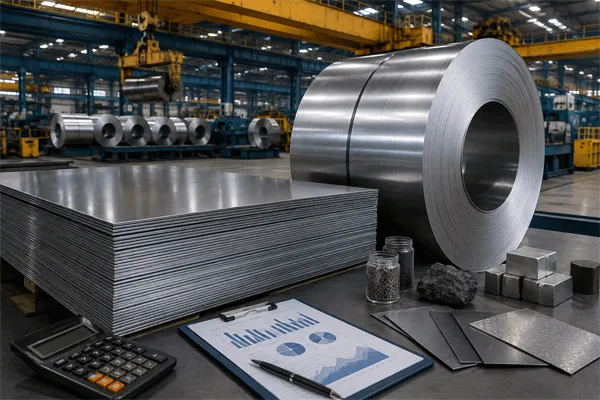
Dimensional accuracy must be specified alongside thickness and width, not treated as an assumed catalog feature.
Cold rolled steel plate specification checklist
Thickness and width
State nominal thickness, permitted deviation and width tolerance. Thin gauges may need tighter rolling control, while non-standard widths can create trimming loss. If the plate feeds a press, include the blank size and the maximum variation that the die can accept.
Length, flatness and edge condition
Cut length, squareness, camber, flatness and edge quality become important when plates are nested, laser-cut or assembled against a fixture. “Cut to length” alone does not define squareness or edge trimming. Request the relevant tolerance class and inspection method.
Surface finish and protection
Bright and matte surfaces are not interchangeable when the plate will be painted, laminated or used as a visible panel. Specify skin pass, oiling or dry delivery, protective film, and the acceptable level of scratches, roll marks and stains. A surface requirement should be written in the purchase contract rather than inferred from a photograph.
Temper and forming requirement
Full-hard material and annealed or skin-passed material behave differently during bending and drawing. If the component has a deep draw, state the draw depth, minimum bend radius, blank-holder conditions and forming test requirement. This is where SPCE high-formability material may be more suitable than a general-purpose grade.
Deep-drawing applications require a grade and temper matched to the part geometry and forming process.
Grade selection for common applications
Grade family
Typical selection logic
Questions before approval
SPCC
General cold rolled forming and fabrication where moderate formability is sufficient
What surface, hardness and dimensional tolerance does the part require?
SPCD
More demanding forming than a general-purpose grade
Is the required elongation documented in the agreed standard and MTC?
SPCE
High-formability or deeper-drawing components
Has the actual part geometry been checked with a forming trial?
These labels are starting points, not a substitute for the governing standard. The same grade name can be quoted with different thickness, surface, temper, tolerance and inspection scopes. Ask the supplier to state the standard edition and the mechanical properties that apply to the ordered thickness.
Where cold rolled steel plate is used
Automotive and appliance panels
Panels and covers often need a smooth surface, controlled thickness and consistent forming response. The buyer should confirm surface acceptance, dent or stretcher-strain limits, and whether the material will be painted after stamping. See the automotive cold rolled steel guide for forming and stamping considerations.
Electrical cabinets and equipment housings
Enclosures benefit from repeatable flatness, clean edges and a surface compatible with powder coating or liquid paint. Include the coating preparation, film or oil requirement, bend direction and hole-making process in the RFQ.
Fabricated brackets and general industrial parts
For brackets, guards and formed components, the critical fields may be thickness tolerance, minimum bend radius, flatness after cutting and weld or fastener fit. A cheaper grade is not useful if springback or edge distortion causes rework.
Cold rolled versus hot rolled: the selection boundary
Cold rolled steel normally offers tighter dimensional control and a more controlled surface than hot rolled material, but it is not automatically the better choice. Hot rolled steel can be more practical for thicker structural parts, rough fabrication and applications where surface scale and wider tolerances are acceptable. Compare the finished part requirement, not just the mill process. The site’s hot rolled versus cold rolled comparison provides the broader process distinction.
Inspection and acceptance points
Match the heat or batch number on the plate, bundle mark and Mill Test Certificate.
Measure thickness, width, length, squareness and flatness at the agreed sampling points.
Inspect surface, edge condition, oil or film, packaging and any corrosion or handling marks before releasing the lot.
For forming parts, retain the first-article or trial result and record the press settings that produced an acceptable component.
Luyuan describes batch traceability, English Mill Test Certificates, pre-shipment inspection and third-party inspection support. Put the required evidence into the inspection plan, including who may reject a lot and how nonconforming material will be isolated.
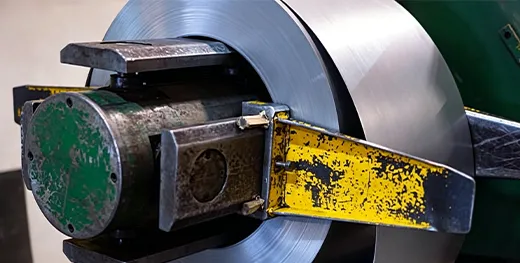
Annealing and temper control influence hardness, elongation and the repeatability of forming operations.
RFQ example for a cold rolled steel plate
A usable request could state: “SPCE cold rolled steel, agreed standard, 1.20 mm × 1,000 mm × 2,000 mm cut-to-length sheets, skin-passed matte surface, dry delivery, specified flatness and thickness tolerances, edge trimmed, MTC required, trial forming approval before bulk production, packed for export to the named destination.” Add quantity, Incoterm and delivery date.
For current product capability and export documentation, review Luyuan’s capability page. Then send the drawing, grade, dimensions, surface and inspection scope through the contact page.
FAQ
Is cold rolled steel plate stronger than hot rolled steel?
Strength depends on grade, temper and processing, not the label alone. Cold rolling improves dimensional and surface control; it does not make every cold rolled plate stronger than every hot rolled product.
What is the best cold rolled grade for deep drawing?
SPCE is commonly considered when high formability is required, but the actual part geometry and forming test should determine approval. A grade name without a drawing or mechanical-property requirement is incomplete.
Can cold rolled coil be used instead of plate?
It can be cut to length when the thickness, flatness, cut tolerance, edge and handling requirements are compatible. Confirm the delivered form with the processor before substituting coil for cut sheets.
What should be checked on delivery?
Check identity and traceability, dimensions, flatness, surface, edges, packaging, corrosion protection and the MTC. For formed parts, also confirm the first-article result before releasing the full lot.
Next step: Send the part drawing or blank size, required grade, dimensions, surface, temper, quantity, destination and inspection scope for a specification-based cold rolled steel plate quotation.
About the author
Luyuan Steel Technical Team supports steel manufacturing, processing, quality-control documentation, product specification and international project supply.






 08-21 2026