—
title: “Cold Rolled Steel Prices: Main Cost Factors”
slug: cold-rolled-steel-prices-main-cost-factors
primary_keyword: cold rolled steel prices
search_intent: Commercial
post_type: Data/Numbers Post
author: Luyuan Steel Technical Team
date: 2026-08-19
meta_title: “Cold Rolled Steel Prices: Main Cost Factors”
meta_description: “See how grade, thickness, finish, order size, processing, inspection and freight shape cold rolled steel prices and landed cost.”
featured_media_id: 1088
—
By Luyuan Steel Technical Team | Updated August 19, 2026
Cold rolled steel prices are quoted from a specification, not a single market number. Grade, thickness, surface finish, order size, processing, inspection, packing, freight and the delivery term all change the price per metric ton. This guide gives buyers a practical way to normalize offers before choosing a mill or service center.
Information basis: Luyuan’s published product information identifies SPCC, SPCD and SPCE grades for manufacturing applications, with customized dimensions, temper and packaging. Public listing references are indicative only and must be confirmed against a current specification-based quotation.
What a cold rolled steel price should identify
A quote is only comparable when the material and delivery basis are the same. Ask the supplier to state each field below rather than accepting “cold rolled coil” as the complete description.
Quote field
Example request
Why it affects price
Grade and standard
SPCC, SPCD or SPCE under an agreed standard
Chemistry, yield strength, elongation, annealing and test scope differ
Thickness and width
0.80 mm × 1,250 mm with tolerances
Rolling schedule, yield, trimming and dimensional control change
Surface and temper
Bright or matte finish; skin-passed or full-hard
Annealing, leveling and surface control add process steps
Coil dimensions
508/610 mm ID, maximum OD and coil mass
Recoiling, handling and equipment limits affect usable yield
Quantity
Trial coil, container order or recurring call-off
Setup, minimums, packing and production planning are spread differently
Inspection
MTC, dimensional report or third-party inspection
Testing and document release are part of the delivered scope
Delivery basis
EXW, FOB, CFR or CIF to a named port
Freight, insurance, port charges and inland haulage change landed cost
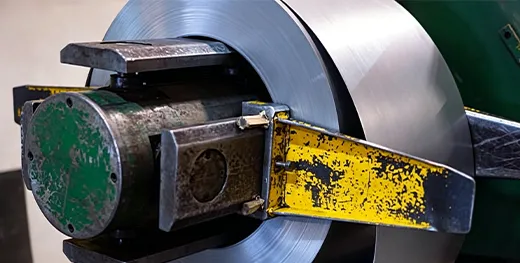
Annealing requirements can change the grade route and final cold rolled steel price.
Indicative references are not a fixed price
Luyuan’s published reference materials place selected steel products at approximately USD 410–650 per metric ton. The same public material lists cold rolled steel coil at approximately USD 585–635/MT. Treat this as an orientation range for a conversation, not as a current offer for every SPCC, SPCD or SPCE specification.
Reference
Indicative range
Correct use
Selected Luyuan steel products
Approximately USD 410–650/MT
Broad context only; product mix and terms are not identical
Cold rolled steel coil
Approximately USD 585–635/MT
Starting context before grade, finish, quantity and freight are confirmed
Other steel families
Varies by product and specification
Do not substitute galvanized, painted or structural-steel references for a cold rolled quote
When a required grade or dimension has no verified public listing, mark it Price on Request. That is more accurate than copying a neighboring product’s number.
Six cost factors buyers can verify
1. Grade, strength and formability
SPCC is commonly selected for general forming, while SPCD and SPCE are used when deeper forming or tighter performance is required. The extra control for chemistry, annealing and mechanical properties can change the mill route and price. Do not compare a deep-drawing grade with a general-purpose grade only by nominal thickness.
2. Thickness, width and tolerance
Thin gauges and non-standard widths may require tighter rolling control or more trimming. Put nominal size and permitted deviation in the RFQ. A lower nominal price can become expensive if the coil does not match a decoiler, stamping die or roll-forming line.
3. Surface finish and temper
Bright or matte appearance, skin pass, oiling, dry surface, leveling and protective film each add handling or inspection. State whether the material will be painted, stamped, bent or exposed. Surface requirements should be agreed before pricing, because a cosmetic rejection is not corrected by a cheaper base coil.
4. Order size and coil configuration
A trial coil and a recurring container program have different setup economics. Specify inside diameter, maximum outside diameter, coil mass, eye orientation, weld restrictions and packing. These details affect slitting, recoiling, loading and the amount of material that can be used at the receiving plant.
5. Processing, testing and documents
Slitting, cut-to-length, leveling, edge trimming, sampling, chemical and mechanical tests, an English Mill Test Certificate or buyer-appointed inspection should appear as separate quote lines. Otherwise suppliers may be pricing different scopes under the same “per ton” label.
6. Freight, currency and payment
FOB, CFR, CIF and EXW are different cost positions. Normalize ocean freight, insurance, port charges, inland haulage, financing, currency and payment terms to calculate landed cost. The lowest ex-works number is not necessarily the lowest delivered cost.
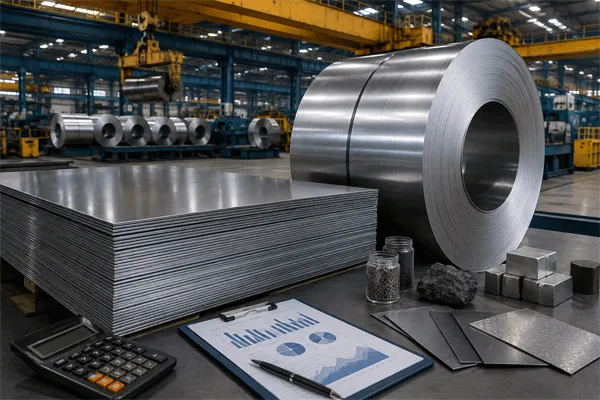
Dimensional accuracy and tolerance records help buyers compare the usable value of two offers.
How to compare two cold rolled steel offers
Copy grade, standard, thickness, width, tolerance, finish, temper and coil dimensions into one comparison sheet.
Convert all offers to the same currency, unit, Incoterm, destination port and tax assumption.
Add processing, inspection, MTC, packaging, slitting, inland delivery and payment costs as separate lines.
Check usable yield after trimming, rejects, coil handling and minimum-order constraints.
Record quotation validity, raw-material adjustment rules, lead time and the conditions that trigger a revised price.
Compared with supplier pages that show only a starting number, this method exposes what the buyer is actually receiving. It also identifies a low quote that quietly excludes a tolerance, document or freight component.
Luyuan cold rolled steel parameters to put in an RFQ
Luyuan’s product information references SPCC, SPCD and SPCE grades, customizable hardness or temper, deep-drawing capability, dimensional accuracy and packaging options. Use these as fields in the request, then ask the supplier to confirm the exact grade, thickness range, surface condition, coil size, inspection plan and production availability for the required order.
Request the agreed standard, coil number, heat or batch traceability, dimensional results, surface acceptance criteria, mechanical test values and document release condition. If a third-party inspection is required, specify who appoints the inspector and whether the cost is included.
At loading, verify coil mass, eye orientation, wrapping, edge protection, lifting points and bundle marks. Moisture damage, telescoping, edge dents or unreadable traceability can erase a small price advantage.
FAQ
What are current cold rolled steel prices?
Luyuan’s public reference for cold rolled steel coil is approximately USD 585–635/MT, but it is not a fixed quote. Grade, dimensions, finish, quantity, inspection, Incoterm and destination must be confirmed before a usable price is issued.
Which grade is cheapest, SPCC, SPCD or SPCE?
There is no universal ranking because the final number also depends on thickness, width, order size and market conditions. A deeper-forming grade can require additional process control, but choosing a cheaper grade that fails the forming test can cost more overall.
Does thinner cold rolled steel always cost less?
Not necessarily. Thin gauges can require tighter rolling control, and a non-standard width can create trimming loss. Compare the delivered specification and usable yield rather than thickness alone.
What should a cold rolled steel RFQ include?
Include grade and standard, thickness, width, tolerance, surface, temper, coil ID and mass, quantity, processing, testing, documents, packing, destination, Incoterm and delivery date.
Next step: Send the grade, dimensions, finish, quantity, inspection scope, destination port and Incoterm through Luyuan’s contact page for a specification-based cold rolled steel quotation.
About the author
Luyuan Steel Technical Team supports steel manufacturing, processing, quality-control documentation, product specification and international project supply.






 08-19 2026