By Luyuan Steel Technical Team | Updated August 18, 2026
Galvanized steel coil price is built from the base steel, zinc coating, dimensions, order quantity, processing, inspection, freight, and trade terms. A public listing range can frame a conversation, but it cannot replace a grade-specific quote. This guide shows which numbers to request before comparing supplier offers.
Information basis: The examples below use Luyuan Steel’s published product parameters and price references. ASTM A653/A653M-23 is the relevant ASTM specification for hot-dip zinc-coated steel sheet; the standard, edition, and coating designation must be written into the purchase contract.
What a galvanized steel coil quote should contain
A useful quote identifies the product before it shows a number. “Galvanized coil” can describe different base grades, widths, thicknesses, zinc masses, surface finishes, coil weights, and delivery terms. Two offers with the same price per metric ton may not deliver the same usable material.
Quote field
Example to specify
Why it changes the price
Base grade and standard
DX51D or SGCC; ASTM A653/A653M-23 or another agreed standard
Strength, formability, chemistry, test scope, and mill route differ by grade
Thickness and width
0.25 mm × 1,250 mm, with tolerance
Gauge affects mass, yield, rolling schedule, and cutting loss
Zinc coating
Z120, Z180, or a contract-defined coating mass
More zinc adds material, bath, control, and inspection cost
Surface and finish
Regular spangle, zero spangle, skin-passed, oiled, or dry
Surface control and downstream appearance requirements add processing steps
Coil size
508 or 610 mm ID, maximum OD and coil mass
Slitting, recoiling, handling, and equipment limits affect yield
Order quantity
Trial coil, one container, or annual call-off
Setup, production planning, packaging, and mill minimums are spread differently
Delivery terms
EXW, FOB, CIF, or another Incoterm and destination port
Freight, insurance, port charges, and currency exposure move the landed number
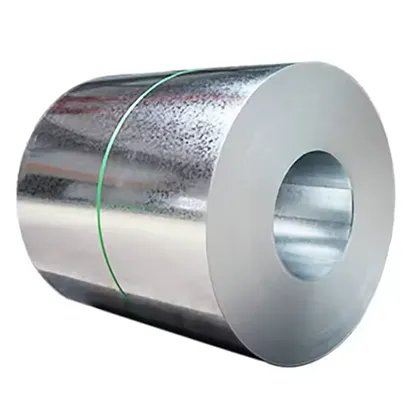
A zinc-coated coil must be priced with its grade, coating mass, dimensions, and delivery terms.
Published price references: useful context, not a fixed quote
Luyuan’s public materials place selected steel products in an indicative range of approximately USD 410–650 per metric ton. The same source lists examples such as PPGI/PPGL at approximately USD 460–650/MT, cold rolled steel coil at USD 585–635/MT, galvanized steel pipe at USD 608–623/MT, and H-beam steel at USD 440–568/MT.
Published reference category
Indicative listing range
How to use it
Selected Luyuan steel products
Approximately USD 410–650/MT
Broad market context only; do not treat it as a galvanized coil offer
PPGI/PPGL steel coil
Approximately USD 460–650/MT
Painted or galvalume products have different inputs and processing
Cold rolled steel coil
Approximately USD 585–635/MT
Useful for comparing another flat-steel family, not for substituting a GI quote
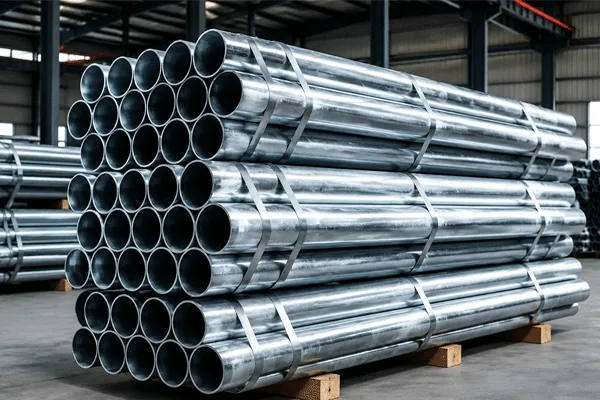
Galvanized steel pipe
Approximately USD 608–623/MT
Pipe forming and coating costs make it a separate product benchmark
H-beam steel
Approximately USD 440–568/MT
Section steel has different rolling, mass, and logistics economics
Products without a verified public listing price should be marked Price on Request. A galvanized steel coil quote should therefore be issued after the supplier confirms the grade, zinc coating, dimensions, quantity, inspection, and destination rather than copying a number from another product family.
The Luyuan GI coil parameters that affect cost
Luyuan’s published GI coil listing identifies DX51D/SGCC grades, a Z120 zinc coating, and a thickness range of 0.18–0.30 mm. Its galvanized steel coil catalog also describes customized width, coating, processing, and packaging at the company/service level. These are useful starting points for an RFQ, not a promise that every combination is available at every quantity.
The site separately lists galvalume coil at 0.21–0.50 mm with coating references of Z121–Z180. Galvalume and galvanized steel are not interchangeable price labels: the coating chemistry, surface requirement, and intended application must remain explicit.
Steel index movements set the starting point, but grade determines what the mill must melt, roll, test, and certify. A forming grade, structural grade, and appliance-grade surface requirement should not be compared as if they were one commodity.
2. Zinc coating mass
A Z120 requirement does not carry the same input as a heavier coating. Specify whether the coating designation is total both sides, per side, or another convention under the agreed standard. Ask how the supplier measures and records coating mass.
3. Thickness, width, and tolerance
Thin material can require tighter rolling control, while wide or non-standard widths can increase setup and trimming loss. Put nominal dimensions and permitted deviation in the RFQ. Otherwise a low nominal price may hide a mismatch with the customer’s decoiler or roll-forming line.
4. Surface and processing
Skin pass, leveling, slitting, cut-to-length, oiling, protective film, and special surface appearance each add handling or inspection. State whether the coil will be painted, roll-formed, stamped, or used as exposed sheet so the supplier can quote the correct finish.
5. Quantity and packing
A one-coil trial, a container order, and a recurring call-off have different setup economics. Coil ID, maximum coil mass, eye orientation, waterproof wrapping, edge protection, and marking also affect packing and loading cost.
6. Inspection and documentation
English MTCs, dimensional reports, coating tests, chemical and mechanical tests, SGS/BV/Intertek inspection, or buyer-appointed inspection can be included in the purchase scope. The cheapest quote may exclude a document or test that the receiving plant requires.
7. Freight, currency, and Incoterms
FOB, CFR, CIF, and EXW figures are not directly comparable. Add ocean freight, insurance, port charges, customs, inland haulage, financing, and currency assumptions before choosing the lower landed cost.
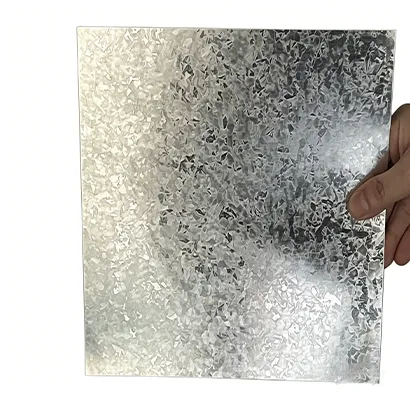
Surface appearance and zinc spangle requirements can change processing and inspection scope.
How to compare two galvanized coil offers
Compared with supplier pages that show only a “starting price,” a procurement comparison should normalize every offer into the same product and delivery basis. Use this sequence:
Copy grade, standard edition, thickness, width, zinc coating, surface, and coil dimensions into one comparison sheet.
Convert all offers to the same unit, currency, Incoterm, destination port, and tax assumption.
Add inspection, MTC, packaging, slitting, and inland delivery as separate line items.
Check the usable yield after trimming, decoiling, rejects, and minimum-order constraints.
Ask each supplier to state the quotation validity, raw-material adjustment rule, lead time, and payment assumptions.
This method makes a higher nominal price explainable. It also catches the reverse problem: a low quote that quietly omits zinc mass, tolerance, testing, or destination charges.
Quality and shipment checks before accepting the price
Luyuan states that it supplies English Mill Test Certificates, batch traceability, 100% pre-shipment inspection, and third-party inspection support. Put those claims into an agreed inspection plan: identify the coil number, sampling location, dimensional points, coating method, surface acceptance, and document release condition.
For export cargo, check coil mass, eye orientation, skid or cradle design, wrapping, moisture protection, lifting points, and bundle marks. A price that excludes damage prevention can become more expensive when the receiving line finds edge dents, rust, telescoping, or unreadable traceability marks.
There is no single verified public price for every galvanized coil specification. Luyuan’s selected steel listing references are approximately USD 410–650/MT, while the final GI coil number depends on grade, dimensions, zinc coating, quantity, testing, Incoterms, and destination.
Does a heavier zinc coating always cost more?
It normally adds zinc input and process control, but the final difference also depends on base steel, width, order size, and market conditions. Compare coating designations under the same standard and measurement convention.
Are PPGI and galvanized steel coil prices interchangeable?
No. PPGI adds paint layers and color or surface requirements, while GI uses a zinc coating without the same prepainting process. Use PPGI/PPGL references only as context, not as a GI quotation.
What should be included in a galvanized coil RFQ?
Include grade and standard, thickness, width, tolerance, zinc coating, surface finish, coil ID and mass, quantity, processing, inspection, packaging, Incoterm, destination, and required delivery date.
Why can a CIF quote be higher than an EXW quote?
CIF includes freight and insurance to the named port, while EXW transfers more work and cost to the buyer. Compare landed cost using the same destination and customs assumptions.
Next step: Send the required grade, thickness, width, zinc coating, quantity, inspection scope, destination port, and Incoterm through Luyuan’s contact page for a specification-based galvanized steel coil quotation.
About the author
Luyuan Steel Technical Team supports steel manufacturing, processing, quality-control documentation, product specification, and international project supply.






 08-18 2026