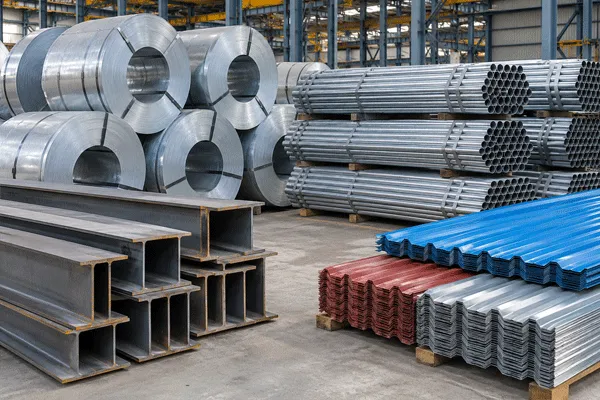
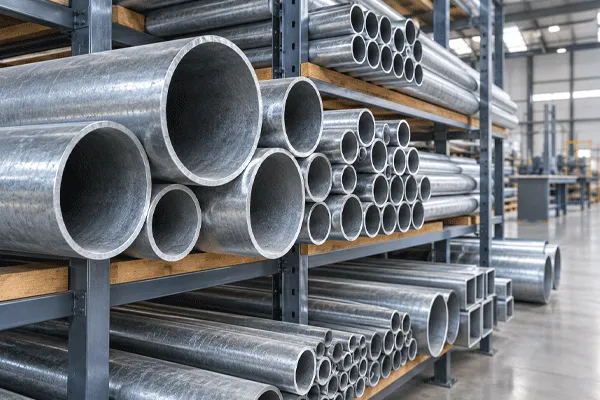
Steel buyers often struggle with rough surfaces, loose dimensional tolerance, and inconsistent forming results. Choosing the wrong material can cause rejected parts, extra finishing work, and higher production costs. Cold rolled steel offers a smoother, more precise solution for demanding manufacturing applications.
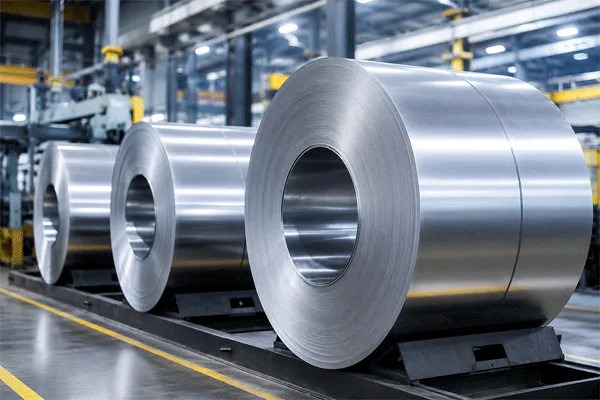
Cold rolled steel is hot rolled steel that undergoes additional processing at or near room temperature. The steel passes through a series of rollers to reduce its thickness, improve its surface finish, tighten dimensional tolerances, and increase its strength and hardness. It is widely used in automotive parts, appliances, furniture, enclosures, precision components, and coated steel products.
Hot Rolled vs Cold Rolled Steel: What’s the Difference?
Article Outline
- What is cold rolled steel?
- How does the cold rolling process work?
- What happens to steel during cold working?
- What is the difference between hot rolled and cold rolled steel?
- What are the main benefits of cold rolled steel?
- Does cold rolled steel have any disadvantages?
- Where is cold rolled steel used?
- Why is it common in automotive and appliance production?
- Is cold rolled steel suitable for cold-formed steel framing?
- How should buyers select a cold rolled steel coil?
- What should importers check before ordering?
- Frequently asked questions
- Key points to remember
What Is Cold Rolled Steel?
Cold rolled steel is steel that has received additional processing after hot rolling. A steel mill first produces a hot rolled coil at high temperatures. After the coil cools, the mill removes surface scale, reduces the material through rollers, and controls its final thickness and properties.
Despite its name, the cold roll process does not always mean the steel feels cold. It means that the main thickness reduction takes place below the steel’s recrystallization temperature, usually near room temperature.
Cold rolled steel is often supplied as:
- Full-width steel coil
- Slit steel coil
- Cut-to-length steel sheet
- Narrow steel strip
- Oiled or unoiled material
- Annealed or full-hard material
- Coated steel substrate
ASTM A1008/A1008M is one commonly referenced specification for cold-rolled carbon, structural, high-strength low-alloy, and other steel sheet categories. The exact grade and standard must match the intended application rather than being selected only by product name.
How Does the Cold Rolling Process Work?
The cold rolling process normally begins with hot rolled steel. Mills heat and roll the steel at high temperatures to create a coil with the required general shape and thickness range. After cooling, the hot-rolled surface normally contains mill scale.
The coil then passes through several process steps:
| Process Step |
Main Purpose |
| Hot rolling |
Produces the starting steel coil |
| Cooling |
Allows the coil to reach a stable temperature |
| Pickling |
Removes oxide scale from the surface |
| Cold rolling |
Reduces thickness through rollers |
| Annealing |
Restores controlled ductility and formability |
| Skin passing |
Improves flatness and surface quality |
| Oiling |
Provides temporary surface protection |
| Inspection |
Checks thickness, width, shape, and properties |
| Recoiling |
Prepares the finished material for delivery |
During pickling, the mill uses an acid-based process to pickle the steel and remove scale. The cleaner strip then enters a rolling mill, where a series of rollers applies pressure and reduces its thickness.
Each roller stand controls the strip in a precise way. The cold rolling process can create thinner gauges and tighter tolerance than ordinary hot rolling. The American Iron and Steel Institute explains that steel finishing can include reheating, hot rolling, cold rolling, pickling, heat treatment, and other finishing lines after the liquid steel has been cast.
What Happens to Steel During Cold Working?
Cold working creates plastic deformation in the steel. As the material passes between rollers, its grains and internal structure change. This process can increase hardness, yield strength, and tensile strength.
This increase is called work hardening or strain hardening. Cold rolling produces stronger material, but strength does not increase without a trade-off. As the steel becomes harder, its ductility may fall. It may become less suitable for deep bending or drawing unless the mill performs further heat treatment.
A simple trend chart looks like this:
More Cold Reduction
        │
        ├── Higher strength
        ├── Higher hardness
        ├── Tighter thickness control
        ├── Smoother surface
        └── Lower ductility before annealing
Cold rolling can also create internal stress. If the buyer needs the material for deep drawing, complex stamping, or close-tolerance fabrication, the mill may need to anneal the steel.
Annealing heats the material under controlled conditions. This allows recrystallization to occur, reduces unwanted stress, and restores useful ductility. The mill can then perform a light temper or skin pass to control flatness, appearance, and final mechanical properties.
Hot Rolled vs Cold Rolled Steel: What’s the Difference?
What Is the Difference Between Hot Rolled and Cold Rolled Steel?
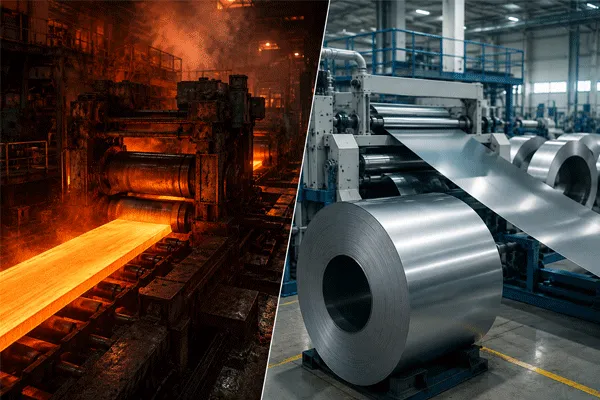
The main difference between hot rolled and cold rolled steel is not simply temperature. It is the amount and type of additional processing.
Hot rolled steel is shaped at temperatures above the recrystallization temperature. At these high temperatures, the steel is easier to form into large coils, plates, beams, and structural products.
Cold rolled steel is processed after the hot rolled material cools. It receives additional processing that improves dimensional control, surface finish, flatness, and certain mechanical properties.
Hot Rolled vs Cold Rolled Steel Comparison
| Feature |
Hot Rolled Steel |
Cold Rolled Steel |
| Processing temperature |
High temperatures |
Near room temperature |
| Surface finish |
Rougher, often with scale |
Cleaner and smoother |
| Dimensional tolerance |
Broader tolerance |
Tighter tolerances |
| Edge appearance |
May be rounded or less precise |
More controlled |
| Strength |
Depends on grade |
Often higher after cold working |
| Ductility |
Often good for general forming |
Depends on reduction and annealing |
| Cost |
Usually lower |
Usually higher |
| Common thickness |
Often thicker |
Often thinner |
| Typical applications |
Structures, heavy equipment, frames |
Appliances, panels, precision parts |
| Further coating |
Can be coated after preparation |
Common substrate for coating |
Understanding the differences between hot rolled and cold rolled materials helps buyers avoid paying for precision they do not need. It also prevents manufacturers from selecting rougher material for a part that requires a smooth surface or tight dimensional tolerances.
The ASTM A1011/A1011M specification covers several categories of hot-rolled steel sheet and strip, while ASTM A1008/A1008M covers several categories of cold-rolled steel sheet. These standards have different grade, property, and ordering requirements.
What Are the Main Benefits of Cold Rolled Steel?
The main benefits of cold rolled steel come from its additional processing. Manufacturers often select it when the finished product must look clean, fit accurately, or move through an automated production line without frequent adjustment.
1. Better Surface Finish
Cold-rolled steel usually has a more uniform and smooth surface compared to hot rolled steel. This makes it useful for exposed panels, painted parts, appliance housings, office furniture, and metal cabinets.
2. Tight Dimensional Tolerances
Cold rolling gives mills better control over thickness, width, flatness, and shape. Tight tolerances matter when a manufacturer uses laser cutting, stamping, automated welding, roll forming, or precision assembly.
3. Improved Strength and Hardness
Cold working can increase strength and hardness. This may allow the buyer to use thinner steel in certain designs, although engineers must confirm the required load, safety factor, and forming performance.
4. Consistent Processing
Stable dimensions can reduce machine adjustment, tool wear, profile variation, and rejected parts. For high-volume production, this consistency may save more money than the difference in raw material cost.
5. Good Substrate for Further Processing
Cold rolled steel is widely used as a base for:
- Galvanized steel
- Galvalume steel
- Electro-galvanized steel
- PPGI and other prepainted products
- Tinplate
- Powder-coated steel
- Laminated steel products
The advantages of cold rolling are especially valuable when the buyer needs repeatable surface quality and close control across many coils.
Does Cold Rolled Steel Have Any Disadvantages?
Cold rolled material is not automatically the best choice for every steel application. It involves additional processing, so it usually costs more than a comparable hot-rolled product.
Cold working may also increase internal stress. When fabricators cut, weld, bend, or machine the material, these stresses can cause springback or small dimensional changes. Selecting the right grade and temper helps control this risk.
Other limitations include:
- Higher processing cost
- Reduced ductility in full-hard material
- Potential springback during forming
- Need for suitable storage and oil protection
- Risk of surface rust when left uncoated
- Possible distortion after cutting or welding
- Limited suitability for very thick structural products
Cold rolled carbon steel does not automatically provide strong corrosion resistance. The smooth surface may look cleaner, but the material can still rust when exposed to moisture.
For outdoor use, buyers may need galvanized, galvalume, painted, plated, or stainless steel. The protection system should match the actual environment.
Where Is Cold Rolled Steel Used?
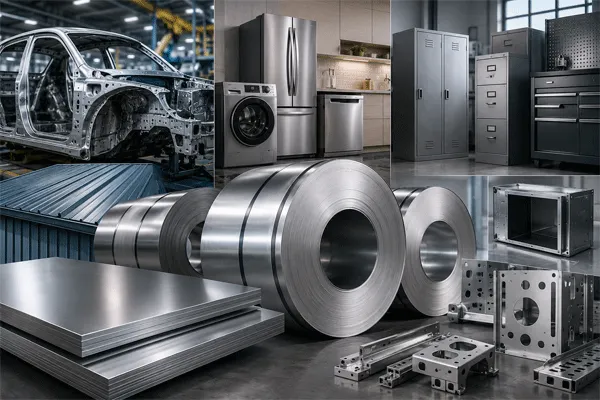
Cold rolled steel is common in industries that require thin gauges, clean appearance, controlled dimensions, or reliable forming.
Major steel applications include:
- Household appliance panels
- Automotive body and structural components
- Electrical cabinets
- Control panels
- Metal furniture
- Shelving systems
- Lighting fixtures
- HVAC components
- Metal doors
- Storage cabinets
- Machine covers
- Office equipment
- Tubes and precision profiles
- Stampings and brackets
- Coated steel production
- Construction components
World Steel Association product information lists domestic products, automotive applications, lighting fixtures, electrical components, sections, profiled sheets, roofing, and wall elements among the uses for finished cold rolled coil. It also describes finished cold coil as material treated to achieve properties suitable for further forming and bending.
The best product depends on the application. A simple flat cabinet panel may use a commercial-quality steel sheet, while a complex stamped part may require deep-drawing steel with controlled elongation and surface condition.
Hot Rolled vs Cold Rolled Steel: What’s the Difference?
Why Is Cold Rolled Steel Used in Appliance Manufacturing?
An appliance body must look clean and fit accurately. Refrigerators, washing machines, air conditioners, ovens, freezers, and other products use panels that must accept bending, stamping, welding, painting, and assembly.
Cold rolled steel offers the surface quality needed for visible appliance panels. It can be cleaned, phosphated, powder coated, painted, or laminated. Its dimensional consistency also helps doors, covers, brackets, and internal parts align during high-volume production.
Common appliance applications include:
- Refrigerator side panels
- Washing machine cabinets
- Oven housings
- Air-conditioning covers
- Freezer panels
- Internal reinforcement parts
- Control box components
- Shelves and brackets
Buyers should confirm whether the part requires ordinary commercial steel, drawing steel, deep-drawing steel, or an enamel-grade product. A low-cost type of steel may crack when the component has deep corners or tight bends.
How Does the Automotive Industry Use Cold-Rolled Steel?
The automotive industry uses cold-rolled material for body panels, reinforcements, brackets, seat parts, interior structures, and safety-related components.
Different automotive parts require different combinations of ductility, strength, weldability, surface finish, and crash performance. Outer panels need a very controlled appearance. Structural parts may need higher yield and tensile strength.
Advanced automotive steel grades can include:
- Mild drawing steel
- Interstitial-free steel
- High-strength low-alloy steel
- Dual-phase steel
- Complex-phase steel
- Martensitic steel
- Bake-hardenable steel
For example, some cold-rolled advanced high-strength steels are developed for side-impact beams, bumpers, and structural components. These applications show why the term “cold rolled steel” alone does not fully describe performance; the steel grade remains essential.
Automotive buyers also monitor flatness, surface defects, coil consistency, weld behavior, forming limits, and coating compatibility. A small variation may affect thousands of finished parts.
Is Cold Rolled Steel Used for Cold-Formed Steel Framing?
Yes. Cold-formed steel framing is made by shaping thin steel sheet into C sections, tracks, studs, channels, and other structural profiles without heating the material during the forming stage.
However, cold-formed steel and cold rolled steel are not exactly the same term.
Cold rolled describes how a steel mill reduces and finishes the flat material. Cold-formed describes how a fabricator shapes sheet or strip into a finished section at room temperature. Cold-formed framing often uses galvanized structural sheet because the zinc coating provides corrosion protection.
Common cold-formed products include:
- Wall studs
- Floor joists
- Roof purlins
- C channels
- Tracks
- Light-gauge trusses
- Partition systems
- Warehouse secondary framing
Structural buyers must verify yield strength, coating, thickness, section dimensions, local design codes, and load requirements. The American Iron and Steel Institute develops research and design resources for cold-formed steel sections, including C and Z sections and members with web holes.
How Should Buyers Select a Cold Rolled Steel Coil?
A complete purchase specification prevents confusion. Simply asking for “cold roll” does not tell the supplier enough about the final requirement.
Buyers should define the following items:
Steel Standard and Grade
Common standards may include ASTM A1008, EN 10130, JIS G3141, GB/T 5213, or other national and project standards. Grades can include commercial, drawing, deep-drawing, structural, and high-strength options.
Thickness and Width
Provide the nominal thickness, width, and accepted tolerance. A buyer should also explain whether edge trimming or slitting is required.
Temper or Hardness
Material can be supplied as annealed, skin passed, quarter hard, half hard, full hard, or according to another defined temper system. The required hardness must match forming needs.
Surface Finish and Quality
Specify whether the application requires:
- Commercial surface
- Exposed surface
- Matte finish
- Bright finish
- Oiled surface
- Unoiled surface
- Controlled roughness
- Improved flatness
Coil Information
Confirm:
- Coil weight
- Coil inner diameter
- Maximum outer diameter
- Slit width tolerance
- Edge condition
- Packaging method
- Loading requirements
Mechanical Properties
For forming and structural use, confirm:
- Yield strength
- Tensile strength
- Elongation
- Hardness
- Bend performance
- Required test direction
The correct specification balances strength and ductility. Stronger is not always better. A very hard coil may fail during stamping, while a very soft grade may lack the required structural strength.
What Should Importers Check Before Ordering Cold Rolled Steel?
Steel importers, distributors, and manufacturers should compare complete offers rather than price per ton alone.
A professional inquiry may include:
| Purchasing Item |
Example Requirement |
| Product |
Cold rolled steel coil |
| Standard |
ASTM A1008 |
| Grade |
Commercial Steel Type B |
| Thickness |
0.80 mm |
| Width |
1,250 mm |
| Tolerance |
As standard or agreed tighter tolerance |
| Surface |
Matte, skin passed |
| Treatment |
Lightly oiled |
| Coil weight |
3–5 metric tons |
| Inner diameter |
508 mm |
| Quantity |
300 metric tons |
| Application |
Appliance cabinet production |
| Inspection |
Mill inspection or third-party inspection |
| Documentation |
MTC, packing list, invoice, origin documents |
| Packaging |
Seaworthy export packaging |
Check whether the supplier can provide MTC traceability, dimensional inspection, mechanical test results, surface inspection, and safe packaging. Moisture barriers, steel protectors, waterproof paper, edge guards, and strong strapping help protect the coil during international transport.
As a professional steel manufacturer and integrated steel supplier in China, we support customized thickness, width, hardness, steel grades, slitting, cutting, surface treatment, packaging, third-party inspection, MTC documentation, and international logistics.
We also supply hot rolled steel, galvanized and galvalume coils, PPGI, PPGL, steel plate, pipes, hollow sections, beams, stainless steel, aluminum, and copper products. This integrated supply model helps distributors, contractors, factories, and international project buyers combine materials under one coordinated sourcing plan.
Case Study: Choosing Steel for an Electrical Cabinet
Consider a manufacturer producing painted electrical cabinets. The company first considers hot rolled material because it has a lower price.
During trial production, several problems appear:
- The rough surface requires more preparation.
- Thickness variation affects bending accuracy.
- Panels do not align consistently.
- More grinding is needed before painting.
- The finished coating highlights surface defects.
- Assembly workers spend extra time adjusting doors.
The manufacturer changes to a skin-passed cold rolled steel sheet with a defined thickness tolerance and suitable forming grade.
The raw material price increases, but the factory reduces preparation work, improves bending consistency, creates a smoother painted finish, and lowers rejection rates. Production becomes faster.
The cheapest steel coil is not always the lowest-cost steel in the finished product.
This is why we ask buyers about the final use before recommending a material. Application details help us match the steel to the forming, welding, coating, appearance, and cost requirements.
How Can a Reliable Steel Supplier Reduce Purchasing Risk?
International steel purchasing involves more than production. Buyers also need clear communication, consistent inspection, export knowledge, accurate documents, safe packaging, and stable delivery.
A capable supplier should help confirm:
- Whether cold rolled or hot rolled steel is more suitable
- Which grade provides the required formability
- Whether annealed or full-hard material is needed
- What thickness tolerance the production line can accept
- Whether the surface will be painted, plated, or galvanized
- What coil weight matches the buyer’s equipment
- Which testing and documents the destination market requires
- How the material should be protected during sea transport
For OEM and ODM orders, we can coordinate cutting, slitting, profiling, customized widths, coating, RAL colors, inspection, MTC documents, and logistics.
Our target is not simply to ship steel products. We aim to help the buyer receive material that processes correctly, meets the agreed specification, and supports repeat orders.
Frequently Asked Questions
Is cold rolled steel stronger than hot rolled steel?
Cold working often increases strength and hardness, so cold rolled material can be stronger than a comparable hot rolled starting material. However, the actual result depends on the grade, reduction rate, annealing condition, and final temper.
Does cold rolled steel rust?
Yes. Uncoated cold rolled carbon steel can rust when moisture and oxygen reach the surface. For better corrosion resistance, buyers may choose galvanized, galvalume, painted, plated, or stainless steel.
Is cold rolled steel suitable for welding?
Yes. Many cold rolled steel grades can be welded by common methods. However, welding parameters should match the grade, thickness, surface oil, coating, and final application.
Can cold rolled steel be bent?
Yes, but bend performance depends on ductility, grade, hardness, rolling direction, thickness, bend radius, and edge condition. Full-hard material is less suitable for severe bending than annealed drawing steel.
Why is cold rolled steel more expensive?
Cold rolled steel requires additional processing after hot rolling. Pickling, thickness reduction, annealing, skin passing, inspection, and tighter dimensional control add production cost.
Is cold rolled steel always better than hot rolled steel?
No. Hot rolled steel is often the more economical choice for structural parts, heavy components, frames, and applications where a highly smooth surface or tight tolerance is unnecessary.
Key Points to Remember
- Cold rolled steel is hot rolled steel that receives additional processing near room temperature.
- Cold rolling improves thickness control, flatness, surface finish, and dimensional tolerance.
- Work hardening can increase strength and hardness but may reduce ductility.
- Annealing helps restore formability and control mechanical properties.
- Cold rolled steel is widely used in appliance, automotive, furniture, electrical, construction, and manufacturing applications.
- Hot rolled steel usually costs less and works well for heavier or less appearance-sensitive parts.
- Cold rolled carbon steel does not provide automatic corrosion resistance.
- Buyers should specify the grade, thickness, width, tolerance, surface, temper, coil weight, and final application.
- MTC traceability, third-party inspection, and seaworthy packaging reduce international purchasing risk.
- The correct material should be selected by total processing value—not only the price per ton.
Need a quotation for cold rolled steel coil, sheet, or customized metal materials? Send us your required standard, grade, thickness, width, hardness, surface condition, coil weight, quantity, destination port, and end application. We will review your requirements and prepare a practical factory-direct supply proposal.









 07-23 2026