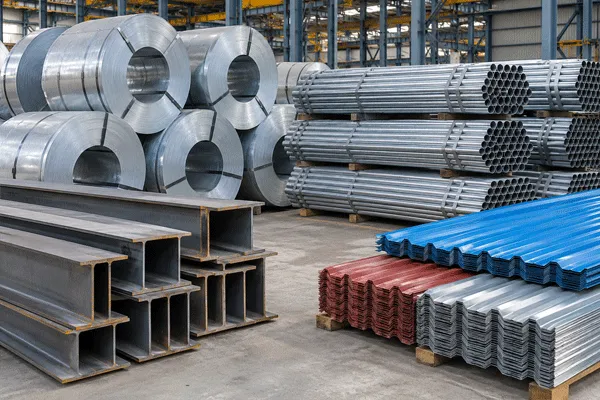
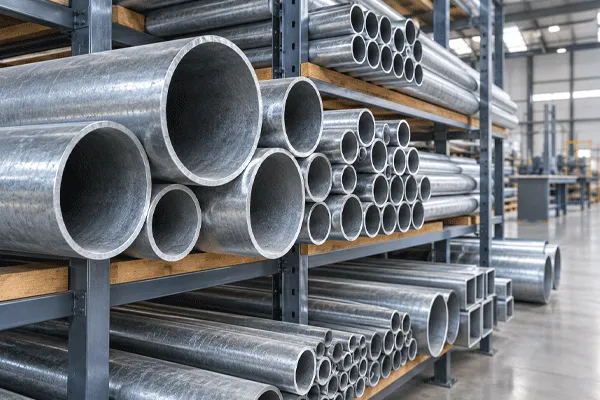
Bare steel can develop rust when moisture and oxygen reach its surface. This may shorten service life, increase maintenance costs, and create quality problems. Hot-dipped galvanized steel coils solve this problem by adding a protective zinc coating to the steel.
Hot-dipped galvanized steel coils are used for roofing sheets, wall cladding, steel framing, automotive components, ducts, appliances, agricultural buildings, pipes, cable trays, storage systems, and general manufacturing. Their zinc coating protects the underlying steel from corrosion while retaining useful strength, formability, weldability, and processing efficiency.
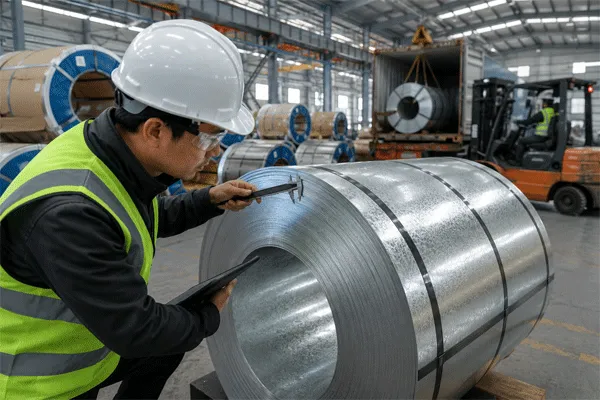
What Are Hot-Dipped Galvanized Steel Coils Used For? Applications and Buying Guide
Article Outline
- What is a hot-dipped galvanized steel coil?
- How does the hot-dip galvanizing process work?
- Why does a zinc coating protect galvanized steel?
- What are the main construction applications?
- Why is galvanized steel coil used for roofing?
- How is it used in automotive and manufacturing industries?
- What agricultural and greenhouse applications use galvanized coil?
- How does galvanized steel compare with other coated materials?
- How should buyers select the correct coating and specification?
- What should importers check before placing an order?
- Frequently asked questions
- Key points to remember
What Is a Hot-Dipped Galvanized Steel Coil?
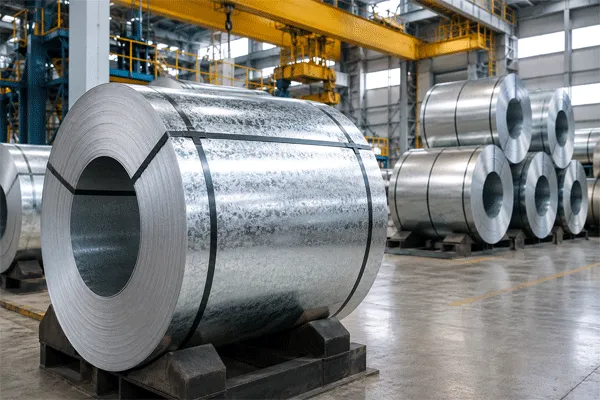
A hot-dipped galvanized steel coil is a continuous steel sheet covered with a protective layer of zinc. Manufacturers normally begin with hot rolled or cold rolled carbon steel. The strip is cleaned, heat-treated, passed through molten zinc, cooled, treated, inspected, and rewound into a finished galvanized steel coil.
The finished material may also be called a galvanized coil, GI coil, galvanized sheet coil, or GI steel coil. Buyers can order it as a full coil, slit coil, flat steel sheet, corrugated roofing sheet, formed profile, or customized component.
Hot-dip galvanized products are available in different steel grades, mechanical properties, surface finishes, thicknesses, widths, and coating weights. ASTM A653/A653M, for example, covers zinc-coated and zinc-iron alloy-coated steel sheet produced by the hot-dip process in coils and cut lengths. It includes commercial, forming, structural, deep-drawing, and high-strength grades.
How Does the Hot-Dip Galvanizing Process Work?
Continuous galvanization involves more than simply painting steel with zinc. The steel strip must first have a clean and controlled surface. Oil, oxides, dirt, and other contamination can interfere with the reaction between steel and zinc.
During production, the strip passes through cleaning and annealing sections before being immersed in a bath of molten zinc. As the steel exits the zinc bath, air knives remove excess metal and control the final coating thickness. The sheet is then cooled, leveled, passivated, oiled when required, and rewound.
A simplified production flow looks like this:
| Production Stage |
Main Purpose |
| Uncoiling |
Feeds the base metal into the line |
| Cleaning |
Removes oil, dirt, and surface contamination |
| Annealing |
Controls strength, ductility, and steel surface condition |
| Zinc bath |
Applies the protective zinc layer |
| Air wiping |
Controls coating weight and uniformity |
| Cooling |
Solidifies and stabilizes the coating |
| Skin passing |
Improves shape and surface finish |
| Passivation or oiling |
Reduces storage staining and protects the surface |
| Inspection |
Checks dimensions, appearance, coating, and properties |
| Recoiling |
Prepares the galvanized steel coil for shipping |
Continuous hot-dip lines generally use molten zinc at a temperature near 450°C. For fabricated steel, the American Galvanizers Association describes a typical bath range of 435–455°C and explains how zinc reacts with iron to create metallurgically bonded layers.
Why Does the Zinc Coating Protect Galvanized Steel?
The zinc coating forms a physical barrier between the steel and the environment. It helps prevent water, oxygen, salts, and other corrosive substances from directly reaching the underlying steel.
Zinc also provides sacrificial protection. When a small edge or scratch exposes the base metal, nearby zinc can corrode first and help protect the exposed area. This is an important difference between galvanized steel and a simple decorative coating.
The protection system therefore works in several ways:
- Barrier protection: The coating separates steel from moisture and air.
- Sacrificial protection: Zinc reacts before the exposed steel.
- Stable corrosion products: Zinc can develop surface compounds that slow further corrosion.
- Edge protection: Nearby zinc can help protect small cut or scratched areas.
The hot-dip galvanizing process also creates strong adhesion of the zinc coating. Rather than sitting loosely on the surface, the zinc develops a metallurgical bond with the steel. This bond improves durability during handling, forming, shipping, and installation.
However, galvanized steel is not indestructible. Its service performance still depends on coating thickness, local climate, chemical exposure, drainage, contact with other materials, and maintenance conditions.
What Are Hot-Dipped Galvanized Steel Coils Used For? Applications and Buying Guide
What Is Galvanized Steel Used for in Construction?
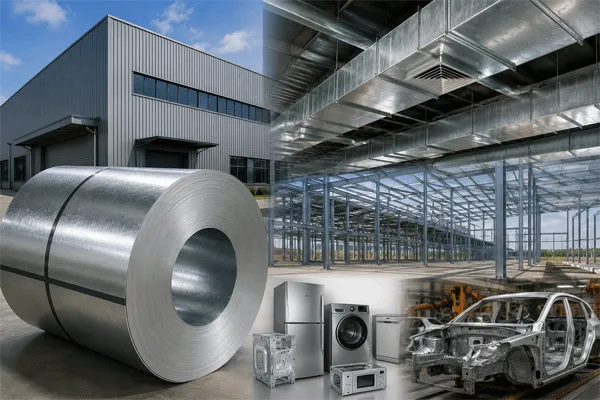
Construction is one of the largest markets for galvanized steel. Contractors and fabricators use the material because it combines strength, corrosion resistance, easy processing, broad availability, and cost-effective production.
Common construction applications include:
- Roof panels and wall cladding
- Purlins and light-gauge framing
- Ceiling channels and drywall profiles
- Steel decks and floor systems
- Cable trays and electrical enclosures
- Rainwater gutters and downpipes
- Fencing and safety barriers
- Doors, shutters, and garage panels
- Ventilation ducts
- Warehouse racks
- Solar mounting components
- Modular and prefabricated buildings
A galvanized steel coil can be slit into narrow strips, cut into sheets, roll-formed into profiles, stamped, bent, punched, welded, or coated with paint. This processing flexibility helps contractors and manufacturers produce repeatable components at scale.
For steel structure fabrication, buyers should select the correct strength grade and coating based on the forming process and final environment. A highly formable galvanized sheet may be suitable for complex profiles, while a structural grade may be required for load-bearing sections.
Why Is Galvanized Steel Coil Used for Roof Applications?
A metal roof faces rain, humidity, wind, dust, temperature changes, and regular exposure to the elements. Unprotected steel may develop rust at scratches, laps, fasteners, cut edges, and areas where water collects.
A hot-dipped galvanized steel sheet provides an economical base for corrugated sheets, trapezoidal panels, tiles, roof decks, and related accessories. The zinc layer improves corrosion protection without making the product difficult to profile.
Roofing sheet manufacturers often purchase full-width galvanized steel coil and process it on roll-forming lines. Important purchasing factors include:
| Roofing Requirement |
Why It Matters |
| Steel thickness |
Affects strength, span, weight, and cost |
| Zinc coating weight |
Influences corrosion resistance |
| Coil width |
Must match the profiling line |
| Yield strength |
Affects shape retention and forming |
| Surface treatment |
Helps reduce storage stains |
| Coil weight |
Must match the decoiler capacity |
| Edge quality |
Supports stable roll forming |
| Flatness |
Reduces waves and profile defects |
For exposed architectural roofs, buyers may select PPGI or PPGL instead of plain galvanized steel. These materials add a paint system over the metallic coating to provide color and additional weather resistance. Plain galvanized coil remains widely used for concealed panels, ducts, structural profiles, temporary buildings, agricultural sheds, and budget-sensitive projects.
Where Is Hot-Dipped Galvanized Steel Used in Automotive Manufacturing?
Hot-dipped galvanized steel is used in the automotive industry for body panels, structural parts, reinforcements, brackets, underbody components, and other parts where corrosion control matters.
Automotive manufacturers need more than a zinc layer. They may also require controlled strength, deep-drawing performance, weldability, paint adhesion, dimensional consistency, and a suitable surface finish. For this reason, automotive galvanized coatings and steel grades are often produced under closely controlled conditions.
Typical applications include:
- Inner and outer body panels
- Door and hood components
- Floor sections
- Chassis brackets
- Structural reinforcements
- Seat components
- Exhaust shields
- Battery enclosures
- Small stamped parts
A smooth hot-dip galvanized surface may support forming and painting, while galvannealed material uses a zinc-iron alloy coating that can provide different welding and paint characteristics. The correct choice depends on the production process and end-use requirements.
What Manufacturing Products Use Galvanized Steel Coil?
Manufacturers use galvanized steel coil when they need a strong, formable, and corrosion-resistant input material. The coil format supports automated cutting, slitting, punching, stamping, and roll forming.
Common manufactured products include:
- Household appliance housings
- Air-conditioning cabinets
- Refrigeration components
- Electrical control cabinets
- Lighting fixtures
- Storage shelves and cabinets
- Industrial equipment covers
- Cable management systems
- Metal furniture parts
- HVAC ducts
- Drums and containers
- Solar equipment structures
- Machine guards
- Workshop panels
A steel sheet coated with zinc can reduce the need for immediate painting in indoor or mild outdoor applications. It can also serve as the substrate for later coil coating, powder coating, or liquid painting.
Good formability matters when the material undergoes deep drawing, tight bending, stamping, or complex profiling. Buyers should not select a galvanized steel coil based only on price and coating weight. Steel grade, elongation, hardness, and bend performance are also important.
What Are Hot-Dipped Galvanized Steel Coils Used For? Applications and Buying Guide
How Is Galvanized Coil Used in Agriculture and Greenhouse Projects?
Agricultural equipment and buildings often face moisture, fertilizers, soil, animal waste, and outdoor weather. These conditions can cause fast corrosion in unprotected carbon steel.
Galvanized steel is widely used in:
- Greenhouse frames
- Agricultural storage buildings
- Livestock shelters
- Poultry houses
- Irrigation components
- Grain storage systems
- Farm fencing
- Feeding equipment
- Equipment covers
- Ventilation systems
- Light structural profiles
Greenhouse suppliers often use galvanized pipes, square tubes, C channels, clamps, and formed profiles. For these applications, buyers should consider local humidity, salinity, condensation, and chemical exposure.
A thicker zinc coating may provide better durability in demanding environments, but good design is also essential. Water traps, poor ventilation, direct contact with aggressive chemicals, and damaged cut edges can still shorten service life.
What Infrastructure and Industrial Applications Use Galvanized Steel?
Galvanized steel supports many infrastructure and industrial projects because it is suitable for outdoor applications and can be processed into many shapes.
Typical uses include:
- Highway guardrails
- Road signs and support structures
- Utility cabinets
- Transmission and communication components
- Solar mounting systems
- Industrial walkways
- Cable ladders and trays
- Pipe supports
- Safety barriers
- Drainage components
- Warehouse structures
- Factory partitions
- Temporary site buildings
For severe industrial, coastal, or chemical environments, the buyer should evaluate whether ordinary galvanized coatings provide enough protection. In some cases, a heavier zinc coating, paint-over-galvanizing system, galvalume coating, stainless steel, or another material may provide better long-term value.
The cheapest material per ton is not always the lowest-cost solution. Buyers should consider service life, installation conditions, maintenance access, replacement cost, and project risk.
Hot-Dip Galvanized Steel vs. Electro-Galvanized Steel: What Is the Difference?
Both materials are coated with zinc, but their production methods and common applications differ.
Hot-dip galvanized steel passes through molten zinc. Electro-galvanized steel receives a thin layer of zinc through electro-galvanizing, an electrical deposition process.
| Feature |
Hot-Dip Galvanized Steel |
Electro-Galvanized Steel |
| Application method |
Molten zinc bath |
Electrochemical deposition |
| Typical coating |
Generally heavier |
Generally thinner and controlled |
| Corrosion performance |
Strong for many outdoor and industrial uses |
Often selected for indoor or painted products |
| Surface appearance |
May show spangle or controlled smooth finish |
Usually smooth and uniform |
| Common uses |
Roofing, structures, ducts, agriculture |
Appliances, electronics, automotive parts |
| Cost position |
Cost-effective for broad use |
Chosen where finish and precision matter |
This does not mean one product is always better. Electro-galvanized steel may offer a very smooth surface and precise coating control. Hot-dip material generally provides more zinc and stronger protection for general construction and outdoor exposure.
The GalvInfo Center explains that continuous hot-dip galvanizing passes sheet through molten zinc, while electro-galvanizing deposits zinc onto the sheet through an electrochemical process.
How Does Galvanized Steel Compare with Galvalume and PPGI?
Galvanized, galvalume, and prepainted steel are related products, but they are not identical.
- Galvanized steel: Steel coated primarily with zinc.
- Galvalume steel: Steel coated with an aluminum-zinc alloy.
- PPGI: Prepainted galvanized steel.
- PPGL: Prepainted galvalume steel.
Galvanized steel provides strong general-purpose corrosion resistance, processing flexibility, and broad market availability. Galvalume may perform well in many roofing and heat-exposed applications. PPGI and PPGL add color, appearance, and an extra paint barrier.
The best material depends on:
- Indoor or outdoor use
- Coastal, industrial, rural, or urban environment
- Required appearance
- Expected service life
- Forming and welding operations
- Budget
- Local standards
- Maintenance plan
For example, a concealed ventilation duct may use galvanized sheet, while a visible warehouse roof may use prepainted galvanized or galvalume material in a selected RAL color.
How Should Buyers Select the Right Galvanized Steel Coil?
A correct purchase specification prevents many quality disputes. Saying “I need galvanized steel” is usually not enough.
Buyers should confirm the following details:
1. Base Steel Grade
The base metal controls strength, elongation, hardness, and formability. Commercial steel works for many general applications, while structural or deep-drawing grades serve more demanding processes.
2. Thickness and Width
State the required nominal thickness, tolerance, and width. Also clarify whether thickness includes the coating or refers only to the steel substrate under the relevant standard.
3. Zinc Coating Weight
Coating designations may follow ASTM, EN, JIS, or other standards. Examples commonly seen in international trade include G60, G90, Z180, and Z275.
A heavier coating generally provides more available zinc for corrosion protection, but it also affects cost, forming behavior, welding, and the final surface.
4. Surface Finish
Available options may include regular spangle, minimized spangle, zero spangle, smooth skin-passed finish, or other mill-specific surfaces.
5. Surface Treatment
Common choices include passivation, chromate-free passivation, oiling, anti-fingerprint treatment, or combinations of these. The correct treatment depends on storage, transport, painting, and fabrication needs.
6. Coil Details
Confirm:
- Coil inner diameter
- Maximum outer diameter
- Coil weight
- Edge type
- Slitting tolerance
- Packaging method
- Loading limits
A roofing manufacturer with a five-ton decoiler should not receive a ten-ton coil. Details matter.
What Should Steel Importers Check Before Ordering?
International buyers should evaluate the supplier’s ability to control production, inspection, documentation, packaging, and delivery—not only the quoted price.
A professional request for quotation should include:
| Required Information |
Example |
| Product |
Hot-dip galvanized steel coil |
| Standard |
ASTM A653, EN 10346, JIS G3302, or requested equivalent |
| Grade |
Commercial, forming, structural, or specified grade |
| Thickness |
0.50 mm |
| Width |
1,250 mm |
| Coating |
Z275 or G90 |
| Surface |
Zero spangle, skin passed |
| Treatment |
Chromate-free passivation and oiled |
| Coil weight |
3–5 metric tons |
| Inner diameter |
508 mm |
| Quantity |
200 metric tons |
| Inspection |
Mill inspection or third-party inspection |
| Documents |
MTC, packing list, invoice, certificate of origin |
| Packaging |
Seaworthy export packaging |
When comparing offers, check whether every supplier has quoted the same standard, coating, tolerance, surface treatment, coil weight, and packaging. A low quote may hide a lighter zinc layer, wider thickness tolerance, lower grade, or weaker packaging.
As a professional steel manufacturer and integrated steel supplier in China, we support customized thickness, width, coating weight, surface treatment, slitting, cutting, profiling, packaging, third-party inspection, and MTC traceability. We also supply PPGI, PPGL, galvalume, hot rolled and cold rolled steel, steel plate, pipes, hollow sections, beams, stainless steel, aluminum, and copper materials for international projects.
Case Study: Selecting Galvanized Steel for a Warehouse Roof
Consider a roofing sheet manufacturer producing panels for inland warehouse projects. The buyer initially requests the lowest-priced galvanized material available.
After reviewing the actual application, several risks become clear:
- The panels will remain outdoors for years.
- The coils may stay in a humid port warehouse before production.
- The roll-forming machine requires a controlled width tolerance.
- The customer needs consistent profile shape.
- The decoiler accepts coils below five tons.
- Finished sheets must arrive without water stains.
A better specification may include a suitable structural or forming grade, defined coating weight, stable thickness tolerance, passivation, light oiling, controlled coil weight, reinforced seaworthy packaging, moisture protection, and pre-shipment inspection.
The final unit price may be slightly higher, but the buyer reduces processing interruptions, profile defects, storage staining, customer complaints, and replacement risk. A well-matched galvanized steel coil creates value far beyond its price per ton.
Frequently Asked Questions
Can hot-dipped galvanized steel coils be used outdoors?
Yes. They are commonly used outdoors for roofing, cladding, fencing, agricultural structures, solar supports, and other products. Performance depends on the zinc coating weight, environment, design, drainage, and exposure conditions.
Does galvanized steel rust?
Galvanized steel can eventually rust after the zinc has been consumed or when severe damage exposes a large area of underlying steel. However, the protective zinc coating greatly slows rust and corrosion compared with bare carbon steel.
Can galvanized steel coil be painted?
Yes. Galvanized steel can be painted when the surface is properly cleaned and prepared and when compatible primers and paint systems are used. Buyers planning to paint the material should confirm the surface treatment with the supplier.
Can galvanized steel be welded?
Yes, but welding removes or damages zinc near the weld zone and can release zinc-containing fumes. Proper ventilation, safe welding procedures, and repair of damaged coating areas are important.
What is prime hot dipped galvanized steel?
Prime hot dipped galvanized steel meets the agreed grade, dimension, coating, surface, and quality requirements for normal commercial use. It is different from secondary, excess, defective, or downgraded material.
Are hot-dip galvanized coils suitable for deep drawing?
Some are. Buyers should select a forming or deep-drawing grade with the required elongation, surface quality, and mechanical properties. A general structural galvanized coil may not perform well in a complex stamped part.
Why Work With an Integrated Steel Supplier?
Purchasing several metal products from unrelated vendors may create inconsistent documentation, quality systems, delivery schedules, and logistics arrangements.
An integrated supplier can coordinate:
- Galvanized and galvalume steel coils
- PPGI and PPGL coils
- Hot rolled and cold rolled coils
- Steel plates and sheets
- Seamless and welded pipes
- Square and rectangular hollow sections
- H beams, C beams, angles, and rebar
- Stainless steel sheets, coils, and pipes
- Aluminum sheets, coils, and pipes
- Copper rods, coils, plates, and pipes
We support OEM and ODM orders for distributors, importers, contractors, roofing manufacturers, steel structure fabricators, machinery factories, greenhouse suppliers, and international engineering companies.
From customized dimensions and RAL colors to slitting, cutting, profiling, MTC documents, inspection, export packing, and international logistics, our goal is simple: help buyers receive the correct material, in the correct condition, at the agreed time.
Key Points to Remember
- Hot-dipped galvanized steel coils are used in construction, roofing, automotive production, agriculture, infrastructure, appliances, HVAC systems, storage equipment, and general manufacturing.
- Zinc provides both barrier and sacrificial corrosion protection.
- The hot-dip process creates strong adhesion and a metallurgical bond between the steel and the coating.
- Coating weight, grade, thickness, surface finish, and treatment must match the final application.
- A heavier zinc coating may improve durability, but it is not the only purchasing factor.
- Buyers should confirm standards, tolerances, coil weight, packaging, inspection, and documentation before ordering.
- ASTM A653/A653M is a common standard for hot-dip zinc-coated steel sheet in coils and cut lengths.
- Galvanized steel, galvalume, PPGI, PPGL, and electro-galvanized steel serve different needs.
- The lowest price per ton does not always produce the lowest total project cost.
- A professional supplier should support MTC traceability, third-party inspection, seaworthy packaging, customization, and export logistics.
Need a quotation for hot-dipped galvanized steel coils or other metal materials? Send us your required standard, grade, thickness, width, zinc coating weight, surface treatment, coil weight, order quantity, destination port, and intended application. We will help you prepare a practical, project-specific steel supply proposal.









 07-23 2026