






H Beam 200 Dimensions: HEA 200 vs HEB 200 vs HEM 200 Size & Weight Guide
Compare H beam 200 dimensions and weights. Explore structural steel sizes for HEA 200, HEB 200, and HEM 200 in this complete beam guide.
11-06 2026

 11-07 2026
Automotive manufacturers need more than the right steel grade. Poor coil handling, inefficient blank layouts, unstable feeding, and uncontrolled stamping conditions can increase scrap and production costs. A well-planned processing route helps manufacturers get more usable parts from every coil of steel.
Automotive cold rolled steel can deliver better production efficiency when manufacturers control material preparation, coil slitting, blank layout, decoiling, leveling, stamping, and quality inspection as one connected process. By reducing unnecessary trimming, protecting surface quality, and maintaining stable material properties, factories can improve material utilization, reduce downtime, and achieve more consistent automotive components.
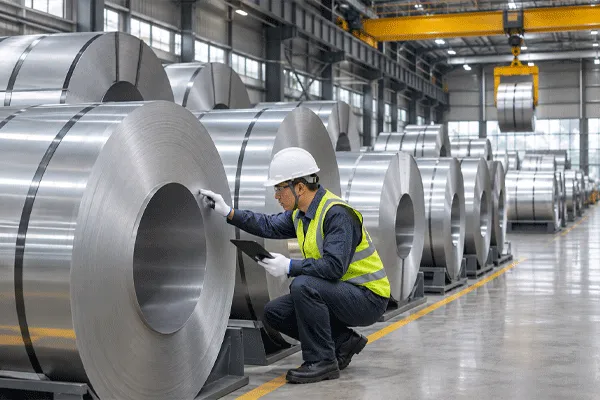
Automotive Cold Rolled Steel Processing: How to Improve Stamping Efficiency and Reduce Material Waste
In automotive manufacturing, steel is not simply purchased and sent directly into production. It passes through several stages before becoming a finished vehicle component. These stages may include coil storage, slitting, blanking, stamping, bending, welding, surface treatment, and final assembly.
Every stage can affect material utilization. A small amount of unnecessary trimming across thousands of stamped parts can create significant material waste. Poor handling can damage the surface, while unstable feeding can interrupt an automated production line. These problems increase operating costs even when the original steel meets the required specification.
For this reason, automotive manufacturers should evaluate cold rolled steel based on more than its purchase price. Important production factors include:
The goal is simple: turn more purchased steel into qualified finished components without creating unnecessary production losses.
A typical automotive cold rolled steel processing route starts with steel coil preparation and ends with finished components ready for assembly. The exact sequence depends on the component design, production equipment, and required surface treatment.
A common manufacturing workflow includes:
Each operation has a direct effect on the next one. For example, poor leveling can cause unstable feeding, while incorrect blank dimensions can affect the final component geometry.
This is why manufacturers should manage the entire processing route rather than treating every operation as an independent task.
Proper material preparation begins before the coil reaches the stamping machine. The receiving team should verify the product identification, steel grade, dimensions, delivery condition, and inspection documents against the approved purchase order.
One important point is the delivery condition. Cold rolled steel can be supplied in different temper and annealing conditions. Full-hard material and soft annealed material do not behave in the same way during forming. A coil suitable for further processing may not be suitable for a demanding stamping operation without additional treatment.
Before production, manufacturers should confirm:
| Inspection item | What to check | Why it matters |
|---|---|---|
| Material identification | Grade and batch number | Prevents material mix-ups |
| Thickness | Actual measured thickness | Supports stable press settings |
| Width | Strip or coil width | Affects blank layout |
| Surface | Scratches, stains, rust and dents | Protects visible components |
| Flatness | Coil shape and strip condition | Supports stable feeding |
| Temper | Full hard or annealed condition | Determines forming behavior |
| Packaging | Moisture and edge protection | Reduces transport damage |
Storage is equally important. Keep coils in a dry, clean area and avoid direct contact with water. Protect exposed edges from impact and maintain clear identification throughout the storage period.
A properly managed receiving process helps prevent damaged or incorrect material from entering serial production.
Yes. Coil width planning and blank layout are two important ways to improve material utilization in automotive production.
Slitting divides a wider steel coil into narrower strips. Manufacturers can then feed these strips into roll-forming, stamping, or other processing equipment. The correct slit width should match the production equipment and the dimensions of the finished parts.
Blank layout is another important factor. It determines how individual component shapes are arranged on the steel strip or sheet before cutting.
For example, a manufacturer producing automotive brackets may be able to arrange several blanks in a more efficient pattern. A better layout can reduce unused spaces between components and lower the amount of edge trimming.
Common material-saving measures include:
However, material utilization should never come at the expense of component quality. Blank spacing, cutting clearance, edge condition, and forming direction must remain within the approved engineering requirements.
A good blank layout balances material savings with stable production and consistent part quality.
Decoiling and leveling prepare the steel strip for downstream production. If the strip enters the stamping line with excessive curvature, waviness, or unstable tension, it may cause feeding problems and affect blank positioning.
During decoiling, operators should check the coil’s loading position, unwinding direction, strip alignment, and tension settings. Incorrect loading can damage the edges or create feeding interruptions.
Leveling helps reduce the shape memory created during coiling. This is especially important when manufacturers need flat blanks for precise stamping or automated handling.
Important process controls include:
The settings should match the material thickness, width, mechanical properties, and equipment design. Excessive leveling pressure can also affect the material, so operators should follow the approved process parameters.
For automotive manufacturers, stable strip feeding is not a minor detail. It supports repeatable positioning, reliable blank dimensions, and smoother production.
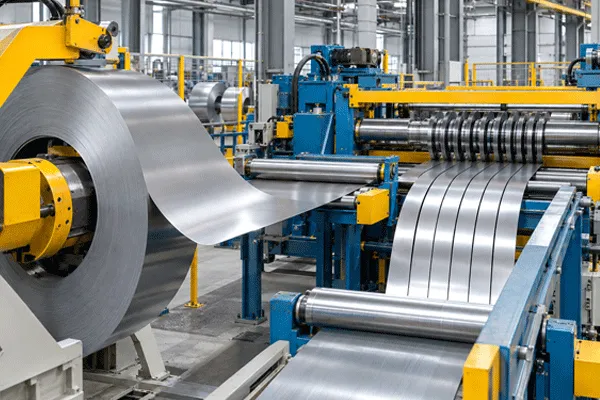
Automotive Cold Rolled Steel Processing: How to Improve Stamping Efficiency and Reduce Material Waste
Stamping is one of the most important operations in automotive sheet metal production. It uses a press and a specially designed die to cut, bend, draw, or form steel into the required shape.
The final result depends on the interaction between material properties, die design, lubrication, press settings, and blank geometry.
A suitable steel grade provides the required formability, but good material alone cannot correct an unsuitable tooling design. Manufacturers should therefore optimize the entire stamping process.
Key factors include:
Die design: Punch and die clearances, corner radii, and forming surfaces should match the material and component design.
Lubrication: Suitable lubrication reduces friction between the steel and the tooling. It can help prevent surface damage, galling, and excessive tool wear.
Press settings: Press speed, holding force, and forming sequence should remain within the validated operating range.
Material direction: Rolling direction can influence the forming response of sheet steel. Component orientation should be considered during blank layout and die development.
Tool maintenance: Worn or damaged dies can create burrs, dimensional variation, surface marks, and inconsistent parts.
Manufacturers should monitor common forming problems such as:
| Problem | Possible process cause | Recommended action |
|---|---|---|
| Cracking | Excessive deformation or unsuitable material condition | Review forming limits and material selection |
| Wrinkling | Unbalanced material flow or holding force | Review die design and blank-holder settings |
| Scratches | Poor tooling surface or contamination | Inspect tooling and cleaning procedures |
| Springback | Elastic recovery after forming | Review material properties and compensation |
| Burrs | Incorrect cutting clearance or worn tools | Check punch and die condition |
The purpose is not to force the steel through the die. It is to create a stable process in which material properties and tooling work together.
After stamping, some automotive components require welding or other joining methods before final assembly. These operations must maintain the dimensional accuracy and structural integrity of the finished part.
Resistance spot welding is widely used in vehicle body manufacturing. Its quality depends on several factors, including steel thickness, material condition, surface cleanliness, electrode condition, and welding parameters.
Before production, manufacturers should validate the welding procedure against the actual material and component design. A change in material grade or surface condition may require a review of the approved welding settings.
Surface protection is another important consideration. Bare carbon steel can develop rust when exposed to moisture, so manufacturers need a suitable protection plan for storage, processing, and the final vehicle environment.
Depending on the component and engineering requirements, possible surface protection routes include:
Not every automotive component should use the same coating system. The choice depends on the required corrosion performance, paint process, joining method, and vehicle manufacturer’s approved material specification.
For example, a component inside a protected cabin may have different exposure requirements from a component located underneath the vehicle.
The material and surface treatment should therefore be selected together, not independently.
Scrap reduction requires more than identifying defective parts at the end of the line. Manufacturers should collect information at each processing stage and identify where material losses occur.
A useful starting point is to calculate material utilization.
Material Utilization Rate = Net Weight of Qualified Parts ÷ Total Input Steel Weight × 100%
Consider a simple illustrative example:
A factory processes 1,000 kg of cold rolled steel and produces 930 kg of qualified finished components.
If improved blank layouts and reduced trimming increase qualified output to 950 kg from the same input weight, utilization becomes 95%.
That represents 20 kg more qualified components per 1,000 kg of input steel.
This is a hypothetical calculation for explaining the method, not a reported Luyuan Steel customer result.
Manufacturers can track several indicators:
| KPI | What it measures |
|---|---|
| Material utilization rate | How much input steel becomes qualified parts |
| Scrap rate | The proportion of material lost during production |
| First-pass yield | Parts accepted without rework |
| Downtime | Production time lost to interruptions |
| Rework rate | Parts requiring additional processing |
| Coil changeover time | Time needed to replace and prepare a coil |
These indicators help identify whether losses come from blank layout, tooling, feeding, material defects, or equipment downtime.
Over time, production teams can use this information to improve process settings and make better purchasing decisions.
A reliable steel supply partner should understand the customer’s production process, not just the requested material name.
For automotive manufacturers, the conversation should cover the finished component, processing route, annual consumption, and delivery requirements.
When requesting a quotation, prepare the following information:
At Luyuan Steel, we provide cold rolled steel coils, sheets, and related steel products for industrial manufacturing. Our published product range includes different dimensions, grades, surface conditions, and processing options. Availability should be confirmed against the specific order requirements.
We also support customized processing, quality inspection, material traceability, third-party inspection, and international shipment preparation.
For buyers with recurring automotive production demand, supply consistency is especially important. A stable specification and clear change-control process help reduce the risk of unexpected material variation between orders.
The best supplier relationship is not based on one low-price shipment. It is built around consistent quality, reliable communication, and long-term production support.
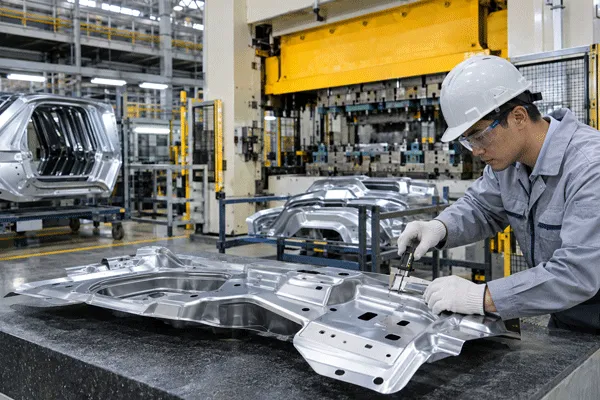
Automotive Cold Rolled Steel Processing: How to Improve Stamping Efficiency and Reduce Material Waste
Once the processing route has been validated, manufacturers should establish a standard procedure for repeat orders and serial production.
A practical checklist can help purchasing, warehouse, quality, and production teams work from the same material requirements.
Before ordering
Before production
During production
Before shipment or final assembly
A repeatable checklist reduces dependence on individual operator experience and makes it easier to identify the cause of production problems.
For global automotive supply chains, this approach also supports communication between material buyers, steel processors, component manufacturers, and engineering teams.
Yes. Cold rolled steel is widely used for automotive stamped components because it offers controlled thickness, good surface quality, and suitable forming properties. The exact grade and delivery condition must match the component design and forming requirements.
They can improve blank layout, optimize coil width, control slitting losses, maintain stable feeding, and monitor stamping defects. Regular scrap analysis also helps identify repeated problems and improve material utilization.
Leveling helps reduce coil curvature and improve strip flatness. This supports stable feeding and accurate blank positioning, which are important for repeatable stamping operations.
Yes. Bare carbon cold rolled steel does not provide long-term corrosion protection by itself. Manufacturers should use suitable temporary protection, storage controls, and final coating systems according to the component’s environment.
Depending on grade availability and production capability, buyers can request customized thickness, width, coil dimensions, surface condition, and processing services. The exact combination should be confirmed before order approval.
Buyers should request an English Mill Test Certificate (MTC), coil identification and traceability records, dimensional inspection results, and any additional mechanical or third-party inspection reports required by the approved purchase specification.
Looking for a reliable cold rolled steel supply partner for your automotive or industrial manufacturing requirements? Contact Luyuan Steel with your material specifications, processing requirements, and estimated order volume to discuss a suitable supply solution.
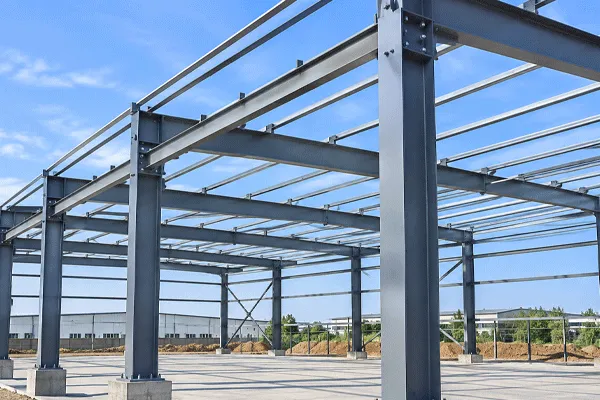
Compare H beam 200 dimensions and weights. Explore structural steel sizes for HEA 200, HEB 200, and HEM 200 in this complete beam guide.
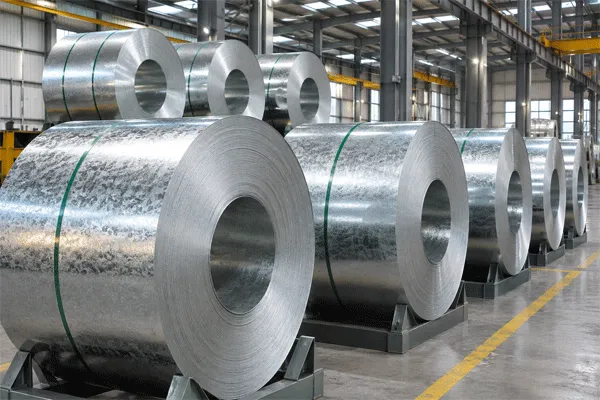
Partner with trusted galvanized steel coil manufacturers and suppliers. Source high-quality steel coils and sheets for slitting, roofing, and OEM production.
We will reply you within 24 hours. If for urgent case, please add WhatsApp/WeChat: +86 15066120072,. Or call +86 15066120072 directly.
*We respect your confidentiality and all information are protected.
We will only use your information to respond to your inquiry and will never send unsolicited emails or promotional messages.