Is Cold Rolled Steel Stronger Than Hot Rolled Steel? Hot Rolled vs Cold Rolled Steel Guide
Choosing the wrong steel can raise cost, slow fabrication, or cause poor surface results. Buyers often compare hot roll and cold roll only by strength, but the real answer depends on forming, tolerance, finish, and project use.
Cold rolled steel is often stronger and harder than hot rolled steel because it goes through extra cold reduction and processing after hot rolling. Hot rolled steel is usually more cost-effective, easier to form in heavy sections, and better for structural or large-scale fabrication where tight surface finish and precision are less critical.
Is Cold Rolled Steel Stronger Than Hot Rolled Steel? Hot Rolled vs Cold Rolled Steel Guide
Article Outline
- Is cold rolled steel stronger than hot rolled steel?
- What is hot roll steel?
- What is cold roll steel?
- What is the main difference between hot rolled and cold rolled steel?
- Why does cold rolling make steel stronger?
- When should you use hot rolled steel?
- When should you use cold rolled steel?
- Hot rolled vs cold rolled steel: which is better for your project?
- How do surface finish, tolerance, and cost affect steel selection?
- How should B2B buyers choose a steel supplier?
- FAQs about hot rolled and cold rolled steel
Is Cold Rolled Steel Stronger Than Hot Rolled Steel?
Yes, cold rolled steel is often stronger than hot rolled steel when both start from a similar base grade. The cold rolling process changes the shape of the steel at or near room temperature. This makes the steel harder, smoother, and more precise. It can also increase yield strength and tensile strength.
But stronger does not always mean better. This is where many buyers make a mistake. A stronger steel may also be less ductile, meaning it may not bend or form as easily. If your project needs heavy structural parts, large beams, base plates, or general fabrication, hot rolled steel may be the better choice.
For international buyers, the better question is: Which steel type fits the real job? As a professional steel manufacturer and integrated steel supplier in China, we usually help customers compare strength, surface finish, tolerance, thickness, processing method, packaging, MTC documents, and final application before recommending hot roll or cold roll material.
What Is Hot Roll Steel?
Hot roll steel is steel that has been rolled at high temperature. At this stage, the steel is easier to shape because it is hot and more workable. After rolling, it cools down naturally. During cooling, the steel shrinks slightly, so its final dimensions are usually less precise than cold roll products.
World Steel describes hot rolled coil as a flat steel product produced by passing heated steel through rolling mills, while cold rolled coil is made later by further thickness reduction of pickled hot rolled coil at low temperature.
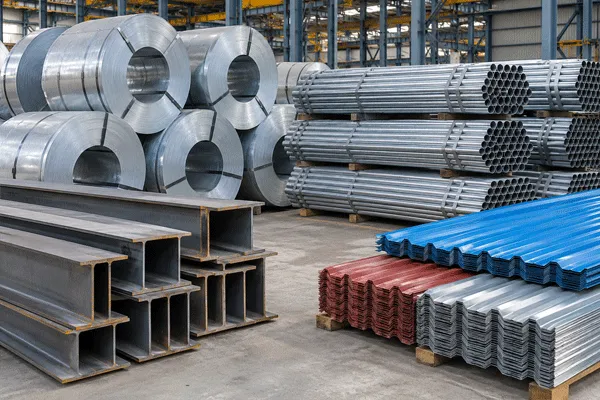
Hot rolled steel is steel used for many industrial and construction projects because it is practical, widely available, and often cheaper than cold rolled steel. It commonly appears in:
- Steel plates
- Hot rolled steel coils and sheets
- H beams and C beams
- Angle steel
- Steel channels
- Structural parts
- Machinery frames
- Warehouse buildings
- Infrastructure projects
A simple way to remember it: hot roll steel is ideal when strength, thickness, and cost matter more than a perfect surface.
What Is Cold Roll Steel?
Cold roll steel starts as hot rolled material, then receives extra processing. It is usually pickled to remove scale, then cold reduced to improve thickness accuracy, surface quality, and mechanical performance. ArcelorMittal explains that cold-rolled sheet steel is produced from hot-rolled sheet with extra steps such as pickling, cold reduction, annealing, and temper rolling to provide specific mechanical properties, surface finish, gauge tolerance, and strip shape.
This is why cold rolled steel has a smoother surface and better dimensional control. It is often used when the final product must look clean or fit tightly.
Common uses include:
- Automotive parts
- Home appliance panels
- Metal furniture
- Electrical cabinets
- Precision components
- Shelving
- Light industrial parts
- Painted or coated steel products
Cold-rolled steel is also useful when buyers need stable flatness, clean edges, and a surface suitable for painting, coating, bending, or stamping.
What Is the Main Difference Between Hot Rolled and Cold Rolled Steel?
The main difference between hot rolled steel and cold rolled steel is the processing temperature and the amount of extra finishing. Hot roll steel is shaped while hot. Cold roll steel is processed further after cooling.
The differences between hot and cold products affect strength, finish, tolerance, cost, and final use.
| Comparison Item |
Hot Rolled Steel |
Cold Rolled Steel |
| Processing |
Rolled at high temperature |
Further processed at room temperature |
| Surface |
Rougher, may have mill scale |
Smoother and cleaner |
| Strength |
Strong, but often lower than cold rolled from same base grade |
Often stronger and harder |
| Tolerance |
Less precise |
More precise |
| Cost |
Usually lower |
Usually higher |
| Formability |
Good for heavy forming and structural use |
Good for precision bending and light forming |
| Best use |
Construction, frames, plates, beams |
Appliances, cabinets, panels, precision parts |
In short, hot rolled and cold rolled products are not enemies. They solve different problems. One is not always “better.” One is better for your specific project.
Why Does Cold Rolling Make Steel Stronger?
Cold rolling makes steel stronger because the material is squeezed and shaped below its recrystallization temperature. This creates work hardening. The structure inside the steel changes, and the material becomes harder and stronger.
This is why cold rolled steel is essentially hot rolled steel that has undergone extra processing. ArcelorMittal Dofasco states that cold-rolled steel is made from hot-rolled steel that is pickled and cold reduced to further reduce thickness while imparting specific mechanical properties, surface finish, gauge tolerance, and strip shape.
But there is a trade-off. Cold rolling can improve strength, but it may reduce ductility if not followed by the right heat treatment. AISI describes annealing as a thermal process used to make previously cold-rolled steel coil more suitable for forming and bending.
So yes, steel is stronger after cold rolling in many cases. But the final performance depends on grade, reduction rate, annealing, temper rolling, and specification.
When Should You Use Hot Rolled Steel?
You should use hot rolled steel when you need strength, thickness, and cost control more than a perfect surface. This is common in construction, infrastructure, heavy machinery, and steel structure fabrication.
Many buyers use hot rolled steel for:
- Steel plates
- Structural beams
- H beams and C beams
- Angle steel
- Base plates
- Machinery frames
- Bridges and infrastructure parts
- Welded structures
- Agricultural buildings
- Warehouse and factory buildings
Hot rolled steel tends to be easier to source in thicker sizes. It is often used in applications where later cutting, welding, drilling, galvanizing, or painting will be done.
If you need a strong frame for a building, a heavy bracket, or a support structure, rolled steel is often used because it gives a good balance of strength, price, and availability.
Is Cold Rolled Steel Stronger Than Hot Rolled Steel? Hot Rolled vs Cold Rolled Steel Guide
When Should You Use Cold Rolled Steel?
You should use cold rolled steel when the project needs a smoother surface, tighter thickness tolerance, better flatness, or cleaner appearance. It is ideal for visible parts and precision manufacturing.
Buyers often use cold rolled steel for:
- Metal cabinets
- Appliance panels
- Automotive parts
- Shelving
- Furniture
- Enclosures
- Light brackets
- Electrical boxes
- Precision stamped parts
- Products that need painting or coating
Cold rolled steel is used where size accuracy matters. If a part must fit into an assembly without much adjustment, cold roll material may reduce fabrication problems.
For example, a machinery factory may choose hot roll plate for the machine base but cold roll sheet for the outer cover. Same project. Different steel.
Hot Rolled vs Cold Rolled Steel: Which Is Better?
The answer to hot rolled vs cold rolled steel depends on the project. If you need lower cost, thicker sections, and general structural performance, choose hot roll. If you need better finish, closer tolerance, and higher surface quality, choose cold roll.
Here is a simple buyer guide:
| Project Requirement |
Better Choice |
| Lower material cost |
Hot rolled steel |
| Smooth surface |
Cold rolled steel |
| Tight tolerance |
Cold rolled steel |
| Heavy structure |
Hot rolled steel |
| Visible product surface |
Cold rolled steel |
| Thick plates and beams |
Hot rolled steel |
| Precision stamping |
Cold rolled steel |
| General welding and fabrication |
Hot rolled steel |
| Cabinet or appliance panel |
Cold rolled steel |
The term rolled vs cold rolled steel can be misleading because both are rolled. The correct comparison is hot rolled vs cold rolled. One is made hot. The other is processed further after cooling.
How Do Surface Finish, Tolerance, and Cost Affect Steel Selection?
Surface finish is one of the biggest reasons buyers choose cold roll. Steel has a rougher surface after hot rolling because scale can form during high-temperature processing. Cold rolling produces a cleaner and smoother surface, making it better for products where appearance matters.
Tolerance is another factor. Cold roll steel offers tighter control over thickness and shape. This helps when parts need to be stamped, bent, assembled, or painted with a consistent finish.
Cost also matters. Hot roll material is usually more economical because it needs fewer processing steps. Cold roll steel offers superior surface and tolerance, but those benefits come with extra cost.
| Buyer Priority |
Recommended Direction |
| Lowest cost per ton |
Hot roll |
| Best surface finish |
Cold roll |
| Tight thickness control |
Cold roll |
| Large structural parts |
Hot roll |
| Painted visible panels |
Cold roll |
| Heavy welded components |
Hot roll |
| Precision metal products |
Cold roll |
The best steel is not the most expensive one. The best steel is the one that fits the job without waste.
What About Cold Drawn Steel?
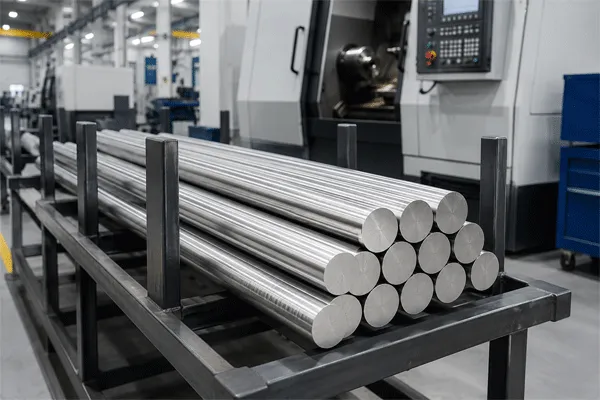
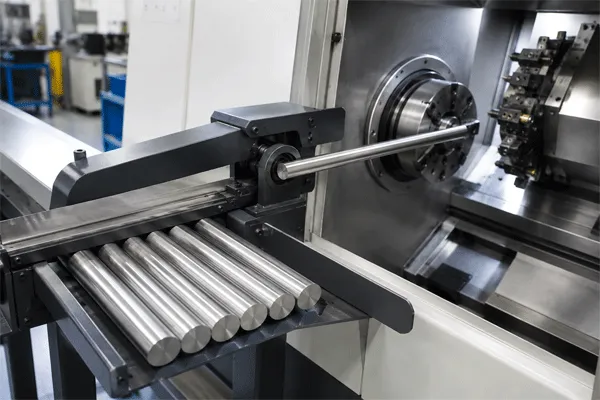
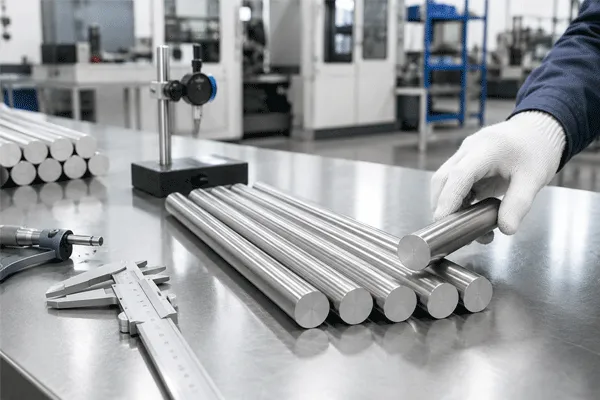
Cold drawn steel is another cold-processed product, but it is not the same as cold roll sheet or coil. Cold drawing usually pulls steel bars, rods, or tubes through a die to improve size accuracy, surface finish, and mechanical properties.
This matters because some buyers say “cold roll” when they actually need cold drawn bars or precision tubes. A shaft, rod, or seamless pipe may need a different process than a flat coil or sheet.
As a supplier, we always confirm the product form:
- Coil
- Sheet
- Plate
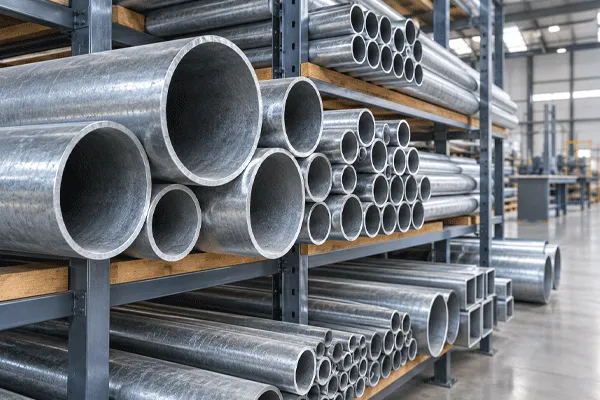
- Pipe
- Tube
- Bar
- Rod
- Beam
- Profile
A clear specification avoids mistakes. “Cold roll” is not enough. Tell the supplier the steel material, grade, size, tolerance, surface, quantity, and application.
Hot Rolled and Cold Rolled Steel in Real B2B Projects
For global steel buyers, the choice is often not only technical. It is also about delivery, inspection, packaging, and total project risk. A contractor may need hot roll beams, cold roll sheets, galvanized coils, and steel pipes in the same order.
As a professional steel manufacturer and integrated steel supplier in China, we support buyers with PPGI steel coils, PPGL steel coils, galvanized steel coils, galvalume steel coils, hot rolled steel coils and sheets, cold rolled steel coils and sheets, steel plates, steel pipes, square and rectangular hollow sections, H beams, C beams, stainless steel sheets, aluminum coils, and copper products.
Typical B2B matching looks like this:
| Buyer Type |
Common Steel Need |
Suggested Product Direction |
| Steel distributor |
Mixed coils and sheets |
Hot roll, cold roll, galvanized, PPGI |
| Construction contractor |
Structural strength |
Hot rolled steel, beams, plates |
| Roofing sheet manufacturer |
Forming and coating |
Galvanized, galvalume, PPGI, PPGL |
| Machinery factory |
Frames and covers |
Hot roll plate + cold roll sheet |
| Steel structure fabricator |
Beams, plates, hollow sections |
Hot roll and welded pipe |
| Appliance manufacturer |
Smooth panels |
Cold rolled steel |
| Pipe and tube buyer |
Round or hollow section |
Welded or seamless pipes |
This is why we do not only ask, “Do you want hot rolled or cold rolled?” We ask, “What are you making?
Is Cold Rolled Steel Stronger Than Hot Rolled Steel? Hot Rolled vs Cold Rolled Steel Guide
How Should B2B Buyers Choose the Right Steel Supplier?
A good supplier should help you choose the right type of steel, not just quote a price. For international projects, buyers need stable quality, strong processing capability, export experience, and traceable documents.
Before ordering, check:
- Steel grade and standard
- Thickness and width
- Coil weight or sheet size
- Surface finish
- Tolerance requirement
- Cutting, slitting, or profiling needs
- Packaging method
- MTC documents
- Third-party inspection
- Delivery schedule
- Destination port and logistics plan
For OEM / ODM steel buyers, customization can include thickness, width, coating weight, RAL color, surface treatment, cutting, slitting, profiling, and seaworthy packaging. These details decide whether the steel arrives ready for production or creates delays.
A fast quote is good. A correct quote is better.
Practical Case Study: Choosing Hot Roll and Cold Roll for a Machinery Factory
A machinery factory needed steel for both internal frames and outer covers. At first, the buyer wanted to use cold roll material for everything because they thought it was stronger and cleaner. That would have increased cost.
After reviewing the drawings, the better plan was:
| Machine Part |
Selected Steel |
Reason |
| Main frame |
Hot rolled steel plate |
Strong and cost-effective |
| Base support |
Hot roll section steel |
Good for welding |
| Outer cover |
Cold rolled steel sheet |
Smooth surface for painting |
| Control box |
Cold roll sheet |
Better dimensional accuracy |
| Guard panel |
Galvanized or cold roll sheet |
Surface protection and forming |
This mix reduced cost and improved appearance where it mattered. That is the practical value of understanding hot rolled steel and cold rolled steel together.
Common Mistakes When Comparing Steel vs Steel
When buyers compare steel vs steel, they often look at one property only. Strength matters, but so do thickness, ductility, surface finish, tolerance, weldability, coating, and cost.
Common mistakes include:
- Choosing cold roll only because it sounds stronger
- Choosing hot roll only because it is cheaper
- Ignoring surface requirements
- Forgetting forming and bending needs
- Buying the wrong tolerance
- Not asking for MTC documents
- Ignoring packaging for sea shipment
- Mixing grades of steel without confirmation
The properties of hot rolled and cold rolled materials must match the application. A beautiful cold roll sheet is not ideal for every structure. A rough hot roll plate is not ideal for every painted panel.
Choose based on function first. Price comes after fit.
FAQs About Hot Roll and Cold Roll Steel
Is cold rolled steel stronger than hot rolled steel?
Yes, cold rolled steel is often stronger and harder than hot rolled steel when made from a similar base grade. The cold rolling process can increase strength, improve surface finish, and tighten tolerance.
What is the difference between hot rolled steel and cold rolled steel?
Hot rolled steel is rolled at high temperature and usually has a rougher surface and looser tolerance. Cold rolled steel is processed further at room temperature, giving it a smoother surface, tighter tolerance, and often higher strength.
Is hot rolled steel cheaper than cold rolled steel?
Yes, hot rolled steel is usually cheaper than cold rolled steel because it requires fewer processing steps. Cold roll steel costs more because of pickling, cold reduction, annealing, temper rolling, and tighter quality control.
Should I use hot rolled or cold rolled steel for welding?
Hot rolled steel is often used for welding, frames, and structural fabrication because it is cost-effective and available in thicker sections. Cold rolled steel can also be welded, but it is often selected for precision parts and smooth surfaces.
Is mild steel hot rolled or cold rolled?
Mild steel can be either hot rolled or cold rolled. Mild steel is more ductile than many high-strength steels, but its final properties depend on grade, carbon content, rolling method, and heat treatment.
Which steel is best for painted products?
Cold rolled steel is often best for painted visible products because steel has a smoother surface after cold rolling. Galvanized, galvalume, PPGI, or PPGL may also be better when corrosion protection or colored finish is needed.
Key Takeaways
- Cold rolled steel is often stronger than hot rolled steel, but stronger does not always mean better.
- Hot roll steel is usually more cost-effective and better for structural, heavy, and large-scale fabrication.
- Cold roll steel is better for smooth surface, tight tolerance, precision parts, and painted visible products.
- The main difference is processing: hot rolled steel cools after high-temperature rolling, while cold rolled steel is processed further at room temperature.
- Cold rolling can increase strength but may reduce ductility without proper annealing or treatment.
- Choose hot rolled steel for beams, plates, frames, structures, and heavy-duty projects.
- Choose cold rolled steel for cabinets, panels, appliance parts, covers, and precision components.
- For B2B projects, confirm grade, size, tolerance, finish, processing, MTC documents, inspection, packaging, and logistics before ordering.
- A reliable integrated steel supplier can help match the right steel material to construction, infrastructure, manufacturing, roofing, machinery, agriculture, and industrial projects.









 07-06 2026