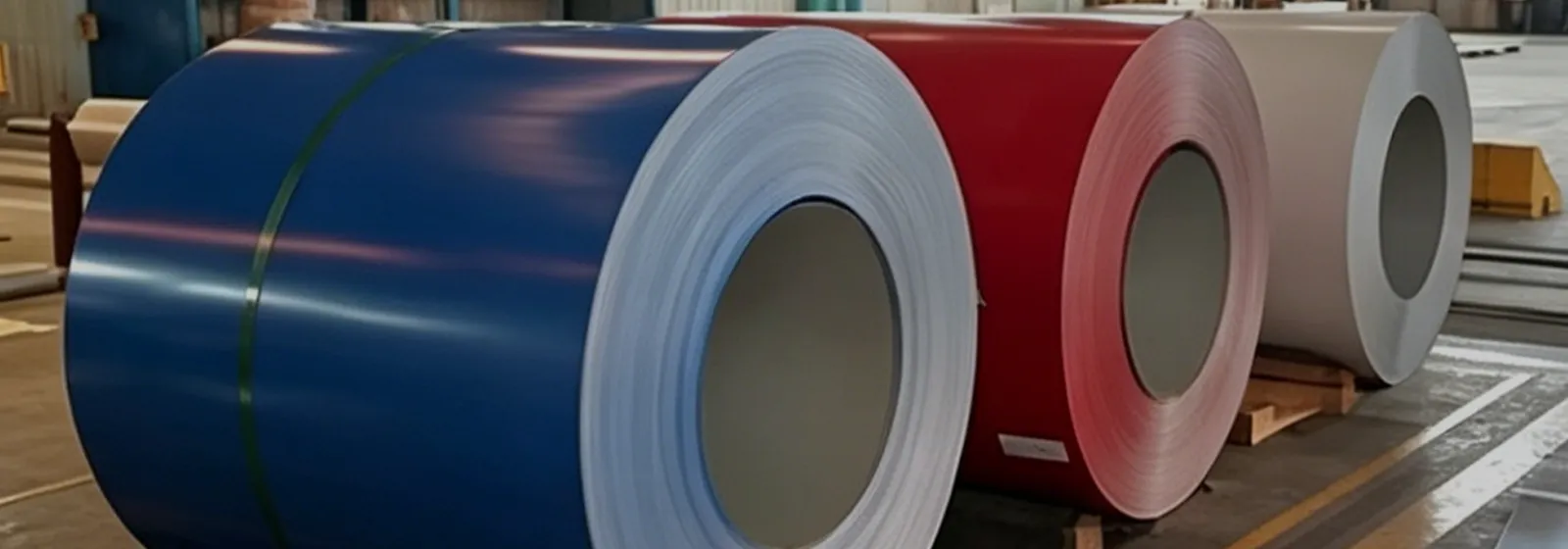
PPGI coil for roofing must match the roll-forming line, panel profile, exposure conditions, and final color requirement. A workable order therefore needs more than a color code: buyers should define substrate, thickness, coating system, width, surface finish, coil dimensions, inspection documents, and packing before production begins.
Start with the finished roofing profile
The roof panel design determines the input coil specification. Confirm the finished cover width, rib depth, forming speed, bend radii, overlap geometry, and whether the panel will be cut, punched, crimped, or curved after forming. These details help identify where paint cracking, springback, surface marking, or dimensional drift could occur.
Luyuan Steel lists PPGI coil for roofing, cladding, panel processing, construction, and fabrication. Its published PPGI thickness range is 0.21–0.50 mm, with custom width, coating weight, paint type, and RAL color supported depending on the order.
PPGI coil specification checklist
RFQ field
What the roofing manufacturer should state
Production risk controlled
Substrate and grade
Required galvanized or coated substrate and applicable grade or standard
Formability, strength, and compatibility with the panel profile
Thickness
Nominal thickness, tolerance, and whether the value includes the coating system
Panel weight, stiffness, line settings, and quotation comparison
Metallic coating
Required coating designation or target agreed for the exposure
Corrosion protection and service environment
Paint system
Primer, topcoat, back coat, finish, gloss, and approved color reference
Color consistency, forming behavior, and weather exposure
Width
Slit width and tolerance matched to the forming line
Profile geometry and scrap rate
Coil dimensions
Coil ID, maximum OD, target coil weight, and allowed joints
Decoiler compatibility and handling safety
Packing
Orientation, edge protection, moisture barrier, labels, and loading plan
Transit damage, edge deformation, and traceability
Choose thickness by the actual panel requirement
Do not select thickness from a generic roofing table alone. Span, support spacing, wind load, profile geometry, fastener arrangement, and local building requirements all affect the finished panel. The engineering requirement should be translated into a coil thickness and tolerance that the roll-forming line can hold consistently.
When comparing quotations, ask each supplier to state how thickness is measured. A nominal figure can be misunderstood if one quotation refers to base metal and another to total coated thickness. The purchase order should use one agreed method.
PPGI coil from the Luyuan Steel media library.
Paint, color, and surface decisions
RAL color is only one part of the paint specification. Roofing manufacturers should also define gloss range, surface texture, top and back coat requirements, acceptable color tolerance, and whether protective film is needed. Agree on a physical color sample when a project requires close matching between production batches.
The forming trial should check the bends and ribs where coating stress is highest. A visually acceptable flat sample does not prove that the same paint system will remain intact through the customer’s profile.
Run a line trial before approving a large order
Confirm slit width, coil ID, maximum OD, and coil weight against the decoiler and forming line.
Set an initial line speed and inspect the first panels for rib geometry, camber, surface marks, paint cracking, and edge condition.
Measure finished panel width and length at several points instead of relying only on the line counter.
Retain an approved panel and coil sample as the reference for the balance of the order.
Record the coil number so any later issue can be traced to the corresponding production batch.
Quality checks and shipment documents
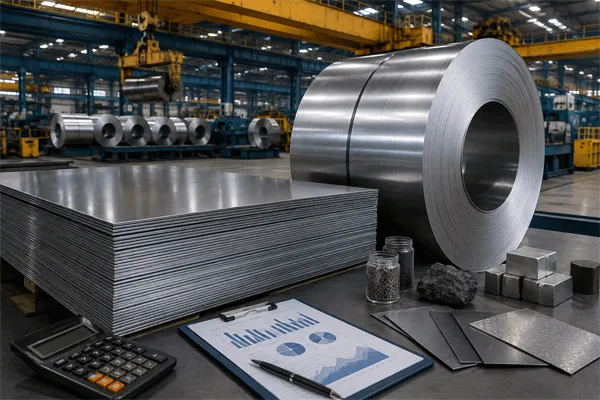
Luyuan Steel’s published service information states that shipments can include an English Mill Test Certificate, pre-shipment inspection, batch traceability, surface inspection, chemical and mechanical testing, and third-party inspection by SGS, BV, Intertek, or a buyer-appointed inspector. The exact test scope and acceptance criteria should be included in the purchase order.
For roofing coil, buyers should also specify how color, gloss, coating appearance, width, thickness, coil weight, edge condition, and packing will be checked. Photos can support the inspection record, but they do not replace measured values or shipment documents.
Planning packing and international shipment
Roofing coil edges and painted surfaces can be damaged by poor handling or moisture during transport. The RFQ should state horizontal or vertical coil orientation, pallet or skid requirements, edge protectors, waterproof wrapping, container loading limits, and label information. Labels should connect each coil to the packing list and inspection record.
A published Luyuan project for corrugated roofing raw material in Senegal involved customized color, zinc coating or plating, and PE surface coating. The website reports 544 metric tons across 136 rolls and delivery to port within 35 days. Treat this as an anonymized project reference, not as a guaranteed lead time for a new order.
Common buying mistakes
Ordering by color and thickness while omitting paint system, gloss, back coat, and acceptable tolerance.
Failing to state whether the quoted thickness includes coatings.
Using a slit width that does not match the real panel profile and forming setup.
Approving a flat sample without testing the actual bends and ribs.
Leaving coil ID, maximum coil weight, packing orientation, or edge protection unspecified.
Assuming a previous project’s lead time applies to a different quantity, specification, and destination.
RFQ information to send the supplier
Send the intended roofing profile, grade or standard, thickness and tolerance, metallic coating target, paint system, RAL color, gloss, slit width, coil ID, maximum OD, target coil weight, estimated volume, inspection requirements, packing method, Incoterm, and destination port. For the available product range, review Luyuan’s PPGI steel coil guide, roofing sheet catalog, and roofing and cladding solution.
FAQ
What PPGI coil thickness does Luyuan publish?
The current product library lists a PPGI thickness range of 0.21–0.50 mm. Final availability, tolerance, and suitability must be confirmed for the specific roofing profile and order.
Is a RAL code enough for a roofing order?
No. The order should also define paint system, gloss, finish, top and back coat requirements, acceptable color tolerance, and whether a physical approval sample is required.
Should the buyer request a trial coil?
A controlled line trial is useful when the profile, paint system, substrate, or supplier changes. Agree the trial quantity and acceptance checks before placing the full order.
What documents should accompany the shipment?
Request the agreed MTC, packing list, coil traceability, inspection results, and any third-party report specified in the contract.
Next step: Send Luyuan Steel your roofing profile, coil specification, target volume, and destination port for a specification-based quotation.
Author: Luyuan Steel Technical Team | Updated August 14, 2026





 08-14 2026