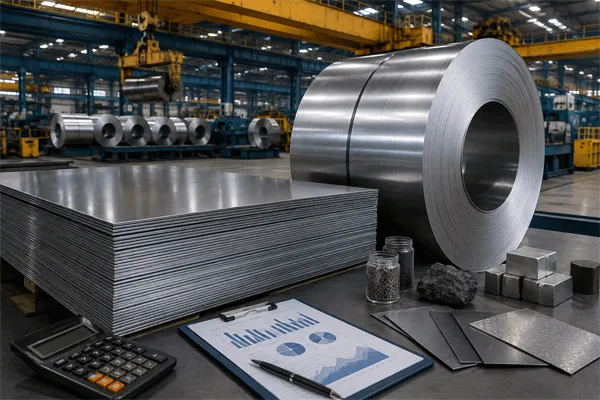
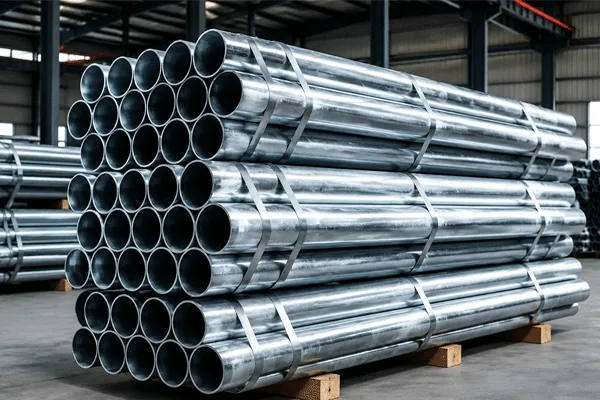
A weak roof sheet may bend, leak, corrode, or pull away during bad weather. Choosing only by price or appearance makes that risk worse. The safer solution is to compare material strength, sheet thickness, profile design, coating, supports, and fasteners as one complete roof system.
For most industrial and commercial buildings, a properly engineered structural-grade corrugated or trapezoidal steel roof sheet is usually the strongest practical option among common lightweight roofing sheets. However, the best roofing sheet depends on steel grade, thickness, profile depth, support spacing, fasteners, coating, local weather conditions, and verified load performance.
Which Is the Strongest Roof Sheet? A Best Roofing Sheet Guide for Metal Roof Projects
Article Outline
- What does “the strongest roof sheet” really mean?
- Which roofing material offers the highest structural strength?
- Why does the corrugated profile make a roof sheet stronger?
- How does sheet thickness affect roof performance?
- Are galvanized and coated steel sheets durable?
- Is polycarbonate roofing stronger than a metal roof?
- Which roof sheet performs best in harsh weather?
- What is the right roofing sheet for each application?
- How should buyers compare roof sheet specifications?
- How do installation and fasteners affect strength?
- What should international buyers request from a supplier?
- Which common questions should buyers ask?
What Does “the Strongest Roof Sheet” Really Mean?
The word strongest can describe several different properties. One buyer may mean resistance to heavy snow. Another may mean wind-uplift resistance. A greenhouse contractor may care more about impact strength and light transmission, while a coastal warehouse buyer may focus on corrosion and longevity.
A strong roof must normally manage several forces:
- Its own weight
- Wind uplift
- Rain and water flow
- Snow or maintenance loads
- Hail or falling objects
- Thermal expansion
- Fastener pull-out
- Long-term corrosion
- Movement of the supporting structure
This means that no roofing material wins every category. Polycarbonate roofing can provide excellent impact resistance and natural light. Traditional roof tiles can offer good weather resistance but may crack under impact. A structural steel roof sheet often provides the best combination of tensile strength, load capacity, profile stiffness, fire performance, and economical large-area coverage.
The Metal Construction Association explains that metal roof strength depends on many connected variables, including material gauge, mechanical properties, profile geometry, seam shape, attachment strength, fastener frequency, and panel width. A roof assembly behaves like a load chain, and its weakest connection may determine failure.
Which Roofing Material Is Usually the Strongest?
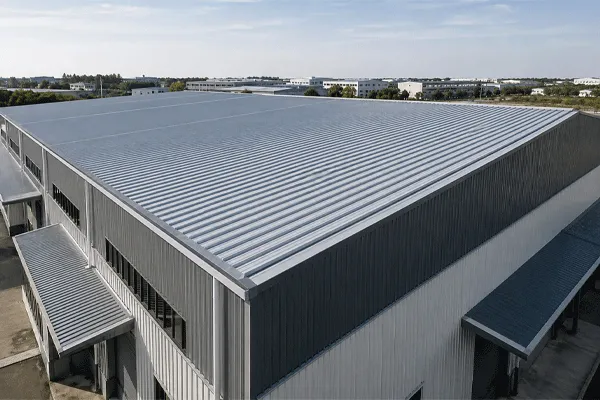
For most factories, warehouses, agricultural buildings, steel structures, and infrastructure projects, structural-grade profiled steel is usually the strongest lightweight roof covering. Manufacturers use high-strength steel and corrugate it into trapezoidal, ribbed, or standing-seam roofing panels.
Steel has high tensile and yield strength compared with common plastic sheets. It can resist significant positive and negative pressure when the profile, supports, and connections are properly engineered. Galvanized roofing sheets and aluminum-zinc-coated steel roofing sheets are also available in structural grades with defined mechanical properties.
ASTM A653/A653M covers zinc-coated steel sheet in several designations, including structural steel and high-strength low-alloy grades. These materials may be supplied with mandatory yield strength, tensile strength, elongation, and bending requirements.
ASTM A792/A792M covers 55% aluminum-zinc alloy-coated steel in commercial, forming, drawing, high-temperature, and structural designations. It is intended for applications that require corrosion resistance, heat resistance, or both.
The strongest practical choice is therefore not simply “metal.” It is usually a structural steel roof sheet with a tested profile and fastening system, selected for the actual roof loads.
Why Does Corrugating a Sheet Make It Stronger?
A flat metal sheet bends easily across a wide unsupported area. When manufacturers corrugate the same sheet, they create ribs and valleys. These shapes increase stiffness without requiring a solid, heavy plate.
Think of a flat piece of paper. It bends under its own weight. Fold it into ridges, and it becomes much harder to bend in the direction of the folds. A corrugated sheet works in a similar way.
Manufacturers may corrugate steel into:
- Traditional wave profiles
- Trapezoidal profiles
- Box-rib profiles
- Tile-effect profiles
- Standing-seam roofing panels
- Deep-deck structural profiles
Profile depth, rib spacing, effective cover width, and steel thickness all affect load capacity. A deeper corrugated profile can often span farther than a shallow profile made from the same material, but the exact result must come from tested span and load tables.
ASTM A755/A755M covers metallic-coated, prepainted steel sheet for exterior building products, including corrugated and other roll-formed configurations. The standard notes that substrate properties, the organic coating system, and the forming method together influence the final product’s expected performance and appearance.
When we process roofing coils for international buyers, we do not treat profiling as a decorative step. The roll-forming design changes the structural behavior of the roof sheet. Buyers should therefore provide the profile drawing, required cover width, rib depth, roof pitch, and support spacing before production.
How Does Sheet Thickness Affect Roof Strength?
In general, a thicker steel roof sheet is harder to bend and may carry more load than a thinner sheet of the same grade and profile. However, thickness alone does not determine strength.
A thinner sheet made from higher-strength steel and formed into a deep structural profile may outperform a thicker sheet made from softer steel with a shallow corrugated profile. Support spacing and fastener layout can change the result again.
Buyers should distinguish between:
- Base metal thickness: The thickness of the steel before metallic and paint coatings
- Total coated thickness: The steel plus zinc, aluminum-zinc, primer, and finish coating
- Nominal thickness: The stated order value
- Actual measured thickness: The verified result within the agreed tolerance
This distinction matters. A quotation for 0.50 mm total coated thickness is not necessarily equal to 0.50 mm base metal thickness.
Simplified Thickness Selection Logic
| Project condition |
Typical purchasing direction |
| Small shelter with close supports |
Light-gauge sheet may be adequate |
| Standard warehouse |
Project-specific structural profile and thickness |
| Long purlin spacing |
Deeper profile, stronger grade, or thicker sheet |
| High wind region |
Tested roof assembly and closer attention to fasteners |
| Heavy snow region |
Engineer-confirmed load and span capacity |
| Frequent roof access |
Better resistance to local foot-traffic loads |
| Industrial facility |
Coating and chemical exposure must also be reviewed |
Thicker sheets may improve local dent resistance and handling, but choosing the thickest product without calculating the support system can waste steel and increase cost. The proper roof sheet should meet the required load with a safe, efficient specification.
Which Is the Strongest Roof Sheet? A Best Roofing Sheet Guide for Metal Roof Projects
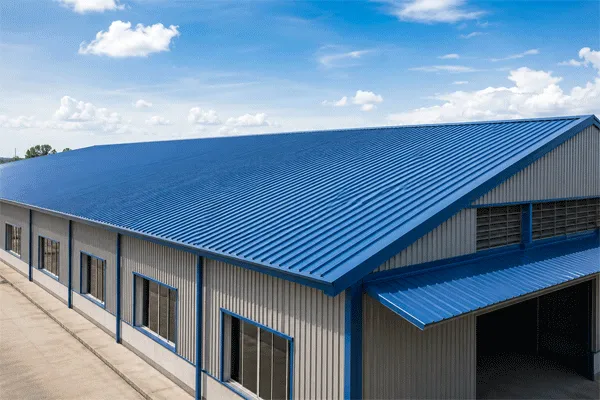
Galvanized steel uses a zinc coating to protect the base steel. Prepainted galvanized steel adds surface treatment, primer, and finish paint. Prepainted aluminum-zinc-coated steel uses a different metallic substrate beneath the paint.
These layers serve different functions:
| Layer |
Main purpose |
| Finish coating |
Color, UV resistance, weather protection |
| Primer |
Adhesion and extra protection |
| Pretreatment |
Supports coating performance |
| Zinc or aluminum-zinc layer |
Protects the steel from corrosion |
| Steel substrate |
Supplies mechanical strength |
| Back coating |
Protects the underside |
ASTM A755/A755M recognizes zinc-coated, aluminum-zinc-coated, and aluminum-coated steel substrates for exterior prepainted building products. It also lists polyester, silicone polyester, acrylic, fluoropolymer, plastisol, and polyurethane among typical top-coating materials.
The National Coil Coating Association describes prepainted metal as formable, weather-resistant, corrosion-resistant, and suitable for long service when the appropriate surface treatment and coating system are used.
A durable roofing solution therefore requires more than strong base steel. The metallic layer, primer, topcoat, back coat, edge protection, drainage, and local atmosphere all affect longevity.
For example:
- Standard polyester may suit normal inland buildings.
- Silicone-modified polyester may offer improved exterior performance.
- High-durability polyester may support demanding industrial and commercial use.
- PVDF may be selected when strong UV and color-retention performance are important.
- Aluminum-zinc-coated steel may be considered where added corrosion or heat resistance is needed.
Is Polycarbonate Roofing Stronger Than a Metal Roof?
Polycarbonate roofing is very strong against impact. It can resist blows that would crack some rigid plastic sheets or traditional materials. It is also lightweight and can allow daylight into greenhouses, canopies, workshops, and agricultural buildings.
A Palram technical guide describes polycarbonate as a tough transparent sheet material and reports strong falling-dart impact performance. It also explains that UV-protected products can block harmful ultraviolet radiation while allowing visible light transmission.
However, impact strength is not the same as structural roof strength. Polycarbonate roofing sheets usually require carefully controlled support spacing, allowance for thermal expansion, suitable washers, and correct installation holes. They are not normally used as a direct replacement for every structural steel roofing application.
Steel vs Polycarbonate Roofing
| Performance factor |
Profiled steel roof sheet |
Polycarbonate roof sheet |
| Structural load capacity |
Generally high when engineered |
Depends strongly on sheet form and supports |
| Impact resistance |
Good, may dent |
Often excellent |
| Light transmission |
Opaque |
Clear, translucent, or tinted |
| Fire behavior |
Non-combustible steel substrate |
Product-specific |
| Thermal movement |
Moderate |
Greater allowance normally required |
| Corrosion |
Controlled by metallic and paint coating |
Does not rust |
| Typical use |
Warehouses, factories, sheds, infrastructure |
Greenhouses, skylights, canopies |
| Large industrial roof coverage |
Very common |
Usually used selectively |
The right choice may combine both. A warehouse may use steel roofing across most of the area and polycarbonate roofing panels as daylight strips.
Which Roof Sheet Performs Best in Harsh Weather?
For harsh weather, the best roofing solution is a tested system designed for the local wind, snow, rain, temperature, and corrosion conditions. Material selection comes after the loads are defined.
High wind creates negative pressure that tries to lift the roof away from the structure. According to the Metal Construction Association, wind-uplift performance depends on the entire assembly, including the panel gauge, mechanical properties, seams, clips, attachment frequency, and profile width.
The 2024 Metal Building Manufacturers Association roof framing guide identifies through-fastened panels and standing-seam panels as two basic metal roof system types. Through-fastened panels connect directly to supporting purlins, while standing-seam systems use specially designed clips connected to the seams.
For severe conditions, buyers should review:
- Design wind pressure
- Roof height and building location
- Edge and corner pressure zones
- Fastener type and spacing
- Clip capacity
- Purlin spacing
- Panel seam design
- Roof pitch
- Drainage
- Snow load
- Coastal salt exposure
- Industrial pollutants
- Thermal movement
A thicker roof sheet cannot compensate for weak fasteners. A premium coating cannot compensate for poor drainage. A strong panel cannot compensate for an unsuitable support structure.
What Is the Right Roofing Sheet for Each Application?
The right roofing depends on what the building must do. There is no need to pay for a heavy industrial profile when covering a small garden structure. In the same way, a light residential product should not be used for an unverified factory span.
Roofing Selection by Application
| Application |
Common suitable choice |
Main buying concern |
| Industrial warehouse |
Corrugated or trapezoidal steel |
Load, span, corrosion, delivery |
| Factory building |
Coated structural steel |
Strength and industrial exposure |
| Agricultural shed |
Galvanized or prepainted steel |
Humidity, ammonia, ventilation |
| Greenhouse |
Steel plus polycarbonate sections |
Structure and light transmission |
| Commercial building |
Prepainted steel or insulated panels |
Appearance, insulation, durability |
| Residential roofing |
Tile-profile or standing-seam metal |
Appearance, noise control, weather |
| Coastal building |
Enhanced metallic and paint system |
Salt corrosion and fasteners |
| Temporary shelter |
Lightweight corrugated sheet |
Cost and easy installation |
| Cold storage |
Insulated metal roofing panels |
Thermal continuity and sealing |
Corrugated iron is a traditional market term, but modern products are usually coated steel rather than untreated iron. Steel roofing sheets may be galvanized, galvalume, prepainted galvanized, or prepainted aluminum-zinc-coated.
For residential roofing, tile-style metal sheets can imitate traditional roof tiles while reducing structural weight. For industrial roofing applications, deeper trapezoidal profile sheets usually offer a more practical balance of strength, speed, and coverage.
Which Is the Strongest Roof Sheet? A Best Roofing Sheet Guide for Metal Roof Projects
How Should Buyers Compare Different Roof Sheet Specifications?
A buyer should never compare two quotations using price per ton alone. First confirm whether both suppliers are offering the same steel grade, base thickness, coating, paint system, width, profile, coil weight, packing, and inspection level.
Use this purchasing checklist:
Base Material
- Steel standard
- Steel grade
- Yield strength
- Base metal thickness
- Width and tolerance
- Galvanized or aluminum-zinc substrate
Surface Protection
- Zinc or aluminum-zinc coating weight
- Pretreatment
- Primer type
- Top paint system
- Top paint thickness
- Back paint thickness
- RAL color
- Gloss and color tolerance
- Protective film if required
Roofing Profile
- Corrugated profile drawing
- Rib height and pitch
- Effective cover width
- Sheet length
- Side lap
- End lap
- Fastener position
- Minimum roof pitch
- Required span table
Commercial Requirements
- Order quantity
- Bundle weight
- OEM labels
- Seaworthy packaging
- MTC documents
- Third-party inspection
- Loading plan
- Destination port
- Delivery schedule
As a professional steel manufacturer and integrated exporter in China, we support customized thickness, width, metallic coating, RAL color, cutting, slitting, and profiling. We also coordinate MTC traceability, third-party inspection, OEM packaging, and international logistics for distributors, roofing manufacturers, contractors, and global project buyers.
How Do Installation and Fasteners Affect Roof Strength?
Installation can turn a high-quality roof sheet into a weak roofing system. The most common risks include incorrect fastener spacing, overdriven screws, damaged washers, poor side laps, swarf left on the surface, and sheets cut with unsuitable tools.
Fasteners transfer wind and gravity forces from the roof covering into the purlins. They must match the panel, support material, and expected loads. Screws that are too small or spaced too far apart may pull out. Overtightening can damage the sealing washer and deform the sheet.
Good installation practice includes:
- Aligning the first roof sheet correctly
- Installing fasteners in the specified position
- Following the engineering fastener pattern
- Maintaining correct side and end laps
- Using compatible washers and sealants
- Removing metal filings immediately
- Allowing for thermal movement
- Avoiding unnecessary walking on unsupported areas
- Protecting cut edges in severe environments
- Inspecting penetrations and flashings
Standing-seam and through-fastened roofing systems behave differently. The MBMA guide notes that standing-seam panels connect through clips, while through-fastened sheets attach directly to purlins. These connection types influence movement, restraint, and structural behavior.
Practical Case Study: Selecting a Roof Sheet for a Coastal Warehouse
Consider a distributor sourcing roofing for a warehouse near the coast. The original inquiry requests a low-cost 0.35 mm colored corrugated sheet. No steel grade, coating weight, fastener system, or wind pressure is provided.
That specification creates several risks:
- The sheet may be too light for the purlin spacing.
- The coating may not suit salt exposure.
- The fastener system may not resist corner-zone uplift.
- The profile may not drain well at the planned roof pitch.
- Thin material may suffer damage during transport and installation.
A better process begins with the building dimensions, purlin spacing, wind design, roof pitch, distance from the sea, required lifespan, and local code. The buyer and supplier can then select a structural grade, proper sheet thickness, corrugated profile, metallic protection, paint system, fastener arrangement, and seaworthy packing.
The result may cost more per ton, but it reduces the risk of replacement, leakage, corrosion, and project delays. That is the real meaning of cost-effective roofing.
What Should International Buyers Request from a Steel Supplier?
International buyers should request a clear technical offer before confirming an order. The supplier should identify the material, tolerances, processing route, inspection plan, packaging, and delivery basis.
Useful documents may include:
- Technical specification sheet
- Mill Test Certificate
- Coating-weight report
- Paint-thickness report
- Dimensional inspection
- Profile drawing
- Packing list
- Container loading photos
- Third-party inspection report
- Shipping documents
Our role as an integrated steel supplier goes beyond producing one roof sheet. We can coordinate PPGI and PPGL coils, galvanized and galvalume coils, structural sections, pipes, plates, stainless steel, aluminum, and copper materials for construction and industrial projects.
For OEM and ODM orders, buyers can specify the thickness, width, coating weight, surface finish, RAL color, profile, bundle design, label, shipping mark, and inspection standard. This simplifies purchasing for steel distributors, roofing sheet manufacturers, steel structure fabricators, contractors, and engineering companies.
To receive an accurate factory-direct quotation, provide:
- Material standard and grade
- Base metal thickness
- Metallic coating
- Paint system and color
- Corrugated profile drawing
- Sheet width and length
- Required quantity
- Packing method
- Inspection requirements
- Destination port
Frequently Asked Questions
Which is the best roofing sheet for an industrial building?
A structural-grade corrugated or trapezoidal steel roof sheet is often the best choice for an industrial building. The final selection must match the wind load, snow load, purlin spacing, corrosion environment, and required service life.
Is a thicker roof sheet always stronger?
A thicker sheet is normally stiffer when all other factors remain equal. However, steel grade, corrugated profile depth, support spacing, and fastener design may have an equal or greater effect on system strength.
Which is stronger, galvanized steel or galvalume steel?
Strength comes mainly from the steel grade and thickness, not only from the metallic coating. Galvanized and aluminum-zinc-coated sheets can both be supplied in structural grades. Their main difference is the corrosion and heat behavior of the metallic layer.
Is corrugated metal suitable for high winds?
Yes, but only when the panel and connection system are engineered for the required wind pressure. Profile geometry, sheet gauge, fastener spacing, seam design, purlin spacing, and edge-zone detailing all affect wind-uplift resistance.
Are polycarbonate roofing sheets suitable for factories?
They are useful for skylights and daylight sections because they transmit light and offer strong impact resistance. Large factory roofs normally combine them with structural metal sheets rather than using transparent plastic sheets for every area.
How long can a steel roof last?
There is no single lifespan for every steel roof. Longevity depends on the substrate, metallic coating, paint system, climate, roof design, installation quality, maintenance, and exposure to salt or chemicals. ASTM A755 similarly notes that substrate, coating system, and forming influence life expectancy.
Key Things to Remember
- Structural-grade corrugated or trapezoidal steel is usually the strongest practical lightweight roof sheet for industrial and commercial projects.
- “Strongest” may mean structural load, wind uplift, impact, corrosion resistance, or long service life.
- Manufacturers corrugate flat steel to create ribs that improve stiffness.
- Sheet thickness matters, but steel grade and profile geometry also affect strength.
- Polycarbonate offers excellent impact resistance and light transmission but serves a different role from structural steel roofing.
- Galvanized and aluminum-zinc-coated steel can both be supplied in structural grades.
- Coating selection should match UV, humidity, salt, chemicals, and other weather conditions.
- Fasteners, seams, clips, purlins, and edge zones are part of the roof’s load path.
- Compare quotations using base metal thickness, coating weight, paint system, profile, inspection, and packing—not price alone.
- MTC documents and third-party inspection help international buyers verify the ordered material.
- A detailed project specification is the first step toward a safe, durable, and long-lasting roof.






 08-06 2026