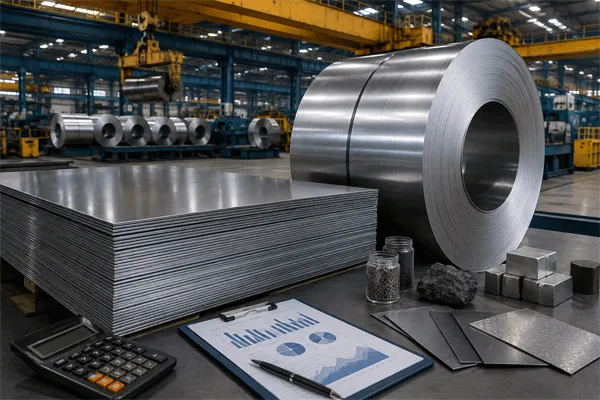
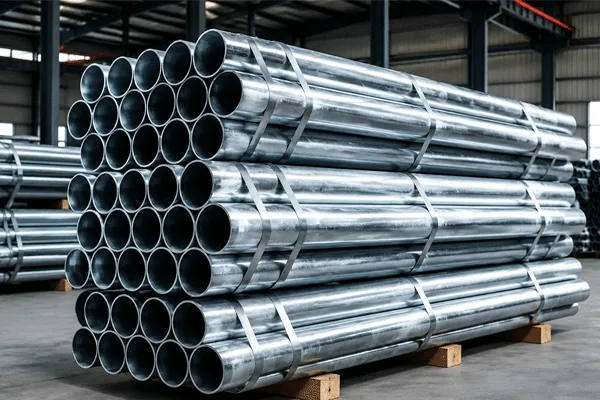
A low-priced metal roof can become costly when its paint fades, edges rust, or panels deform. These failures often begin with an unclear material specification. By understanding PPGI, its substrate, protective layers, and suitable applications, buyers can select a safer product for each building and climate.
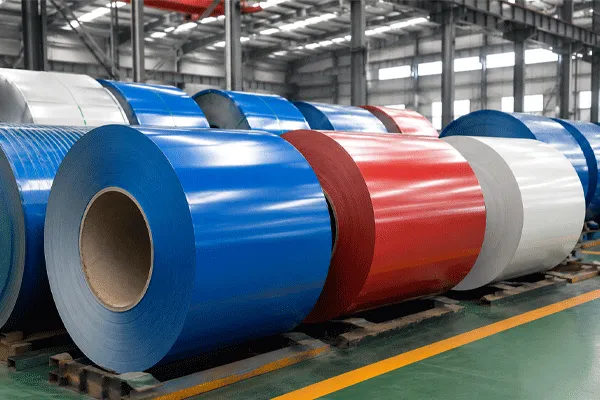
PPGI roofing is made from pre-painted galvanized steel. A steel substrate receives a protective zinc layer, chemical pretreatment, primer, and colored finish before being formed into building panels. The material is light, strong, attractive, and available in many thicknesses, profiles, colors, and paint systems. Its final performance depends on the complete specification, installation, environment, and maintenance.
What Is PPGI Roofing? PPGI vs PPGL Material Guide
Article Outline
- What is PPGI roof material?
- What does PPGI stand for?
- How is pre-painted steel produced?
- What protective layers does the product contain?
- What are the main advantages of PPGI?
- Which paint system should buyers select?
- How do the two materials differ?
- How should thickness and metallic protection be specified?
- Where is pre-painted steel commonly used?
- How can users improve service life?
- What should B2B buyers confirm before ordering?
- Which questions about PPGI are asked most often?
What Is PPGI Roof Material?
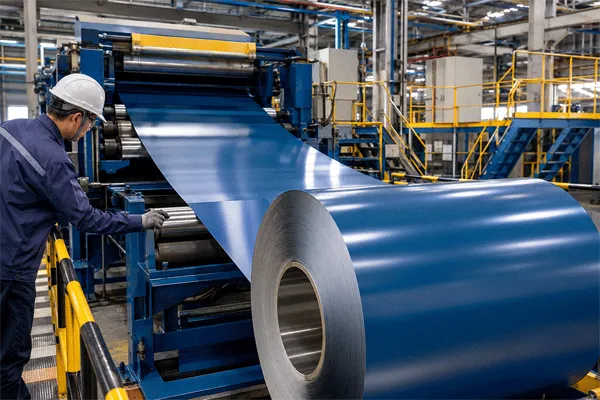
PPGI is a factory-finished steel product used to make corrugated panels, trapezoidal panels, tile-style profiles, sandwich panel skins, flashings, and wall cladding. The base is galvanized steel, while the outer paint system gives the material its color and adds another protective barrier.
A PPGI roofing sheet is different from bare GI steel. Galvanized material has a metallic protective layer but no colored factory finish. PPGI adds pretreatment, primer, and paint before the material is shaped. This controlled process gives manufacturers a consistent surface and removes the need to paint each finished panel at the job site.
ASTM A755/A755M covers metallic-coated steel sheet that is prepainted by the coil-coating process for exterior building products. It includes material supplied in coils, cut lengths, and formed configurations such as corrugated panels.
What Does PPGI Stand For?
PPGI stands for pre-painted galvanized iron. In current trade, “pre-painted galvanized steel” is usually more accurate because the base metal is steel rather than pure iron. Both phrases refer to a color-finished product built on a galvanized substrate.
The name tells buyers only the general material family. It does not tell them the steel grade, base metal thickness, metallic protection level, primer, paint type, film thickness, gloss, or color tolerance. Two products with the same name can therefore perform very differently.
A complete specification may look like this:
Pre-painted galvanized steel, structural grade, 0.45 mm base metal thickness, selected metallic protection, PE finish, standard RAL color, specified top and back paint, required width, and seaworthy export packing.
This description is much safer than ordering “red PPGI” alone.
How Is PPGI Coil Produced?
Production normally begins with cold-rolled steel. The strip is cleaned and hot-dip galvanized. It then enters a continuous line where the surface is prepared and painted under controlled factory conditions.
The simplified process is:
Cold-rolled strip → galvanizing → cleaning → pretreatment → primer → finish paint → oven curing → cooling → inspection → recoiling
The National Coil Coating Association explains that the continuous process unwinds metal, cleans and treats it, applies primer and paint, then recoils it for shipment. This method allows tight control over surface preparation, film application, curing temperature, and appearance.
A PPGI coil can later be slit, cut, embossed, or roll-formed. Correct tooling matters. Sharp bends, dirty rollers, excessive pressure, or unsuitable lubricants can scratch the surface or reduce paint adhesion. Buyers who plan deep profiling should tell the supplier before production so the steel grade and finish can be matched to the forming process.
What Protective Layers Does a PPGI Sheet Contain?
A typical PPGI sheet contains several layers, and each performs a different task.
| Layer |
Purpose |
| Finish paint |
Supplies color, gloss, weather protection, and surface appearance |
| Primer |
Supports adhesion and adds protection |
| Pretreatment |
Helps the paint system bond to the metallic surface |
| Zinc layer |
Protects the steel substrate from corrosion |
| Base steel |
Provides strength and shape |
| Back primer and back paint |
Protect the reverse surface |
The outer finish is only one part of the system. The substrate, metallic layer, primer, top paint, back paint, and forming method all influence durability. ASTM A755 notes that the substrate and organic system, together with forming, affect the appearance and expected performance of the final building product.
This is why paint thickness alone cannot define quality. A thicker finish may still perform poorly if the surface preparation is weak or the material is damaged during forming. Buyers should review the full build-up and request agreed test methods rather than relying only on a color sample.
What Are the Main Advantages of PPGI?
The main advantages of PPGI are low weight, useful strength, attractive appearance, fast processing, and flexible customization. Long panels cover large areas quickly, while the steel base supports many industrial and commercial building designs.
Other benefits include:
- A broad variety of colors and gloss levels
- Good corrosion resistance when correctly specified
- Easy slitting, cutting, corrugating, and profiling
- Consistent factory-applied appearance
- Lower dead load than many traditional materials
- Fast installation for large projects
- Supply as sheet form, slit strip, flat panels, or finished profiles
- Compatibility with insulation and sandwich panel systems
Prepainted metal can be formed into many shapes and is widely used in exterior and interior construction. The National Coil Coating Association also highlights its weathering ability and broad aesthetic options for building products.
These benefits do not make every grade suitable for every project. Salt air, animal waste, industrial fumes, strong sunlight, high humidity, and standing water can shorten service life. Good selection begins with the exposure conditions, not with color or price.
What Is PPGI Roofing? PPGI vs PPGL Material Guide
Which Paint System Should Buyers Choose: PE, SMP, HDP, or PVDF?
Common types of color coated steel finishes include PE, SMP, HDP, and PVDF. Each option has a different balance of formability, hardness, weather resistance, color retention, and cost.
| Finish |
General features |
Typical use |
| PE |
Economical, flexible, many colors |
Standard warehouses and mild environments |
| SMP |
Improved hardness and outdoor performance in many systems |
Commercial and industrial buildings |
| HDP |
High-durability polyester for stronger exterior performance |
Long-term exterior panels |
| PVDF |
Strong weathering and color retention |
High-end architecture and severe sunlight |
PE polyester is widely used for standard projects. SMP means silicone-modified polyester. HDP means high-durability polyester. PVDF is a fluoropolymer finish often selected when appearance retention is especially important.
ASTM A755 lists polyester, silicone polyester, acrylic, fluoropolymer, plastisol, and polyurethane among typical topcoat materials used for prepainted building sheet. Buyers should still confirm the primer, top film, back paint, gloss, color tolerance, bend performance, and test requirements. A paint name by itself is not a complete specification.
Climate should guide the decision. ISO 12944-2 explains that environmental corrosivity is an important factor in choosing protective paint systems for steel structures. Although that standard is not a direct product standard for this material, the principle remains useful: harsher exposure requires more careful system selection.
What Is the Difference Between PPGI and PPGL?
The main difference between PPGI and PPGL is the metallic layer beneath the paint.
- PPGI uses a galvanized substrate.
- PPGL uses a galvalume steel substrate, normally based on a 55% aluminum-zinc alloy layer.
ASTM A653/A653M covers hot-dip galvanized sheets, while ASTM A792/A792M covers 55% aluminum-zinc alloy-coated steel. Both substrates may be prepainted for building applications when the full product meets the required standard.
| Comparison |
PPGI |
PPGL |
| Metallic protection |
Mainly zinc |
Aluminum-zinc alloy |
| Common market position |
General-purpose and widely available |
Often selected for strong barrier performance |
| Forming and exposed edges |
Project-specific evaluation needed |
Project-specific evaluation needed |
| Heat performance |
Suitable for normal building use |
Often chosen where better heat resistance is desired |
| Best choice |
Depends on exposure and budget |
Depends on exposure and budget |
This substrate difference does not mean that one is always better. PPGL steel may suit high heat and some exposed conditions. PPGI steel remains a practical choice for many standard buildings and processing routes. Cut edges, scratches, fasteners, paint quality, drainage, and local climate can influence either material.
For this reason, a supplier should review whether PPGI or PPGL fits the project instead of giving one answer for every buyer.
How Should Thickness and Metallic Protection Be Specified?
Thickness affects stiffness, handling, span, wind resistance, and the amount of steel purchased per square meter. Buyers should state whether the order uses base metal thickness or total coated thickness. Confusing these two measures can create price disputes and weaker-than-expected panels.
The required thickness depends on:
- Steel grade
- Panel profile
- Purlin spacing
- Wind and snow loads
- Building code
- Handling conditions
- End use
The metallic layer also matters. A higher zinc coating can improve protection, but the correct level depends on exposure, design, and budget. ISO 14713-1 provides general guidance on zinc coatings and corrosion protection for iron and steel structures.
A simple selection chart can help:
| Project condition |
Main purchasing priority |
| Dry inland warehouse |
Practical PE system and correct thickness |
| Humid farm building |
Better back-side protection and ventilation |
| Coastal construction |
Strong protection, sealed details, compatible fasteners |
| Strong-UV region |
Improved color retention, often HDP or PVDF |
| Polluted industrial area |
Project-specific chemical and corrosion review |
| Deep profiling |
Formable grade and flexible paint system |
Do not evaluate the panel alone. Fasteners, washers, sealants, overlaps, drainage, insulation, and cut-edge treatment all affect the finished building envelope.
What Are the Main Applications of PPGI?
The applications of PPGI include much more than one type of roof. The product is widely used where manufacturers need a light, shaped, durable, and attractive steel surface.
Common uses include:
- Industrial building panels
- Warehouse and factory cladding
- Agricultural sheds and greenhouse projects
- Prefabricated buildings
- Residential metal panels
- Garage doors and shutters
- Sandwich panel skins
- Ceilings and partitions
- Flashings and rainwater accessories
- Appliance and equipment housings
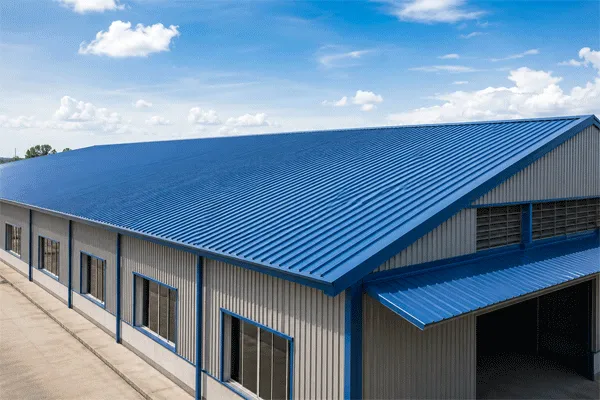
A PPGI corrugated roofing sheet gains stiffness from its profile and directs rainwater along the channels. Trapezoidal panels are common in factories and storage buildings. Tile-shaped profiles offer a more traditional appearance.
The specification for roofing and wall panels may differ. Upper building surfaces face direct rain, UV exposure, temperature cycling, foot traffic, and fastener penetrations. Wall panels may place greater importance on appearance, gloss, and color consistency.
As an integrated supplier in China, we can coordinate PPGI products with galvanized coils, galvalume coils, structural sections, pipes, stainless steel, aluminum, and copper materials. This can help international project buyers combine inspection, export packaging, and shipping plans.
What Is PPGI Roofing? PPGI vs PPGL Material Guide
How Can Buyers Improve PPGI Service Life?
There is no reliable single service-life number for every product. Performance changes with the substrate, paint, environment, design, installation, storage, and maintenance.
Early failure often results from avoidable mistakes:
- Packs become wet during storage.
- Salt or debris remains on sheltered surfaces.
- Cut edges stay unprotected in severe conditions.
- Fasteners scratch the paint.
- Incompatible metals touch each other.
- Gutters block and hold water.
- Harsh cleaners attack the finish.
- The chosen system does not match the site.
BlueScope technical data advises keeping prepainted sheet packs dry and warns that poor storage or unsuitable forming lubricants can harm appearance and long-term durability.
Good care is simple. Store material indoors or under proper cover, keep it dry, use clean lifting tools, remove metal filings, inspect fasteners, clean blocked drainage paths, and repair damage with an approved method. These steps protect the product after it leaves the factory.
What Should Importers Check Before Ordering PPGI Steel Coil?
Steel distributors, importers, contractors, profile manufacturers, and project buyers should compare full specifications rather than price per ton alone. A low quotation may use thinner base steel, lighter metallic protection, a simpler finish, smaller coils, or weaker packing.
Product Details
- Applicable standard and steel grade
- Base metal thickness and tolerance
- Width and edge condition
- Metallic protection designation
- PE, SMP, HDP, or PVDF system
- Top and back paint thickness
- RAL color, gloss, and tolerance
- Coil inner diameter and weight
- Surface protection film
- Profile drawing for finished panels
Quality Documents
- Mill Test Certificate
- Metallic layer test
- Paint film test
- Adhesion or T-bend test when required
- Hardness and impact test when specified
- Third-party inspection report
- Packing and loading records
Export Requirements
- Safe seaworthy packaging
- Edge and corner guards
- Container loading plan
- Product labels and shipping marks
- OEM or ODM printed packaging
- Delivery schedule and destination port
EN 10169:2022 covers technical delivery conditions for continuously organic-coated steel flat products, including designation, purchaser information, performance, inspection documents, marking, packaging, and storage. It is therefore a useful reference when preparing an international purchase order.
From our manufacturing and export work, incomplete orders create the greatest risk. “0.40 mm PPGI” is unclear unless both sides agree on the thickness basis. “PVDF” is also incomplete without primer, film thickness, color, gloss, and testing. A detailed contract protects the buyer and supplier.
We support OEM and ODM orders with customized thickness, width, metallic protection, paint, RAL color, slitting, cutting, profiling, packaging, third-party inspection, MTC traceability, and international logistics. A clear inquiry helps us return a faster and more accurate quotation.
Frequently Asked Questions About PPGI
Is PPGI the Same as Galvanized Steel?
No. Galvanized steel has a metallic protective layer but no colored factory paint. PPGI uses that material as its substrate and adds pretreatment, primer, and finish paint.
Is PPGI Suitable for Coastal Construction?
It may be suitable, but a basic grade will not fit every coastal site. The supplier should review salt exposure, distance from the sea, paint system, edges, fasteners, and maintenance before recommending a product.
Which Is Better, PPGI or PPGL?
Neither is best for every project. The choice depends on climate, heat, humidity, edge exposure, processing, price, and expected durability. A project-specific comparison is more useful than a general claim.
Yes. Manufacturers can often match RAL colors or approved samples. Minimum quantities, pigment availability, color tolerance, gloss, and production schedule should be agreed before ordering.
Does a Thicker Paint Film Always Mean Better Quality?
No. Pretreatment, primer, curing, adhesion, flexibility, pigment quality, and substrate protection are also important. Buyers should assess the complete system.
What Information Is Needed for a Quotation?
Provide the standard, grade, thickness basis, width, metallic layer, paint system, top and back film, RAL color, gloss, coil weight, quantity, application, packaging, and destination port.
Key Points to Remember
- PPGI is pre-painted galvanized steel used for building panels and many manufactured products.
- The material combines a steel base, metallic protection, pretreatment, primer, and finish paint.
- Its quality cannot be judged by color or price alone.
- PE, SMP, HDP, and PVDF serve different budgets and environments.
- The two materials use different metallic substrates, so project conditions should guide the choice.
- Base metal thickness must be stated clearly.
- Paint type, film build, forming, storage, installation, and maintenance all influence durability.
- MTC documents, agreed testing, third-party inspection, and seaworthy packing reduce import risk.
- OEM customization can cover dimensions, color, processing, branding, and logistics.
- A complete inquiry leads to a faster quotation and a product better matched to the final building.





 08-06 2026