By Luyuan Steel Technical Team | Updated August 26, 2026
Deformed steel bars price is not a single market number. A usable rebar quote depends on grade, diameter, length, quantity, testing, loading method, delivery terms and destination. Luyuan’s public reference lists HRB500 rebar in 5.5-16 mm diameters, with 6 m, 9 m, 12 m and coil delivery options; solution pages also reference HRB400, HRB500 and ASTM A615 Grade 60. Use those published references as a starting point, then lock the exact specification in the RFQ.
Price basis: the source library gives a public reference range of USD 440-568 per metric ton for H-beam steel, not a fixed deformed-bar quotation. Rebar without a verified public listing price should be marked Price on Request. The final price changes with grade, diameter, quantity, testing, loading, Incoterms, freight and destination.
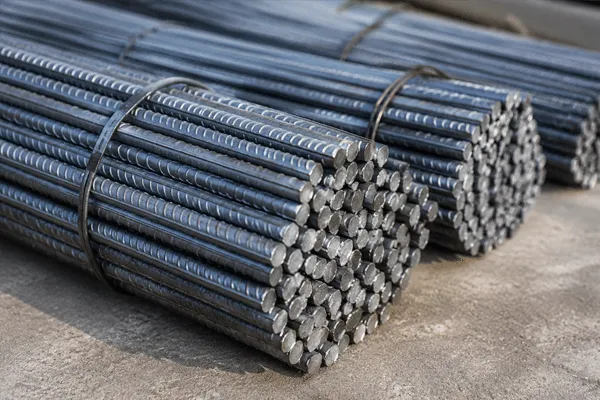
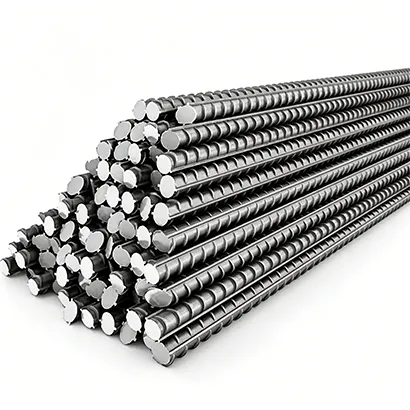
A deformed bar quote should identify grade, diameter, quantity and delivery basis before the price is compared.
Use a comparable price basis first
Two offers cannot be compared if one is quoted per metric ton for 12 m bars and the other is quoted per piece for mixed lengths. Normalize every offer to the same currency, unit, delivery term, product form and specification. Ask the supplier to separate material value, processing, inspection, packing and freight so a low headline price does not hide a missing service.
Quote field
Published or practical reference
Why it changes the comparison
Public listing benchmark
H-beam reference: USD 440-568/MT
Reference only; it is not a fixed deformed-bar price
Rebar grade
HRB500 listed; HRB400, HRB500 and ASTM A615 Grade 60 also referenced
Strength, chemistry and testing obligations differ by standard
Diameter
5.5-16 mm on the published HRB500 listing
Changes mass per metre, rolling schedule and project fit
Length or coil
6 m, 9 m, 12 m or coil
Affects yield, cutting, loading, wastage and local handling
Quantity
Project-specific metric tons
Mill allocation, production efficiency and freight utilization change
Delivery basis
Incoterm and named destination required
Freight, insurance, port charges and risk transfer may be excluded
The table is a comparison framework, not a promise that any one field carries a fixed premium. Request the same fields from every bidder and write the quotation validity date because steel and freight references can move after the offer is issued.
1. Grade and standard drive the material cost
HRB500, HRB400 and ASTM A615 Grade 60 are not interchangeable labels. They may differ in yield strength, tensile strength, elongation, rib requirements, chemistry limits and test documentation. A project designed to one standard may require an engineer-approved substitution before another grade can be used.
Write the governing standard, grade and inspection document into the RFQ. If seismic or impact requirements apply, name the test temperature and acceptance rule. Higher strength can reduce steel tonnage in some designs, but it can also change bending, welding or approval requirements. Compare the total installed cost rather than assuming the lowest price per ton is the best result.
2. Diameter, length and coil form affect yield
Luyuan’s published HRB500 listing references 5.5-16 mm diameters and 6 m, 9 m, 12 m or coil delivery. Diameter determines the bar mass per metre and the rolling campaign. Length determines how much cutting waste remains after the bar schedule is nested. Coil delivery can improve automated processing for suitable lines, while straight bars may be easier for a site that has no decoiler.
State diameter and permitted diameter tolerance.
State nominal length, length tolerance and whether random lengths are allowed.
Choose straight bars or coil based on the buyer’s cutting, bending and unloading equipment.
Provide the bar schedule or cutting list so the supplier can estimate yield and bundle sizes.
Diameter and delivered length influence mass calculations, cutting yield and handling cost.
3. Quantity changes the mill and freight economics
A small trial order may carry a different unit cost from a vessel-sized project lot because production allocation, bundle preparation and freight utilization are different. A Southeast Asia commercial-complex case in Luyuan’s source library used more than 5,000 tons of high-strength H-beams and rebar and was delivered two weeks ahead of schedule. A Middle East highway case references 8,000 tons and completion of the bridge framework one month ahead of schedule. These are project references, not price promises.
Give the supplier the total tonnage, shipment split, required monthly call-off and port. Ask whether the quote assumes one production run, multiple lots or a partial-container shipment. A nominal per-ton saving can disappear when the order is split into inefficient loads or requires repeated inspection and port handling.
4. Testing and documents are part of the delivered value
Rebar price should state whether the offer includes a Mill Test Certificate, heat-number traceability, dimensional checks, tensile and bend tests, pre-shipment inspection or third-party witnessing. If the project uses an engineer-approved inspection and test plan, attach it to the RFQ. Otherwise, two suppliers may quote different evidence while using the same product name.
Evidence item
Buyer question
Potential cost effect
Mill Test Certificate
Which chemistry and mechanical values are reported for the heat?
Document preparation and standard-specific testing
Heat traceability
Can bundle marks be reconciled to the MTC after cutting?
Marking, segregation and handling controls
Third-party inspection
Who witnesses, what sampling plan applies and where is it performed?
Inspector fees, testing and schedule coordination
Dimensional and rib checks
What diameter, length and deformation limits are accepted?
Inspection labor and possible rework or sorting
5. Loading, packing and port handling alter the landed price
Bundle weight, lifting points, moisture protection, marking and container or vessel loading all affect the delivered cost. A quote that excludes export packing may look lower until the buyer adds local wrapping, crane time and port storage. State whether bundles must be seaworthy, whether wooden separators are allowed, and whether each bundle needs a heat number and barcode.
Confirm the loading plan for 6 m, 9 m and 12 m bars. Long bars can require special handling or a different vessel arrangement. Coil rebar may need different securing and unloading equipment. Ask for the assumed payload and the basis for any overweight or port surcharge.
6. Incoterms, destination and freight decide the landed total
Specify the Incoterm and named port or jobsite. EXW, FOB, CFR and CIF move different costs and risks between buyer and seller. Freight, marine insurance, destination handling, customs, duties, inland transport and currency conversion should be shown separately where possible.
Request the material price per metric ton on the agreed grade and form.
Request processing, testing, packing and inspection as separate line items.
Request freight and insurance to the named destination with validity dates.
Add destination charges, taxes, duties and inland delivery before comparing landed cost.
Do not convert an FOB offer into a CIF comparison using an old freight assumption. Reconfirm the route, vessel window and port charges when the purchase order is released.
Price scenarios buyers can use
Scenario
Specification basis
What to request
Budget estimate
Grade family, approximate diameter and total tonnage
Indicative material range clearly labeled non-binding
Competitive RFQ
Exact grade, standard, diameter, length or coil, quantity and Incoterm
Comparable line-item quote with validity date
Contract award
Approved drawings, inspection plan, packing and destination
Firm price, production window, evidence package and remedies
Change order
Revised diameter, quantity, shipment split or delivery date
Delta price showing which field changed and why
For a quick budget, mark the result as an estimate. For procurement, require a firm quote that identifies the assumptions. The source library’s USD 440-568/MT H-beam range illustrates why a public listing can be a useful orientation but cannot answer a deformed-steel-bars price question without matching the product and specification.
Loading, bundle marking and inspection evidence should be included when calculating the landed rebar cost.
Common errors that make a quote look cheaper
Comparing HRB500 with an unapproved alternative grade.
Comparing 12 m straight bars with coil without adding local decoiling and cutting.
Leaving the destination and Incoterm blank.
Ignoring third-party inspection, MTC and heat traceability.
Using a public H-beam listing as if it were a fixed deformed-bar price.
Approving a low price before confirming bundle weight, packing and port handling.
RFQ template for deformed steel bars
Use this structure: “Deformed steel bars, [grade] to [standard], [diameter] mm, [6/9/12 m or coil], quantity [X] metric tons, [rib and tolerance requirements], MTC and heat traceability required, tensile and bend tests to [standard], third-party inspection [yes/no], seaworthy export packing, [Incoterm] to [destination], shipment by [date].” Attach the bar schedule, drawing notes and inspection plan.
Compared with common commodity rebar offers, a specification-based quote makes testing, loading and destination assumptions visible. It may not produce the lowest headline number, but it gives the project team a price that can be checked against the actual delivered scope.
Review Luyuan’s capability page for current processing and documentation scope, then send the bar schedule and delivery basis through the contact page.
FAQ
What is the current deformed steel bars price?
Luyuan’s source library does not publish a fixed deformed-bar price. It lists a USD 440-568/MT public reference for H-beam steel, while rebar should be quoted against the exact grade, diameter, quantity, testing, Incoterm and destination.
Which rebar grades are referenced by Luyuan?
The published section-steel data lists HRB500 and solution pages also reference HRB400, HRB500 and ASTM A615 Grade 60. Confirm the governing standard and engineer approval before treating grades as alternatives.
Does diameter change the price per ton?
It can change the rolling schedule, minimum order, yield and logistics even when the quote is per ton. State the diameter mix and bar schedule so the supplier can price the actual production plan.
What documents should accompany the shipment?
Define the MTC, heat traceability, dimensional and rib checks, tensile and bend tests, inspection report, packing list and any third-party certificate in the purchase order.
Next step: Send the grade and standard, diameter mix, length or coil form, tonnage, bar schedule, testing, loading, Incoterm and destination for a comparable deformed steel bars quotation.
About the author
Luyuan Steel Technical Team supports steel manufacturing, processing, quality-control documentation, product specification and international project supply.






 08-26 2026