By Luyuan Steel Technical Team | Updated August 27, 2026
High strength deformed steel bars must be selected against the structural design, governing standard, bar diameter, rib geometry, bend schedule and inspection plan. A grade label alone is not enough. Project teams should align engineering approval, mill documentation, fabrication limits and delivery sequencing before releasing a bulk order.
Information basis: Luyuan’s published section-steel data lists HRB500 rebar in 5.5-16 mm diameters, with 6 m, 9 m, 12 m and coil delivery options. Solution pages also reference HRB400, HRB500 and ASTM A615 Grade 60 products. Exact mechanical values and dimensional tolerances must follow the standard edition named in the purchase order.
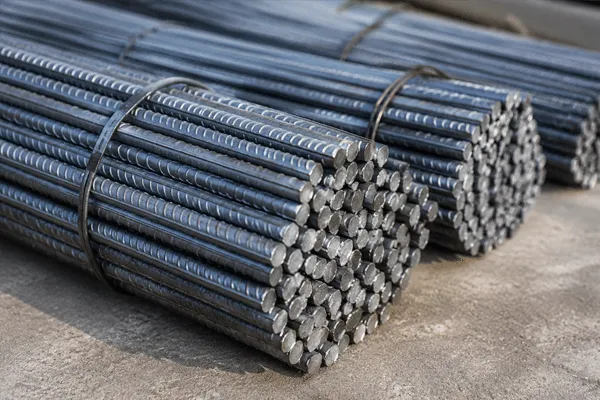
Grade, diameter, length and traceability should be confirmed before high-strength rebar is released to fabrication.
Published product specification reference
Specification field
Luyuan published reference
Project requirement to add
Listed product grade
HRB500
Governing standard, standard edition and engineer approval
Additional solution references
HRB400, HRB500 and ASTM A615 Grade 60
Required yield, tensile, elongation and bend criteria
Diameter
5.5-16 mm on the product listing
Bar schedule, permitted deviation and mass-per-metre tolerance
Length
6 m, 9 m or 12 m
Cutting allowance, length tolerance and bundle plan
Alternative form
Coil
Decoiling equipment, straightness and processing route
Documentation
Project-specific MTC and traceability scope
Heat number, test plan, inspection witness and release authority
These values define Luyuan’s published range, not every possible project combination. A requested diameter outside the listed 5.5-16 mm range needs a separate availability check. The same applies to a non-standard length, special seismic designation or tighter mass tolerance.
Grade selection: HRB400, HRB500 or ASTM A615 Grade 60
Grade selection starts with the structural drawings and local code. HRB400 and HRB500 are referenced in Luyuan project materials, while ASTM A615 Grade 60 appears as an option for projects using the ASTM system. ASTM International maintains standards for steel reinforcement; the specified edition and supplementary requirements should be written into the contract.
Grade reference
Selection context
Approval question
HRB400
Reinforced-concrete work designed to the applicable HRB standard
Does the drawing name this grade and the required ductility class?
HRB500
Higher-strength reinforcement where the design and code permit it
Are bend radius, splice, anchorage and fabrication rules approved?
ASTM A615 Grade 60
Projects specified to the ASTM reinforcement standard
Which A615/A615M edition and test requirements apply?
Do not treat these grade names as automatic equivalents. Yield strength is only one field. Chemistry, tensile-to-yield relationship, elongation, bend performance, rib geometry and marking rules can differ. Any substitution should be approved by the project engineer before purchase.
Diameter, length and mass planning
Bar diameter affects reinforcement area, spacing, congestion, lap length, bend tooling and lifting weight. The project bar schedule should identify each diameter, shape code, cut length and quantity. A mixed-diameter order also needs a bundle-marking plan so site teams can identify bars without opening every bundle.
Match each bar mark on the drawing to grade, diameter and cut length.
Calculate total linear metres and theoretical mass using the governing standard.
Add approved cutting and fabrication allowances rather than an arbitrary percentage.
Separate straight-bar and coil requirements because their processing and handling routes differ.
Confirm 6 m, 9 m or 12 m supply against container, vessel, yard and crane constraints.
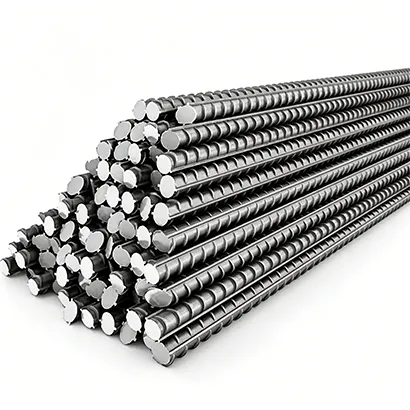
Diameter and delivered length influence reinforcement layout, cutting yield, bundle weight and site handling.
Rib geometry and bond performance
Deformations transfer force between steel and concrete. Rib height, spacing, angle and relative rib area must meet the specified standard. A visually aggressive rib pattern is not proof of compliance. Dimensional inspection should compare measured deformation geometry with the accepted standard and sampling plan.
Check for rolled-in grade marks and traceable mill identification. Surface rust should be assessed against the project’s acceptance rule; light oxidation and severe scale, pitting or contamination are not the same condition. Oil, mud or loose scale can interfere with bond and handling even when the steel chemistry is correct.
Seismic design requires more than high yield strength
Seismic reinforcement must satisfy the local structural code and the engineer’s ductility requirements. Higher yield strength can reduce required steel area in some designs, but it can also change strain demand, anchorage, lap-splice behavior and bend detailing. The project should define elongation, tensile-to-yield relationship, bend performance and any cyclic or seismic designation required by the code.
Luyuan’s source library includes an anonymized Middle East highway project using high-strength H-beams and rebar for structural and seismic requirements, with a stated volume of 8,000 tons. This is evidence of project supply experience, not proof that one grade fits every seismic design.
High-strength H-beams and rebar as a project package
The related product scope combines high-strength H-beams and rebar for infrastructure and building projects. Rebar carries tensile reinforcement within concrete, while H-beams form structural framing. When both are procured together, align grade standards, drawing revisions, inspection release dates, shipment sequence and site storage identifiers.
Luyuan’s project references include a commercial complex in Southeast Asia supplied with more than 5,000 tons of high-strength H-beams and rebar. The website states delivery finished two weeks ahead of schedule. The useful procurement lesson is coordination: bar schedules and structural member lists should be frozen against the same drawing revision before production.
Inspection and acceptance table
Inspection point
Evidence
Typical rejection risk
Identity and grade
Bundle tag, rolled mark, heat number and MTC
Mixed heats, wrong grade or untraceable bars
Diameter and mass
Caliper, scale and agreed sampling record
Out-of-tolerance section or incorrect theoretical mass basis
Rib geometry
Measured rib height, spacing and pattern against standard
Bond geometry outside the accepted limits
Mechanical properties
Tensile, yield, elongation and bend-test report
Grade values or ductility requirements not achieved
Length and straightness
Dimensional report and visual inspection
Excess cutting loss, handling problems or fabrication delay
Surface and packing
Pre-shipment photos, packing list and inspection release
Severe rust, contamination, damaged bundles or missing marks
Write the sampling frequency, witness points and release authority into the inspection plan. A Mill Test Certificate should be reconciled to the physical bundle marks; receiving a PDF that cannot be linked to the delivered bars is not complete traceability.
Bundle identification and inspection records keep grades and heat numbers traceable through delivery.
Application selection by project type
Application
Critical selection fields
Common mistake
High-rise building
Grade, ductility, congestion, couplers, bend schedule and delivery floors
Changing diameter without redesigning anchorage and spacing
Bridge and highway structure
Seismic class, fatigue exposure, traceability and staged delivery
Approving grade by yield strength alone
Foundation and pile cap
Large bar schedule, lap or coupler plan, lifting and corrosion control
Ignoring bundle weight and crane access
Precast component
Tight cut lengths, bend accuracy, jig fit and production sequencing
Ordering random lengths without calculating fabrication waste
Advantages and limitations
High-strength deformed steel bars can reduce reinforcement congestion and total bar area when the design code and engineer permit the higher grade. They also support heavy infrastructure and high-load construction. The limitations are material: tighter bend rules may apply, fabrication equipment must suit the grade, substitutions need approval, and inspection must verify ductility rather than yield strength alone.
Compared with common lower-strength reinforcement, a higher-strength grade may improve design efficiency, but it does not automatically reduce installed cost. Couplers, bend tooling, testing, bar spacing, cutting yield and code constraints can offset material savings.
RFQ checklist
A usable request can state: “High strength deformed steel bars, [grade] to [standard and edition], diameters [list], 6/9/12 m straight bars or coil, quantity by diameter, rib and mass tolerances to the named standard, tensile and bend testing, heat-number traceability, third-party inspection [if required], seaworthy bundles, [Incoterm] to [destination], delivery sequence by [dates].” Attach the approved bar schedule and drawing revision.
Price is available on request because the source library does not publish a fixed rebar listing. Ask for material, testing, processing, packing and freight as separate line items. The previous deformed steel bars price guide explains how to normalize those cost fields.
Review Luyuan’s capability page, then send the approved bar schedule, standard and inspection plan through the contact page.
FAQ
What high-strength rebar grades does Luyuan reference?
The published material lists HRB500 and solution references include HRB400, HRB500 and ASTM A615 Grade 60. Final availability and compliance must be confirmed against the specified standard.
What diameter range is published?
Luyuan’s HRB500 product listing shows 5.5-16 mm. Diameters outside that range require a separate production and availability check.
Is HRB500 always better than HRB400?
No. The structural design, ductility requirement, bend schedule, local code and fabrication route determine the correct grade. Higher yield strength alone does not make a grade suitable.
What must be verified before shipment?
Verify grade and standard, heat traceability, diameter, mass, rib geometry, mechanical and bend tests, length, straightness, surface, bundle marks and packing.
Next step: Send the governing standard, bar schedule, drawing revision, grade, diameter mix, lengths, testing, inspection and delivery sequence for a specification-based quotation.
About the author
Luyuan Steel Technical Team supports steel manufacturing, processing, quality-control documentation, product specification and international project supply.






 08-27 2026