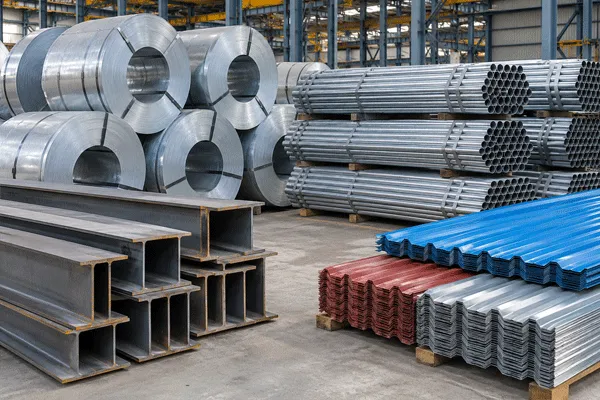
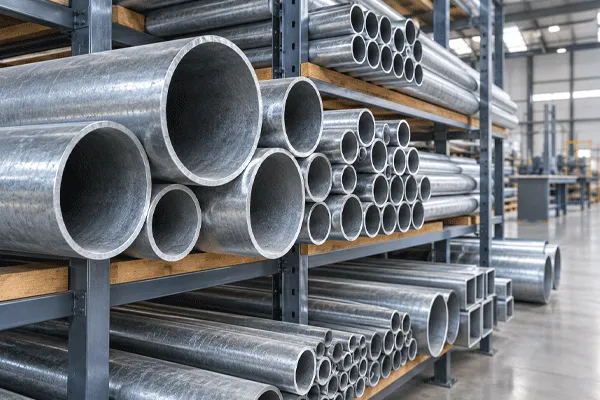
Choosing the wrong stainless steel coil can cause rust, poor forming, failed inspection, and delayed projects. For importers and manufacturers, one bad coil shipment can slow the whole supply chain. The smart solution is to buy the right grade, size, surface, and custom specification from a reliable steel supplier.
A stainless steel coil is a rolled metal material used for cutting, slitting, forming, welding, tube production, tubing, heat exchanger parts, cooling coil systems, panels, and industrial equipment. 304 stainless steel is a common choice because it offers good corrosion resistance, easy processing, stable quality, and wide application for global B2B buyers.
Article Outline
- What is a stainless steel coil?
- Why is 304 stainless steel coil a popular product?
- What stainless steel coil specification should buyers confirm?
- Where is stainless steel coil used?
- How does stainless steel coil become tube and tubing?
- Can stainless steel coil be used for heat exchanger and cooling coil production?
- How do 304, 316 stainless, carbon steel, aluminum, and copper compare?
- What custom service is available from a China steel supplier?
- What quality checks and documents should buyers request?
- How should stainless steel coil be packed and shipped?
- FAQs about stainless steel coil
What Is a Stainless Steel Coil?
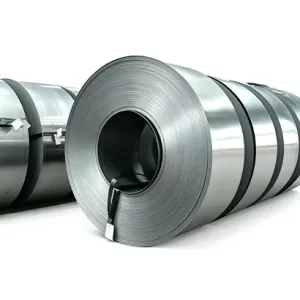
A stainless steel coil is a continuous roll of flat stainless steel material. Steel mills roll the metal into thin or medium-thick strip, then wind it into coil form for easier storage, transport, and processing. Buyers can later cut it into sheet, slit it into narrow strip, or process it into tube, tubing, panels, machine parts, and other finished products.
For B2B buyers, coil form is practical. It saves space, supports high-volume manufacturing, and allows fast downstream processing. A roofing sheet factory may need stainless steel coil for profiling. A tube mill may use it to produce welded steel tube. A machinery plant may cut it into parts for equipment covers, tanks, or frames.
As a professional steel manufacturer and integrated steel supplier in China, we supply stainless steel coil together with PPGI coil, PPGL coil, galvanized coil, galvalume coil, hot rolled steel, cold rolled steel, steel plate, steel pipe, H beam, C beam, angle steel, rebar, aluminum, copper, and other metal materials. This helps steel importers and project buyers reduce sourcing work.
Why Is 304 Stainless Steel Coil a Popular Product?
304 stainless steel is one of the most widely used stainless grades in the world. It offers a good balance of corrosion resistance, forming ability, welding performance, surface appearance, and cost. That is why many buyers choose 304 for construction, manufacturing, kitchen equipment, food and beverage machinery, tanks, panels, and industrial parts.
304 stainless steel coil is also easier to source than many special alloys. This matters for distributors, stockists, and contractors who need stable supply. When buyers need repeat orders, mixed container loading, or fast quotation, a common grade like 304 can make the whole purchase easier.
Stainless steel 304 is not always the strongest or most corrosion-proof option. But for many normal indoor, outdoor, and light industrial uses, it works well. It is strong enough for many parts, clean enough for food-related use, and easy enough to process in many factories.
What Stainless Steel Coil Specification Should Buyers Confirm?
Before buying stainless steel coil, buyers should confirm more than the price. The right specification decides whether the material can work smoothly in your production line. A small mistake in thickness, width, surface, diameter, or edge condition may create waste, machine stoppage, or customer complaints.
A complete inquiry should include grade, thickness, width, coil weight, surface finish, edge type, inner diameter, outer diameter, tolerance, length if cut-to-size, packing method, and required documents. For project orders, buyers should also tell the supplier the final application.
| Specification Item |
What to Confirm |
Why It Matters |
| Grade |
304, 304L, 316, 201, 430 |
Controls corrosion resistance and use |
| Thickness |
Custom thickness available |
Affects strength and forming |
| Width |
Full width or slit width |
Affects production efficiency |
| Surface |
2B, BA, No.4, HL, mirror |
Affects appearance and end use |
| Edge |
Mill edge or slit edge |
Affects safety and processing |
| Coil ID |
Common inner diameter options |
Affects uncoiling equipment |
| Packing |
Seaworthy export packing |
Protects goods during shipment |
| Documents |
MTC, inspection report |
Supports traceability and customs |
A buyer making a tube coil may care about stable strip width and weld performance. A decorative panel buyer may care more about surface finish. A heat exchanger buyer may care about thickness tolerance and clean surface. Good suppliers ask these questions before production, not after problems happen.
Where Is Stainless Steel Coil Used?
Stainless steel coil has many applications because it is clean, strong, attractive, and easy to process. It is widely used in construction, infrastructure projects, manufacturing, agriculture, machinery, warehouse buildings, industrial facilities, and global engineering projects.
Common application areas include:
- Roofing and wall cladding
- Kitchen equipment and sinks
- Food and beverage equipment
- Tube and pipe production
- Heat exchanger components
- Cooling coil systems
- Machinery covers and cabinets
- Storage tanks and containers
- Elevator panels and decoration
- Industrial plant equipment
- Greenhouse and warehouse projects
In real procurement, many buyers do not buy only one product. A building contractor may need stainless steel coil, galvanized steel coil, H beams, C beams, steel pipes, and angle steel. A machinery factory may need stainless sheet, plate, seamless pipe, rod, and aluminum parts. An integrated steel supplier can support these mixed needs with one purchasing channel.
How Does Stainless Steel Coil Become Tube and Tubing?
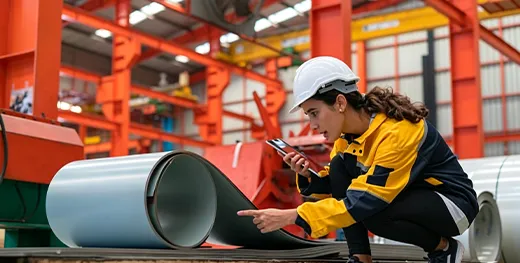
Many buyers use stainless steel coil as raw material for tube and tubing production. The coil is first slit into narrow strips. Then the strip is formed into a round shape, welded, sized, polished, tested, and cut to the required length. The finished product may become round pipe, square tube, rectangular tube, or precision tubing.
For tubing production, stable coil quality is very important. If the strip has uneven thickness, bad edges, poor surface, or unstable width, the final tubing may have poor weld quality, uneven diameter, or bad appearance. These problems may look small at first. But in high-volume manufacturing, they become expensive very quickly.
Some buyers also need stainless steel tubing for heat transfer, water flow, pump systems, and mechanical parts. In these cases, the buyer should confirm both the coil grade and the final working environment. Clean surface, proper thickness, and stable processing performance all matter.
Can Stainless Steel Coil Be Used for Heat Exchanger and Cooling Coil Production?
Yes. Stainless steel coil can be used for some heat exchanger parts, cooling coil systems, and stainless steel heating components. It may be processed into sheets, fins, covers, formed parts, or tubing coil systems depending on the design.
304 stainless steel is often used when the working medium is not too aggressive. It can handle many normal water, air, food, and light chemical environments. It is also easier to form and weld than many harder materials. For this reason, 304 is a common option for equipment manufacturers that need a balance between performance and cost.
However, not every heat exchanger should use 304. If the equipment works in high-chloride water, seawater, strong chemicals, or highly corrosive environments, 316 stainless may be a better choice because it offers superior corrosion resistance. The best choice depends on temperature, pressure, fluid type, cleaning method, and service life expectations.
How Do 304, 316 Stainless, Carbon Steel, Aluminum, and Copper Compare?
Different materials solve different problems. A smart buyer does not always choose the most expensive metal. The right material is the one that matches the job, budget, environment, and production method.
| Material |
Main Advantage |
Common Use |
Buyer Note |
| 304 stainless steel |
Good general corrosion resistance |
Tube, panel, tank, equipment |
Popular and cost-effective |
| 316 stainless |
Better resistance in harsh areas |
Marine, chemical, outdoor projects |
Higher cost but stronger protection |
| Carbon steel |
Strong and economical |
Structures, frames, beams |
Needs coating or painting |
| Aluminum |
Light and easy to process |
Covers, panels, transport parts |
Good when weight matters |
| Copper |
Good heat and electrical transfer |
Copper pipe, coil, electrical parts |
Higher price, special use |
For example, 304 stainless steel coil may be right for kitchen equipment, indoor panels, and normal industrial parts. 316 stainless may be better near the sea or in corrosive environments. Carbon steel may be the best choice for heavy structural use. Aluminum may help reduce weight. Copper may be selected when thermal or electrical conductivity is the main goal.
What Custom Service Is Available from a China Steel Supplier?
Global steel buyers often need more than standard stock. They may need a special size, surface treatment, coil weight, packaging mark, or mixed product shipment. This is where custom steel service becomes important.
As a China steel manufacturer and integrated supplier, we can support OEM / ODM customization for steel distributors, importers, contractors, pipe and tube buyers, roofing sheet manufacturers, steel structure fabricators, and industrial project buyers.
Available service options may include:
- Custom thickness and width
- Coil slitting
- Cut-to-length processing
- Surface protection film
- Polishing and surface treatment
- Profiling support
- Seaworthy export packaging
- MTC document support
- Third-party inspection support
- International logistics coordination
For example, a roofing sheet manufacturer may order PPGI coil, PPGL coil, and stainless steel coil in one purchasing plan. A pipe buyer may need stainless coil, welded pipe, seamless pipe, and square tube. A construction contractor may need H beams, C beams, galvanized coil, steel plate, and rebar for the same project.
What Quality Checks and Documents Should Buyers Request?
Quality control should start before production. It should not begin after the container arrives. A professional buyer should confirm inspection requirements, tolerances, documents, and packing details before placing the order.
Important quality checks include:
- Grade verification
- Chemical composition review
- Thickness tolerance check
- Width tolerance check
- Surface inspection
- Edge inspection
- Coil shape inspection
- Weight checking
- Label checking
- Packing inspection
For export orders, buyers should request MTC documents. MTC helps show the chemical and mechanical data of the material. For large project orders, buyers may also request third-party inspection before shipment. This gives extra confidence to importers, contractors, and engineering companies.
A good supplier should also provide clear photos, packing details, and loading support. In steel trade, trust comes from details. Clear documents, stable quality, and honest communication can reduce risk for both sides.
How Should Stainless Steel Coil Be Packed and Shipped?
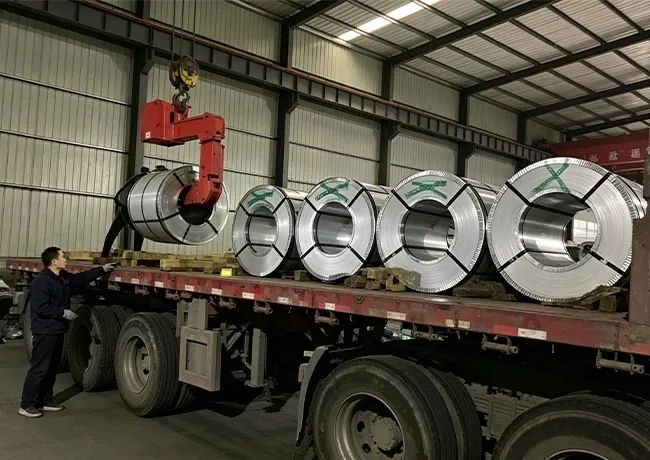
Good packing protects good material. Stainless steel coil may travel a long way by truck, warehouse, port, vessel, and final delivery. If the packing is weak, the coil may suffer scratches, moisture damage, edge dents, or loose straps.
Common export packing includes waterproof paper, plastic film, steel sheet protection, edge guards, wooden pallets, steel straps, and clear labels. For polished surfaces, extra protection may be needed. For slit coil, tight packing is very important because narrow coils can move during transport.
Shipping plans should also match the material. Heavy coil often ships in 20GP containers. Long steel tube, beam, or special 50ft length material may need different loading plans. A professional supplier should help buyers choose safe packaging and practical logistics.
B2B Case Study: Helping a Tube Buyer Reduce Production Waste
One overseas tube manufacturer needed 304 stainless steel coil for welded tubing production. Their main concern was not only price. They needed stable width, smooth edge, clean surface, and fast delivery because their production line could not stop.
We reviewed the buyer’s required grade, thickness, slit width, coil weight, surface finish, and packing method. We also confirmed the final tube application and helped match the coil specification to their production needs. Before shipment, we checked labels, surface condition, packaging, and MTC documents.
The buyer received material that matched the production plan. Less adjustment. Less waste. Faster output. This is the real value of a reliable steel supplier: not only selling metal, but helping customers keep their project and factory schedule under control.
How Should Buyers Send a Clear Stainless Steel Coil Inquiry?
A clear inquiry helps suppliers quote faster and more accurately. It also helps avoid wrong offers. If you only ask, “What is your stainless steel coil price?” the supplier still needs many missing details.
A good inquiry can include:
- Required grade: 304, 304L, 316, or others
- Thickness and width
- Coil weight
- Surface finish
- Edge condition
- Quantity
- Final application
- Destination port
- Required documents
- Inspection requirement
- Packing requirement
- Delivery time
Here is a simple inquiry example:
We need 304 stainless steel coil, 0.8 mm thickness, 1219 mm width, 2B surface, about 25 tons, with MTC and seaworthy packing. Final use is tube production. Please quote CIF price to our destination port.
This kind of inquiry saves time. It also helps the supplier recommend the right product, not just the cheapest option.
Why Work With an Integrated Steel Supplier?
Many B2B buyers face the same problem. They need different steel and metal products, but each supplier only handles one category. This creates more emails, more payment work, more shipping problems, and more quality risk.
An integrated steel supplier can make procurement easier. Buyers can source stainless steel coil, galvanized coil, galvalume coil, steel plate, steel pipe, hollow sections, H beam, C beam, angle steel, rebar, aluminum sheet, aluminum coil, copper rod, copper coil, and copper pipe from one supply channel.
For steel distributors, this means more product coverage. For contractors, it means easier project supply. For manufacturers, it means better production planning. For importers, it means stable long-term cooperation.
FAQs About Stainless Steel Coil
What is stainless steel coil used for?
Stainless steel coil is used for sheet processing, tube making, tubing, heat exchanger parts, cooling coil systems, kitchen equipment, machinery covers, tanks, roofing, wall cladding, and industrial manufacturing.
Is 304 stainless steel coil good for general use?
Yes. 304 stainless steel coil is a good general-use material. It offers good corrosion resistance, forming ability, weld performance, and availability. It is suitable for many construction, manufacturing, equipment, and decoration applications.
What is the difference between 304 and 316 stainless steel?
304 is a common general-purpose grade. 316 stainless offers better resistance in chloride, marine, and more corrosive environments. 304 is often more cost-effective, while 316 is better for harsher service conditions.
Can stainless steel coil be used to make tube?
Yes. Stainless steel coil can be slit and formed into welded tube or tubing. Buyers should confirm thickness, width, surface, edge quality, and grade before production.
Can I order custom stainless steel coil?
Yes. Custom options can include thickness, width, surface finish, slit width, coil weight, packing, protection film, and inspection documents. Custom processing helps match the coil to your production line.
What documents should I request when importing stainless steel coil?
You should request commercial invoice, packing list, bill of lading, MTC, and any required inspection report. For large projects, third-party inspection before shipment is also recommended.
Key Things to Remember
- Stainless steel coil is a flexible metal material for cutting, slitting, forming, tube making, and industrial production.
- 304 stainless steel is popular because it offers good corrosion resistance, processing ability, and stable availability.
- Buyers should confirm grade, thickness, width, surface, edge, diameter, packing, and documents before ordering.
- Stainless steel coil can be used for tube, tubing, heat exchanger parts, cooling coil systems, panels, and equipment.
- 316 stainless may be better than 304 for marine, chemical, or highly corrosive environments.
- A reliable China steel supplier can support custom processing, MTC documents, third-party inspection, safe packaging, and international logistics.
- For B2B buyers, the best supplier is not only the cheapest one. The best supplier helps protect your project schedule, product quality, and long-term supply chain.









 06-22 2026