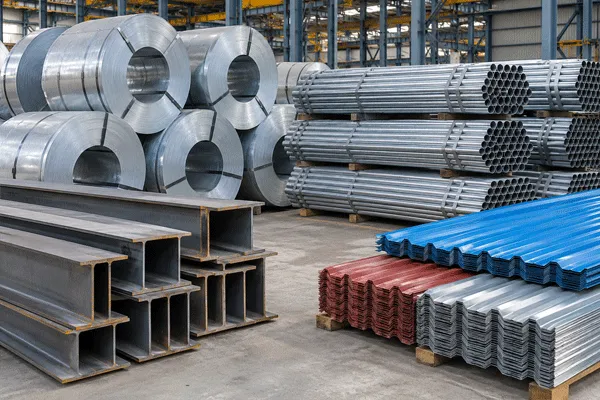
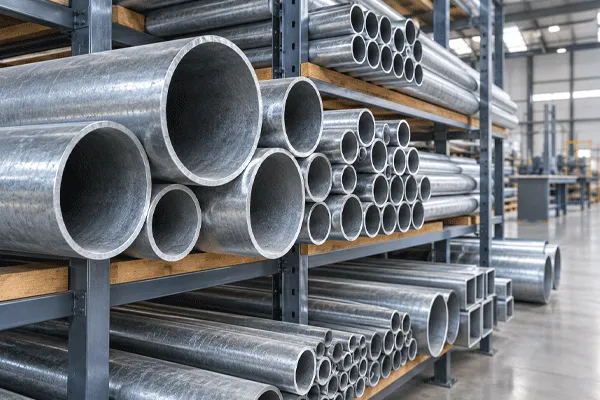
Unprotected steel can rust fast when it meets moisture, salt, and harsh weather. That means project delays, quality claims, and higher replacement cost. Galvanized steel coils solve this problem by adding zinc protection to steel before it becomes roofing, siding, HVAC parts, or fabricated products.
Galvanized steel coils are carbon steel coils coated with zinc to protect the underlying steel from rust and corrosion. The galvanized steel coil and sheet are widely used in construction, roofing, automotive parts, HVAC systems, steel structure fabrication, appliances, and manufacturing because they offer corrosion resistance, formability, and long service life.
Article Outline
- What are galvanized steel coils?
- How does the galvanize process protect steel from rust?
- What is the difference between galvanized steel coil and galvanized steel sheet?
- What are the benefits of galvanized steel?
- Where are galvanized steel coils used in construction and manufacturing?
- How do zinc coating weight and surface treatment affect performance?
- What specifications should buyers check before ordering galvanized steel coil?
- How do galvanized steel coils compare with PPGI, PPGL, and galvalume coils?
- How should importers choose a trusted galvanized steel supplier?
- What does a professional steel coil supplier provide beyond price?
- FAQs about galvanized steel coil and sheet
What Are Galvanized Steel Coils? Galvanized Steel Coil and Sheet Guide from a Steel Coil Supplier
What Are Galvanized Steel Coils?
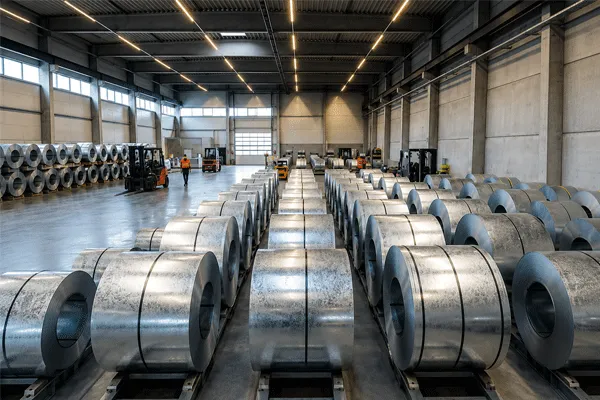
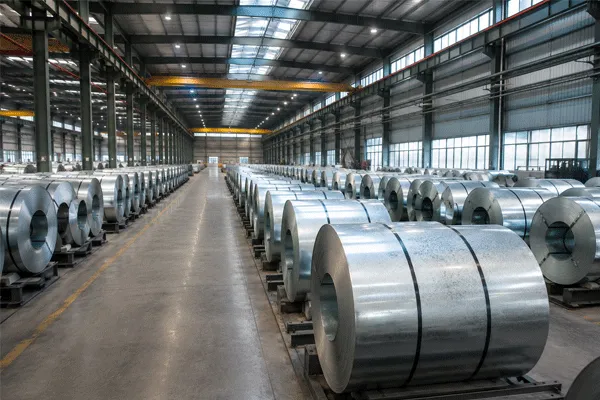
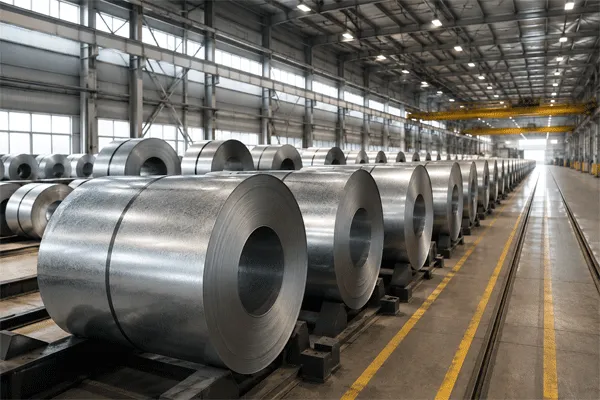
Galvanized steel coils are steel coils that go through a galvanize process to receive a protective zinc coating. In simple terms, galvanized steel is carbon steel with zinc on both sides. The zinc helps protect the steel from corrosion, moisture, and exposure to the elements.
A galvanized steel coil starts as a cold rolled or hot rolled base coil. The steel is cleaned, heated, and passed through a bath of molten zinc. This creates a layer of zinc on the surface. After cooling, the coil can be slit, cut, formed, profiled, or painted according to the final use.
ASTM A653/A653M covers steel sheet, zinc-coated galvanized or zinc-iron alloy-coated galvannealed by the hot-dip process in coils and cut lengths, making it one of the common standards buyers may see in international galvanized steel coil and sheet procurement.
How Does the Galvanize Process Protect Steel from Rust?
The reason buyers galvanize steel is simple: zinc protects the underlying steel. The coating works in two ways. First, zinc serves as a barrier between the steel and the environment. Second, zinc acts as a sacrificial anode, meaning it corrodes before the steel does.
The American Galvanizers Association explains that zinc in a hot-dip galvanized coating sacrifices itself to protect the base steel until the surrounding zinc is consumed. This is why galvanized products are manufactured for outdoor and industrial projects where bare steel would corrode too quickly.
The basic galvanization process includes:
| Step |
What Happens |
Why It Matters |
| Cleaning |
Oil, scale, and dirt are removed |
Helps coating bond to steel |
| Pickling |
Oxides are removed from the surface |
Prepares clean steel surface |
| Fluxing |
Steel is prepared for zinc contact |
Improves zinc adhesion |
| Hot dipping |
Steel enters molten zinc bath |
Creates protective coating |
| Cooling |
Coated steel is cooled and inspected |
Stabilizes final surface |
| Coiling |
Finished steel is wound into coil |
Ready for shipping or processing |
This process makes galvanized steel much more suitable for construction and manufacturing than untreated carbon steel in wet or outdoor environments.
What Is the Difference Between Galvanized Steel Coil and Galvanized Steel Sheet?
A galvanized steel coil is supplied in rolled form. A galvanized steel sheet is cut from that coil into flat sheets. Both products may use the same base material and zinc coating, but they serve different buying and processing needs.
Importers, roofing sheet manufacturers, and steel distributors often buy coil because it gives them flexibility. They can cut it, slit it, profile it, corrugate it, or process it into roof panels, wall cladding, ducts, and structural parts. Contractors may prefer steel sheet when they need ready-to-use flat material for fabrication.
| Product Form |
Best For |
Buyer Type |
| Galvanized coil |
Slitting, cutting, profiling, roll forming |
Steel distributors, roofing factories |
| Galvanized steel sheet |
Direct fabrication and panel cutting |
Contractors, workshops, fabricators |
| Galvanized sheet strips |
Small parts, stamping, edging |
Manufacturing companies |
| Profiled sheet |
Roofing, siding, wall cladding |
Building material wholesalers |
As a steel coil and sheet supplier, we often help buyers choose between coil and sheet based on local labor cost, machine availability, packaging needs, and final product design.
What Are the Benefits of Galvanized Steel?
The benefits of galvanized steel are the main reason it is used in so many industries. It offers corrosion resistance, practical cost, good appearance, and easy processing. It is also widely available in different thicknesses, widths, coating weights, and surface finishes.
Key benefits include:
- Strong corrosion resistance for outdoor and humid environments
- Longer lifespan than bare steel in many applications
- Good formability for roofing, cladding, ducts, and parts
- Stable coating for storage, transport, and fabrication
- Lower maintenance cost in many construction projects
- Flexible processing such as slitting, cutting, profiling, and bending
The zinc coating provides both barrier protection and sacrificial protection. AGA also notes that zinc coatings protect steel due to their anodic properties, meaning zinc will corrode before the underlying steel.
For global project buyers, the value is not only the coil price. The real value is fewer rust problems, stable quality, fewer site complaints, and better control over project delivery.
What Are Galvanized Steel Coils? Galvanized Steel Coil and Sheet Guide from a Steel Coil Supplier
Where Are Galvanized Steel Coils Used in Construction and Manufacturing?
Galvanized steel is widely used because it fits many industries. It can handle moisture, air exposure, transport, forming, and long-term use better than bare steel. Many buyers use galvanized steel coils when the final product will be exposed to moisture or harsh weather conditions.
Common applications include:
| Industry |
Application |
Why Galvanized Steel Works |
| Construction |
Roof panels, siding, wall cladding |
Weather resistance and formability |
| Infrastructure |
Guardrails, supports, drainage parts |
Long service life |
| Automotive |
Body parts and corrosion-resistant parts |
Zinc helps reduce corrosion risk |
| HVAC |
Ducts, vents, air handling parts |
Good forming and clean surface |
| Agriculture |
Greenhouse frames, storage buildings |
Moisture resistance |
| Manufacturing |
Cabinets, shelves, appliance parts |
Easy processing |
| Steel structure |
Secondary members, purlins, C beams |
Practical protection |
WorldAutoSteel notes that many vehicle steel parts need corrosion protection, and zinc coatings are a common way to protect automotive steels. This also explains why galvanized products are common in automotive supply chains as well as building material markets.
For roofing sheet manufacturers, galvanized steel coils are often processed into corrugated roof panels, trapezoidal sheets, and wall panels. For HVAC buyers, coil can become ductwork. For machinery factories, it can become panels, guards, covers, and brackets.
How Do Zinc Coating Weight and Surface Treatment Affect Performance?
Not all galvanized steel coils are the same. The coating weight, surface finish, base steel grade, thickness tolerance, and surface treatment all affect final performance. A higher coating weight usually gives more zinc protection, but it may also affect price, forming, and final use.
Common selection details include:
- Coil thickness
- Coil width
- Zinc coating weight
- Spangle type
- Surface treatment
- Oiled or unoiled finish
- Passivation
- Chromated or chromium-free treatment
- Coil ID and coil weight
- Edge condition
- Packaging method
AGA explains that the service life of zinc coatings is related to zinc coating thickness, though coating density and specification differences must also be considered when comparing zinc coatings.
For buyers, this means “cheap galvanized coil” is not always cheaper. If the zinc coating is too low for the environment, the product may rust early. If the surface treatment is wrong, white rust can appear during sea transport. If packaging is weak, moisture can damage the coil before it reaches the warehouse.
What Specifications Should Buyers Check Before Ordering Galvanized Steel Coil?
Before ordering galvanized steel coil, buyers should confirm the full technical specification. A serious supplier should not quote only thickness and width. That is not enough for export projects, steel distributors, or construction contractors.
A practical order checklist includes:
| Specification Item |
Why It Matters |
| Standard |
ASTM, EN, JIS, GB, or project standard |
| Grade |
Defines strength and forming performance |
| Thickness |
Affects load, forming, and cost |
| Width |
Must match processing machine |
| Zinc coating |
Controls corrosion protection |
| Surface |
Regular spangle, minimized spangle, zero spangle |
| Treatment |
Passivation, oiling, anti-fingerprint if needed |
| Coil weight |
Affects handling and logistics |
| Coil ID |
Must match decoiler |
| MTC |
Confirms material traceability |
| Inspection |
Supports third-party quality control |
| Packaging |
Protects coil during sea freight |
For example, a roofing manufacturer may need a softer grade for roll forming. An infrastructure project may need higher strength. A distributor may need a variety of coating weights for different applications. Different applications need different coil choices.
As a professional steel company in China, we support customized thickness, width, coating weight, surface treatment, cutting, slitting, profiling, RAL colors for related pre-painted products, MTC documents, third-party inspection, and international logistics.
How Do Galvanized Steel Coils Compare With PPGI, PPGL, and Galvalume Coils?
Galvanized steel coils are not the only coated steel products. Buyers often compare them with PPGI, PPGL, and galvalume steel coils. The right choice depends on budget, weather exposure, appearance, forming needs, and project location.
| Product |
Main Coating / Surface |
Typical Use |
| Galvanized steel coil |
Zinc coating |
Roofing base, ducts, general fabrication |
| PPGI coil |
Pre-painted galvanized steel |
Color roofing, wall panels, appliances |
| PPGL coil |
Pre-painted galvalume steel |
Color panels with aluminum-zinc base |
| Galvalume coil |
Aluminum-zinc coating |
Roofing, outdoor panels, heat-reflective uses |
Galvanized steel solutions are popular when buyers need practical corrosion protection and flexible downstream processing. PPGI is better when color and finished appearance are required. Galvalume may be selected for certain roofing and wall cladding uses where aluminum-zinc coating performance is preferred.
A trusted galvanized steel supplier should explain these differences clearly. If every product is described as “top-quality” without matching the real application, the buyer takes the risk.
How Should Importers Choose a Trusted Galvanized Steel Supplier?
Choosing a trusted galvanized steel supplier is not only about the lowest price. Price matters. But stable quality, fast quotation, export experience, safe packaging, clear documents, and delivery control matter just as much.
A good supplier should provide:
- Clear specification confirmation
- Factory-direct pricing
- Stable steel supply
- OEM / ODM customization
- Cutting, slitting, and profiling support
- MTC traceability
- Third-party inspection support
- Photos or videos before shipment
- Seaworthy packaging
- Container loading plan
- Fast communication
For steel importers and project contractors, poor supply can stop a whole project. A wrong thickness, wrong zinc coating, damaged coil edge, or missing MTC can create delays and claims. That is why supplier selection should be treated as project risk control.
What Are Galvanized Steel Coils? Galvanized Steel Coil and Sheet Guide from a Steel Coil Supplier
What Does a Professional Steel Coil Supplier Provide Beyond Price?
A professional coil supplier should help the buyer reduce mistakes. Many international buyers know the market price, but they still need help with grade selection, coating selection, packaging, logistics, and inspection.
We support global buyers with:
- PPGI steel coils
- PPGL steel coils
- Galvanized steel coils
- Galvalume steel coils
- Hot rolled steel coils and sheets
- Cold rolled steel coils and sheets
- Steel plates
- Steel pipes
- Seamless pipes
- Welded pipes
- Square and rectangular hollow sections
- H beams, C beams, angle steel, and rebar
- Stainless steel sheets, coils, and pipes
- Aluminum sheets, coils, and pipes
- Copper rods, coils, plates, and pipes
This product range allows buyers to source multiple steel products through one export partner. For engineering companies and international project buyers, that saves time. For distributors, it supports mixed-container purchasing and stable long-term cooperation.
A good steel supplier does not only sell steel. A good supplier helps the buyer avoid wrong material, wrong coating, wrong packaging, and wrong delivery timing.
Practical Case: Galvanized Coil for a Roofing Sheet Manufacturer
A roofing sheet manufacturer needs galvanized steel coils for roll forming roof panels. The buyer asks for competitive pricing, but the real project needs more details: thickness tolerance, coating weight, coil width, surface finish, coil ID, and packaging method.
A practical supply plan may look like this:
| Buyer Requirement |
Supplier Solution |
| Roof panel production |
Galvanized coil for roll forming |
| Outdoor exposure |
Suitable zinc coating selection |
| Local machine width |
Customized coil width |
| Fast processing |
Stable coil weight and edge condition |
| Export shipment |
Moisture-resistant seaworthy packaging |
| Quality control |
MTC and third-party inspection support |
In this case, premium galvanized steel coils are not only about appearance. They must run well on the buyer’s machine, resist rust during transport, and meet the final roof application. That is how high-quality galvanized steel creates real business value.
FAQs About Galvanized Steel Coil and Sheet
What are galvanized steel coils?
Galvanized steel coils are steel coils coated with zinc to protect steel from rust and corrosion. They are often made through hot-dipped galvanizing and supplied in coil form for cutting, slitting, profiling, and manufacturing.
What is galvanized steel used for?
Galvanized steel is used in roofing, wall cladding, siding, HVAC ducts, automotive parts, appliances, steel structure components, agricultural buildings, warehouse projects, and many industries that need corrosion-resistant steel products.
Is galvanized steel better than bare steel?
Yes, for many outdoor or humid applications. Bare steel can rust quickly when exposed to moisture. Galvanized steel has a zinc coating that acts as a protective barrier and helps protect the underlying steel sheet.
What is the difference between galvanized coil and galvanized sheet?
Galvanized coil is supplied as a rolled steel product. Galvanized sheet is cut from coil into flat sheet form. Coil is better for continuous processing, while sheet is easier for direct fabrication.
What standard is common for galvanized steel coil?
ASTM A653/A653M is a common standard for zinc-coated galvanized steel sheet made by the hot-dip process in coils and cut lengths. Buyers may also use EN, JIS, GB, or project-specific standards depending on the market.
How do I choose a galvanized steel coil supplier?
Choose a supplier that can confirm grade, thickness, width, coating weight, surface treatment, MTC, inspection, packaging, and delivery schedule. A reliable supplier should support technical documents, customization, and after-sales communication.
Key Takeaways
- Galvanized steel coils are carbon steel coils coated with zinc for rust and corrosion protection.
- The galvanize process creates a protective coating that serves as a barrier and sacrificial protection.
- Galvanized steel coil and sheet are widely used in roofing, siding, HVAC, automotive, construction, and manufacturing.
- Zinc coating weight, surface treatment, steel grade, and packaging affect final performance.
- Buyers should confirm standards such as ASTM, coating weight, thickness, width, MTC, and inspection requirements before ordering.
- A trusted supplier provides more than price: customization, processing, quality control, seaworthy packaging, logistics, and long-term support.
- For global steel buyers, working with an experienced Chinese steel coil supplier can reduce sourcing risk and improve project delivery.








 07-03 2026