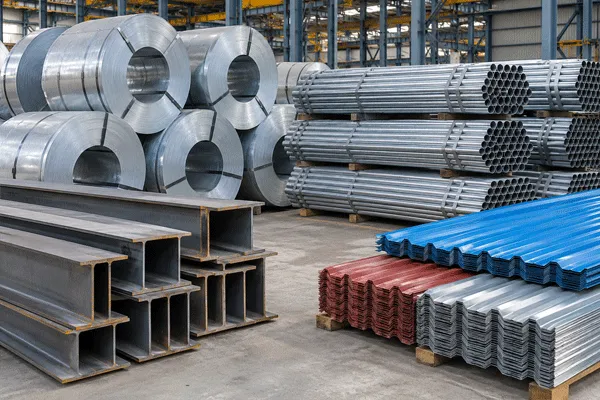
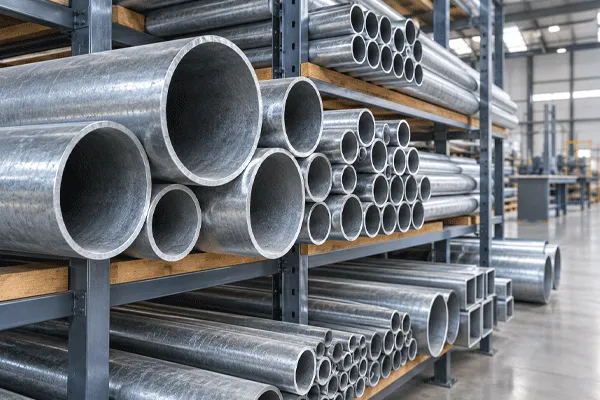
Choosing the wrong steel sheet can lead to early rust, difficult forming, poor dimensional fit, and unnecessary material costs. The problem often starts when buyers treat HR, CR, and GP as interchangeable names. Understanding how each steel product is made helps you select the right sheet before ordering.
HR sheet is uncoated hot rolled steel, while GP sheet is galvanized plain steel protected by a zinc coating. HR is often selected for structural strength, thicker dimensions, welding, and cost efficiency. GP is preferred where corrosion resistance, a cleaner surface, and long service life matter. Many GP sheets use cold rolled steel as the base material.
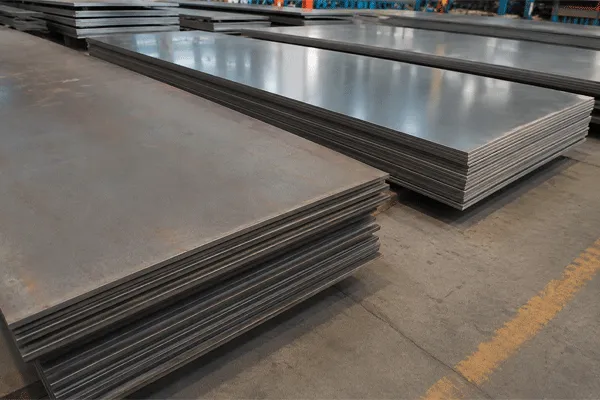
HR Sheet vs GP Sheet: What Is the Difference Between Hot Rolled Steel, Galvanized Plain Steel, and Cold Rolled Steel?
Article Outline
- What do HR sheet, CR sheet, and GP sheet mean?
- How are HR sheets made through hot rolling?
- How are CR and GP sheets manufactured?
- What are the key differences between HR and GP steel?
- How do their surface finish and dimensional accuracy compare?
- Are their mechanical properties different?
- Which sheet provides better corrosion resistance?
- How do HR and GP sheets perform during forming and welding?
- Where are HR sheets and GP sheets commonly used?
- Which material offers better cost efficiency?
- How do you choose the right sheet?
- What should international buyers specify when ordering?
- Frequently asked questions
- Key points to remember
What Do HR Sheet, CR Sheet, and GP Sheet Mean?
Before comparing the materials, it is important to define the three common trade terms.
- HR sheet means hot rolled steel sheet.
- CR sheet means cold rolled steel sheet.
- GP sheet commonly means galvanized plain steel sheet.
HR and CR describe how the base steel is rolled. GP describes a finished steel product with a protective zinc coating. This is the main reason buyers should not treat HR sheet vs CR sheet and HR sheet vs GP sheet as the same comparison.
A GP sheet may use a cold rolled or hot rolled base, depending on its thickness, grade, surface requirement, and application. However, many thin, smooth galvanized sheets use a cold-rolled base because cold rolled steel provides controlled thickness and a cleaner surface.
The World Steel Association describes cold rolled coil as a product made by further reducing pickled hot rolled coil at a low temperature. It also identifies cold rolled coil as a common base material for coated steel products. Nippon Steel notes that both hot-rolled and cold-rolled coils can serve as base metal for hot-dip galvanized sheet, depending on the specification.
A simple product relationship
Steel Slab
   ↓
Hot Rolling
   ↓
HR Coil or HR Sheet
   │
   ├── Pickling and Cold Rolling → CR Coil or CR Sheet
   │                                  ↓
   │                            Galvanizing
   │                                  ↓
   └──────────────────────────── GP Sheet
This relationship explains why a buyer may see similar chemical grades across HR, CR, and GP products. The main differences come from rolling, surface processing, annealing, zinc coating, tolerances, and final intended use.
How Are HR Sheets Made Through Hot Rolling?
Hot rolled steel begins with a steel slab. The slab is reheated and passed through a series of rollers while the material remains hot enough to deform easily. Each roller reduces the thickness and shapes the steel into a coil, plate, or sheet.
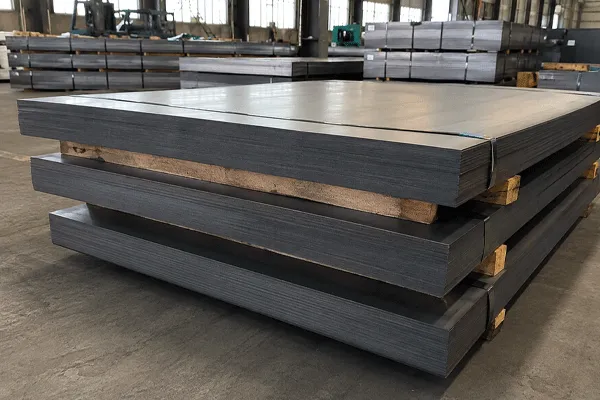
After hot rolling, the steel is cooled. As the steel is cooled, a layer of iron oxide scale may develop on the surface. Standard black HR sheet therefore has a darker, rougher appearance than cold-rolled or galvanized material.
Hot rolled products can also receive additional surface treatment. Common options include:
- Black hot rolled finish
- Pickled surface
- Pickled and oiled surface
- Shot-blasted surface
- Primer-coated surface
- Cut-to-length sheet
- Slit coil
- Checkered plate
Nippon Steel’s hot rolled product range includes black, pickled, and shot-blasted finishes, with grades intended for structural, automotive, pipe, container, machinery, and general fabrication uses.
Hot rolling is well suited to larger thicknesses and structural steel products. It offers good productivity and cost efficiency because the material requires fewer finishing stages than cold-rolled or galvanized sheet.
However, cooling after rolling can cause small changes in size and shape. Standard HR sheets may therefore have broader dimensional tolerances than CR sheets. This is often acceptable for structural frames, machine bases, supports, brackets, and welded assemblies.
How Are Cold Rolled Steel and GP Sheets Manufactured?
Cold rolled steel starts with hot rolled coil. The HR coil is normally pickled to remove oxide scale and then passed through rollers at or near room temperature.
The cold reduction process makes the sheet thinner and improves its dimensional control. It can also increase hardness and strength before annealing. Because cold reduction can make the steel less ductile, manufacturers usually anneal the material to restore the required forming properties.
Cold-rolled steel often provides:
- A smooth surface
- Precise dimensions
- Tight tolerances
- Controlled flatness
- Consistent thickness
- Good press-forming performance
- A suitable surface for painting or coating
Nippon Steel explains that cold rolling reduces the steel to its specified thickness and that annealing forms a more uniform crystal structure suited to the required grade and application. Its cold rolled steel products are widely used in automotive parts, electrical appliances, cabinets, office equipment, and containers.
HR Sheet vs GP Sheet: What Is the Difference Between Hot Rolled Steel, Galvanized Plain Steel, and Cold Rolled Steel?
How is GP sheet produced?
To make hot-dip galvanized GP sheet, the base coil passes through cleaning and surface-preparation stages. It then enters a bath of molten zinc. Gas knives control the coating mass before the strip cools and moves through finishing, inspection, recoiling, or cutting stages.
The zinc layer gives the steel better protection against rust. Depending on the order, the GP surface may have:
- Regular spangle
- Minimum spangle
- Zero spangle
- Skin-passed finish
- Chromated or chromium-free passivation
- Oiled surface
- Anti-fingerprint treatment
- Different zinc coating weights
ASTM A653/A653M covers hot-dip zinc-coated and zinc-iron alloy-coated steel sheet supplied in coils or cut lengths. The specification includes commercial, forming, deep-drawing, structural, and high-strength designations, as well as different coating masses.
What Are the Key Differences Between HR and GP Steel?
The most important difference is simple: HR sheet is normally uncoated, while GP sheet has a zinc coating.
| Comparison Point |
HR Sheet |
GP Sheet |
| Full name |
Hot rolled steel sheet |
Galvanized plain steel sheet |
| Product type |
Rolled base steel |
Zinc-coated steel product |
| Common base |
Hot rolled steel |
Often CR steel; HR base is also possible |
| Surface |
Dark, scaled, or pickled |
Metallic zinc finish |
| Corrosion resistance |
Limited without protection |
Higher due to zinc coating |
| Thickness range |
Often medium to thick |
Commonly thin to medium |
| Dimensional accuracy |
Standard industrial tolerance |
Often tighter when CR base is used |
| Surface finish |
Rougher unless pickled |
Smoother and more uniform |
| Welding |
Generally straightforward |
Requires coating and fume controls |
| Painting |
Usually needs cleaning and primer |
Requires compatible surface preparation |
| Common applications |
Structures, frames, machinery, pipes |
Roofing, ducting, panels, appliances |
| Relative cost |
Usually lower |
Higher because of extra processing |
| Outdoor use |
Needs paint or another coating |
Better suited to moderate exposure |
The comparison should not be reduced to “one is strong and the other is weak.” Both materials are available in several grades. Yield strength, tensile strength, elongation, hardness, and formability depend on the selected steel grade, thickness, temper, and production standard.
GP sheet is also not automatically more dimensionally accurate than every HR sheet. Its accuracy depends on the base metal and specification. A structural galvanized product made from an HR base may differ from a thin commercial GP sheet made from cold rolled steel.
How Do Their Surface Finish and Dimensional Accuracy Compare?
A standard hot-rolled sheet typically has visible scale, a dark gray or blue-black tone, and a less refined surface. Pickling removes the scale and creates a cleaner steel surface, although it still may not match the smooth finish of CR or skin-passed GP material.
GP sheet has a zinc-coated appearance. The visible pattern depends on the zinc chemistry, cooling process, skin passing, and spangle control. A zero-spangle or minimum-spangle surface may look smooth and uniform, while a regular-spangle product has a more visible crystalline pattern.
Surface comparison
Surface cleanliness

Standard HR       █████
Pickled HR        ███████
CR Sheet          █████████
GP Sheet          █████████

Corrosion protection without paint

Standard HR       ██
Pickled HR        ██
CR Sheet          ██
GP Sheet          █████████
The chart is a simplified comparison. Actual performance depends on the grade, coating, environment, surface treatment, storage, and fabrication process.
Cold rolled steel generally offers better dimensional accuracy because the steel is passed through precision rollers after hot rolling. This makes CR sheets useful where precise dimensions, smooth surfaces, tight tolerances, and repeatable forming are important.
GP sheets made from a cold-rolled base often retain many of these dimensional benefits. However, zinc coating thickness and galvanizing-line processing must also be included when the final gauge and tolerance are specified.
Buyers should state whether the ordered thickness means:
- Base metal thickness
- Total coated thickness
- Minimum thickness
- Nominal thickness
- Thickness including zinc
- Thickness excluding zinc
This detail can prevent disputes during inspection.
Are the Mechanical Properties of HR, CR, and GP Sheets Different?
The rolling and coating processes can affect the mechanical properties, but the final grade matters more than the abbreviation alone.
Hot rolled steel is available in commercial, drawing, structural, high-strength, and automotive grades. Cold rolling can increase strength and hardness through work hardening. Annealing then adjusts the balance between strength, hardness, and formability.
For this reason, it is not accurate to say that all CR sheet is stronger than all HR sheet. A high-strength hot rolled grade may have greater yield strength than a basic commercial cold-rolled grade.
Likewise, galvanizing does not define the core mechanical strength of GP sheet. The base steel grade controls most of the tensile and forming behavior, while the zinc layer supplies corrosion protection.
When comparing mechanical properties, buyers should review:
- Steel grade
- Yield strength
- Tensile strength
- Elongation
- Hardness
- Bend performance
- Hole-expansion performance
- Drawing quality
- Coating adhesion
- Weldability
ASTM A653 includes several galvanized sheet designations with different chemical and mechanical requirements rather than treating all galvanized steel as one grade.
Why does annealing matter?
The cold rolling process stretches and distorts the steel’s grain structure. Annealing heats the material under controlled conditions so that the required structure and forming performance can be restored.
Temper rolling may follow annealing. This light rolling step can improve surface finish, flatness, shape control, and resistance to stretcher-strain marks.
Therefore, a buyer ordering CR or GP sheet for deep drawing should not specify only thickness and width. The forming grade, temper, surface quality, and required mechanical values should also appear in the purchase order.
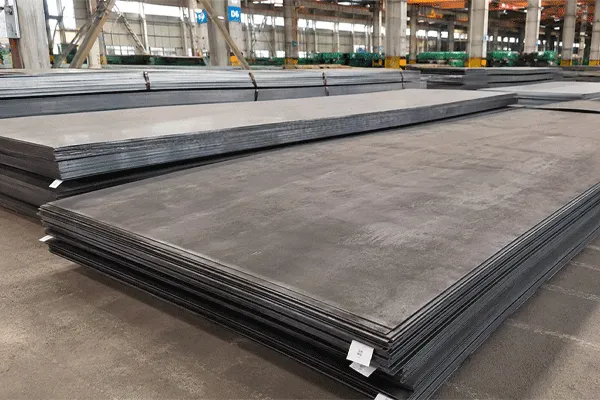
HR Sheet vs GP Sheet: What Is the Difference Between Hot Rolled Steel, Galvanized Plain Steel, and Cold Rolled Steel?
Which Sheet Provides Better Corrosion Resistance?
GP sheet provides much better corrosion resistance than bare HR or CR sheet because zinc protects the steel surface.
The zinc coating works as both a barrier and a sacrificial layer. If a small exposed area forms, the surrounding zinc can help protect the underlying steel. The useful service life depends on coating mass, exposure conditions, moisture, pollutants, cut edges, installation details, and maintenance.
HR sheet without paint, oil, galvanizing, or another protective treatment can rust quickly in humid storage or outdoor service. Pickling improves surface cleanliness, but it does not provide permanent corrosion protection.
GP sheet is therefore commonly selected for:
- Roofing components
- Wall panels
- HVAC ducting
- Electrical cabinets
- Agricultural equipment
- Greenhouse components
- Light-gauge framing
- Appliance parts
- Storage systems
- General outdoor fabrication
Nippon Steel lists galvanized products for construction, civil engineering, electrical appliances, automobiles, and household products. Its manufacturing documentation also confirms that the zinc coating is applied after base-metal preparation and annealing.
More zinc does not always mean that the product fits every application. A buyer must consider forming, welding, paint adhesion, coating cracking, surface appearance, and total cost as well as corrosion life.
For severe coastal, chemical, or highly corrosive environments, standard GP may not be enough. Galvalume, zinc-aluminum-magnesium coated steel, stainless steel, protective paint systems, or project-specific corrosion solutions may be more suitable.
How Do HR and GP Sheets Perform During Forming and Welding?
HR sheet is widely used for cutting, bending, drilling, rolling, and welding. Its suitability depends on grade, carbon equivalent, thickness, bend radius, and the required joint design.
Pickled and oiled HR sheet may be easier to process than black HR sheet when clean surfaces are needed. Removing scale can improve laser cutting, painting, and welding preparation.
GP sheet can also be cut, bent, stamped, and welded, but the zinc coating changes the fabrication process.
Important GP fabrication points
- Tight bending may crack or damage the zinc layer.
- Cutting exposes the steel at the cut edge.
- Welding burns or vaporizes zinc near the joint.
- Grinding removes local corrosion protection.
- Some surface treatments can affect paint adhesion.
- Damaged areas may need approved repair coating.
- Ventilation and worker protection are essential during hot work.
Welding galvanized steel can generate zinc oxide fumes. OSHA and NIOSH identify zinc-containing fumes as a respiratory hazard and associate zinc exposure with metal fume fever. Fabricators should use suitable local exhaust ventilation, risk assessment, work practices, and personal protective equipment.
Both HR and GP can be welded, but bare HR is usually simpler when the project involves extensive welding. GP is often more attractive when corrosion protection after fabrication is the main concern.
For welded GP assemblies, the designer must decide whether to:
- Weld pre-galvanized sheet and repair the joint area;
- Fabricate the part first and galvanize it afterward; or
- Use another protective coating system.
The right method depends on sheet thickness, component size, appearance, corrosion category, production volume, and local facilities.
Where Are HR Sheets and GP Sheets Commonly Used?
HR sheets are used where structural strength, thickness, weldability, and cost matter more than a decorative surface.
Common HR sheet applications
- Structural frames
- Machine bases
- Truck and trailer parts
- Industrial equipment
- Welded steel pipes
- Storage tanks
- Brackets and supports
- Agricultural machinery
- General fabrication
- Construction components
- Heavy enclosures
- Steel flooring
- Automotive chassis parts
Hot rolled steel products are available for a wide range of construction, pipe, automotive, container, machinery, and structural uses.
GP sheets are used where rust protection and a clean surface are more important.
Common GP sheet applications
- Roofing and wall cladding
- HVAC ducts
- Electrical panels
- Appliance housings
- Ceiling systems
- Light steel framing
- Warehouse accessories
- Greenhouse components
- Cable trays
- Furniture
- Automotive panels
- General outdoor fabrication
Where is CR sheet used?
CR sheets are preferred for products requiring accurate dimensions, a smooth finish, controlled forming, or a high-quality painted surface. Common applications include appliance panels, cabinets, automotive body parts, office furniture, drums, precision brackets, and stamped components.
This is why buyers researching hot rolled vs cold rolled often encounter GP sheet in the same supply chain. Cold-rolled steel is both a finished material and a common base for coated steel products.
Which Material Offers Better Cost Efficiency?
HR sheet usually has the lowest initial price because it requires fewer processing stages. The steel is hot rolled, cooled, inspected, and supplied as black, pickled, oiled, slit, or cut material.
CR sheet has a higher price because it requires pickling, cold reduction, annealing, and finishing. GP sheet adds galvanizing, coating control, surface treatment, and additional inspection.
A simple initial-price order is often:
HR Sheet < CR Sheet < GP Sheet
This order is only a general guide. Grade, thickness, coating weight, market conditions, order volume, processing, and logistics can change the actual result.
Initial price is not the same as lifecycle cost. An HR sheet used outdoors may need blasting, primer, topcoat, inspection, touch-up, and repainting. GP sheet may have a higher purchase price but lower maintenance demand.
Simplified lifecycle comparison
| Cost Factor |
HR Sheet |
GP Sheet |
| Initial material cost |
Lower |
Higher |
| Painting requirement |
Often required |
May not be required |
| Corrosion maintenance |
Higher in exposed service |
Usually lower |
| Welding preparation |
Simpler |
Coating control required |
| Surface appearance |
Industrial |
Cleaner metallic finish |
| Long-term outdoor cost |
Depends heavily on coating |
Often more predictable |
Choose HR when the steel will remain indoors, receive a complete paint system, or form part of a heavy welded structure. Choose GP when zinc protection can reduce future corrosion and maintenance costs.
How Do You Choose the Right Sheet for Your Project?
Start with the working environment and required function. Do not begin with price alone.
Choose HR sheet when:
- The component is structural.
- A thicker steel sheet is required.
- The product needs extensive welding.
- Surface appearance is not critical.
- The assembly will be painted after fabrication.
- Cost efficiency is a major concern.
- Standard dimensional tolerance is acceptable.
Choose GP sheet when:
- Corrosion resistance is important.
- The sheet will face humidity or moderate outdoor exposure.
- The product needs a clean metallic appearance.
- Painting should be reduced or avoided.
- The application involves ducting, cladding, panels, or light fabrication.
- A zinc coating is included in the project specification.
Choose CR sheet when:
- Tight tolerances are required.
- The product needs a smooth surface.
- The steel will be stamped or deep drawn.
- Precise dimensions affect assembly.
- The sheet will receive a decorative paint or finish.
- The component is used in automotive, appliance, or precision fabrication.
Quick selection table
| Project Requirement |
Recommended Starting Option |
| Heavy welded frame |
HR |
| Machine enclosure with painted finish |
CR |
| HVAC duct |
GP |
| Outdoor electrical cabinet |
GP |
| Automotive body panel |
CR or coated automotive grade |
| Structural bracket |
HR |
| Roofing or cladding base |
GP |
| Precision stamped part |
CR |
| Painted structural component |
HR or pickled HR |
| Corrosion-resistant light fabrication |
GP |
The correct answer may also involve PPGI, PPGL, galvalume, stainless steel, or aluminum. Material selection should always reflect the full application rather than one property.
What Should International Buyers Specify When Ordering HR or GP Sheet?
A clear inquiry helps the supplier provide an accurate quotation and reduces problems during production or inspection.
HR sheet purchasing checklist
- Standard, such as ASTM, EN, JIS, or GB
- Steel grade
- Thickness
- Width and length
- Coil or cut-sheet form
- Black, pickled, pickled and oiled, or shot-blasted surface
- Mill edge or slit edge
- Thickness tolerance
- Flatness requirement
- Mechanical properties
- End use
- Coil weight
- Packing method
- MTC requirement
GP sheet purchasing checklist
- Applicable galvanized steel standard
- Base steel designation
- Thickness definition
- Width and length
- Zinc coating mass
- Spangle type
- Surface treatment
- Skin-pass requirement
- Oiling requirement
- Forming grade or structural grade
- Coating adhesion requirement
- Coil or sheet form
- Packaging and moisture protection
- MTC and inspection documents
ASTM A653/A653M includes multiple steel categories and coating designations. A purchase order that states only “GP sheet” is therefore incomplete for an international project.
As a professional steel manufacturer and integrated supplier in China, we support customized:
- Thickness and width
- Coil weight
- Zinc coating mass
- Surface treatment
- Cutting and slitting
- Profiling
- RAL color coating
- Export packaging
- MTC documentation
- Third-party inspection
- Container loading
- International logistics
We recommend sending the final application, drawings, technical standard, annual demand, destination port, and required delivery schedule with the inquiry. This allows us to help select the right steel instead of quoting an incomplete specification.
Illustrative Steel Procurement Case
Consider a warehouse contractor sourcing material for two different components:
- Welded internal equipment supports
- External ventilation ducts
The first proposal uses GP sheet for both parts. This appears simple, but the supports require extensive welding and will later receive an industrial paint system. The zinc coating adds cost and creates extra work near the weld zones.
A better material plan is:
- Use HR or pickled HR for the welded supports.
- Use GP sheet for the ventilation ducts.
- Specify zinc coating mass based on exposure.
- Use a forming-quality GP grade for folded duct sections.
- Apply seaworthy packaging to prevent moisture damage during transport.
This approach does not select one material as “best.” It matches each steel product to the actual use. That is the goal of professional procurement.
Frequently Asked Questions
Is GP sheet the same as cold rolled steel?
No. CR sheet is uncoated cold rolled steel. GP sheet is galvanized plain steel with a zinc coating. Many GP sheets use CR as the base, but the coating makes GP a different finished product.
Is GP sheet stronger than HR sheet?
Not necessarily. Strength depends on the base steel grade, thickness, temper, and mechanical specification. Zinc improves corrosion resistance, but it does not automatically make the core steel stronger.
Why does HR sheet have a rough surface?
HR sheet is rolled and cooled at high temperatures. Oxide scale forms during cooling, creating a darker and rougher surface. Pickling can remove this scale and produce a cleaner finish.
Can HR sheet be used outdoors?
Yes, but bare HR steel needs suitable corrosion protection. This may include galvanizing, primer and paint, powder coating, metal spraying, or another project-specific system.
Can GP sheet be welded?
Yes, but the zinc coating affects welding and produces fumes when heated. Fabricators need suitable ventilation, safe procedures, and coating repair around affected areas.
Which is better for automotive parts, HR or CR?
Both are used in automotive production. HR grades are common in chassis, wheels, supports, and thicker structural parts. CR and coated cold-rolled grades are often used for body panels and precision-formed components.
Key Points to Remember
- HR means hot rolled steel sheet.
- CR means cold rolled steel sheet.
- GP commonly means galvanized plain steel sheet.
- HR and CR describe rolling conditions; GP describes a zinc-coated product.
- GP sheet often uses CR steel as its base, but hot-rolled base metal can also be galvanized.
- HR provides strong cost efficiency for structures, welding, and thicker components.
- CR offers a smooth finish, precise dimensions, and tight tolerances.
- GP provides better corrosion resistance because of its zinc coating.
- Steel grade controls mechanical strength more than the HR, CR, or GP abbreviation alone.
- Bare HR and CR steel require protection in corrosive environments.
- Welding GP sheet needs zinc-fume controls and coating repair.
- Initial material price should be compared with coating and maintenance costs.
- Buyers should specify grade, tolerance, coating, finish, size, and application.
- MTC traceability and third-party inspection help verify bulk steel orders.
- The right steel is the material that matches the fabrication process and service environment.









 07-30 2026