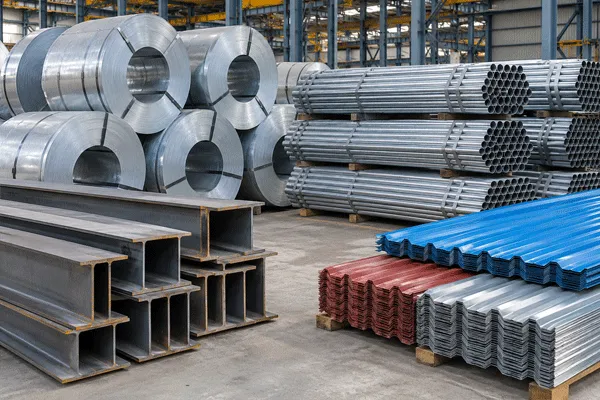
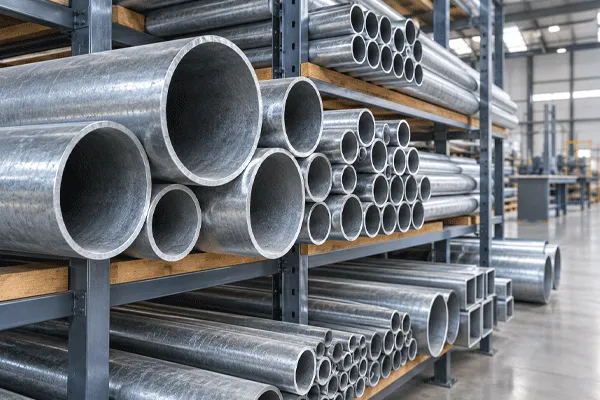
Buying the wrong galvanized material can lead to early rust, forming problems, wasted stock, and delayed projects. These risks grow when coating, thickness, surface, and inspection terms are unclear. This guide shows how to compare galvanized steel coil and sheet and prepare a safer purchase.
A galvanized steel coil is carbon steel protected by a zinc-based coating. The coating creates a barrier against moisture and offers sacrificial protection if the surface is scratched. Buyers should compare the steel grade, thickness, width, coating weight, surface condition, processing requirements, inspection documents, packaging, and delivery plan before selecting a supplier.
Galvanized Steel Coil and Sheet Supplier: A Practical Guide to Steel Coils
What Is a Galvanized Steel Coil?
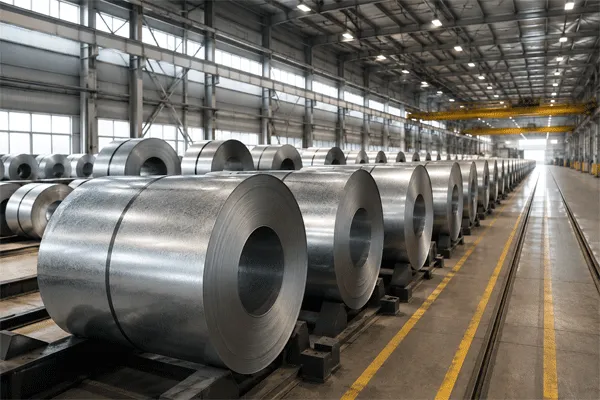
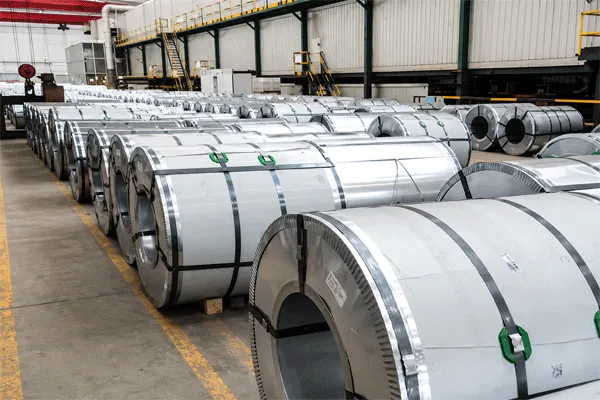
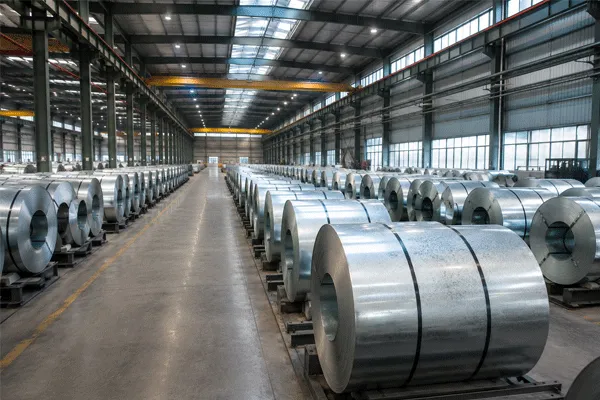
A galvanized steel coil is a continuous rolled steel sheet coated with zinc to improve protection against corrosion. After coating, the material is wound into a coil for easier storage, shipping, slitting, cutting, profiling, and continuous production.
In continuous hot dipping, a prepared steel strip passes through a bath of molten zinc. The zinc bonds to the steel surface and creates a protective layer. According to the World Steel Association, hot-dip galvanizing is widely used to apply protective zinc or zinc-aluminum coatings to steel exposed to demanding environments.
The finished coil may later become:
- Roofing and wall panels
- Corrugated sheets
- Ventilation components
- Warehouse building materials
- Steel structure accessories
- Agricultural and greenhouse components
- Machinery covers
- General manufactured parts
As a professional Chinese steel manufacturer and integrated steel supplier, we help international buyers source, customize, inspect, process, package, and export metal materials for project and distribution requirements.
How Does the Zinc Coating Protect the Underlying Steel?
The zinc coating protects steel in two related ways. First, it forms a physical barrier between the steel and the environment. This reduces contact with oxygen and moisture, which are key causes of rust and corrosion.
Second, zinc provides galvanic protection. Zinc is more reactive than iron, so it can act as a sacrificial material when a small cut or scratch exposes the base metal. In simple terms, the zinc corrodes first and helps protect the underlying steel.
GalvInfo explains that zinc coatings provide both barrier and cathodic protection. The barrier limits moisture contact, while the electrochemical action helps protect exposed areas of the steel. GalvInfo Center
This does not mean galvanized material can never corrode. Its service performance still depends on coating mass, exposure conditions, fabrication, storage, drainage, chemical contact, and maintenance. However, the coating can greatly improve the durability of galvanized steel compared with unprotected bare steel in a suitable application.
How Are Hot-Dip Galvanized Steel Coils Produced?
Continuous hot-dip galvanizing begins with a steel strip, which may use a cold-rolled or hot-rolled substrate depending on the required product. The strip is cleaned and prepared before entering a molten zinc bath. It is then withdrawn while equipment controls the coating deposited on its surface.
A simplified process can be shown as follows:
- Uncoil and join the steel strip.
- Clean the strip surface.
- Heat or anneal the material as required.
- Pass the strip through molten zinc.
- Control the coating mass.
- Cool and inspect the coated strip.
- Apply the specified surface treatment.
- Recoil the finished material.
This process applies zinc continuously to long strips of steel. GalvInfo notes that continuous galvanizing can use cold-rolled or hot-rolled steel sheet as the incoming material.
The resulting hot dipped galvanized steel can then be slit, cut, profiled, or formed. When requesting hot-dip galvanized steel coils, buyers should not focus only on thickness. Grade, coating, surface, width tolerance, coil weight, and downstream forming also matter.
What Are the Main Benefits of Galvanized Steel?
The central benefits of galvanized steel relate to protection, processing efficiency, and broad application potential. A properly selected coating prevents corrosion from reaching the substrate as quickly as it would on unprotected steel.
Other practical benefits include:
- Improved rust protection: The zinc layer helps isolate the steel from moisture.
- Sacrificial performance: Zinc can help protect small exposed areas.
- Production efficiency: Coiled material supports continuous profiling and cutting.
- Wide processing potential: Coils can be slit, cut, bent, stamped, or roll-formed when the selected grade permits.
- Consistent procurement: Defined grades, coating weights, dimensions, and surface requirements make repeat orders easier to manage.
- Broad application range: Galvanized steel is widely used in construction, manufacturing, infrastructure, agriculture, and some automotive components.
A galvanized surface is not automatically right for every environment. A high-quality purchase begins with matching the specification to the real exposure and manufacturing process. More coating is not always the only answer; surface treatment, edge protection, drainage, design, and storage also affect performance.
Galvanized Steel Coil and Sheet Supplier: A Practical Guide to Steel Coils
Galvanized Steel Coil and Sheet: What Is the Difference?
Galvanized steel coil and sheet are usually the same type of coated flat material supplied in different commercial forms. Coil is wound for continuous processing. Sheet is supplied as flat pieces cut to a required length.
| Factor |
Coil Form |
Sheet Form |
| Supply format |
Continuous wound strip |
Flat, cut-length material |
| Common buyer |
Profiling line, service center, manufacturer |
Fabricator, contractor, workshop |
| Processing |
Slitting, cut-to-length, roll forming |
Cutting, bending, punching, assembly |
| Material handling |
Requires coil-handling equipment |
Easier for smaller workshops |
| Order planning |
Useful for repeat or high-volume work |
Useful for defined sheet quantities |
| Main advantage |
Continuous production efficiency |
Ready-to-process dimensions |
A roofing manufacturer may prefer a galvanized coil because it can feed directly into a profiling line. A fabricator producing small batches may prefer a galvanized steel sheet because it needs no uncoiling equipment.
As a steel coil and sheet supplier, we can discuss customized thickness, width, cutting, slitting, profiling, surface treatment, packaging, MTC documentation, third-party inspection, and export logistics. Final availability should always be confirmed against the requested grade and order specification.
How Do Galvanized Steel Coil and Galvalume Steel Coil Differ?
These names should not be treated as interchangeable. A conventional galvanized product uses a zinc-based coating. Galvalume steel coil uses an aluminum-zinc alloy coating and belongs to a related but distinct product category.
| Comparison |
Galvanized Steel |
Galvalume Steel |
| Coating family |
Primarily zinc |
Aluminum-zinc alloy |
| Common abbreviation |
GI |
GL |
| Protection principle |
Barrier and sacrificial zinc protection |
Performance of an aluminum-zinc coating system |
| Common purchasing mistake |
Treating every zinc-coated coil as identical |
Using “galvalume” as a synonym for galvanized |
| Correct buying approach |
State grade and zinc coating requirement |
State grade and aluminum-zinc coating requirement |
GalvInfo identifies 55% aluminum-zinc alloy-coated sheet as a separate hot-dip coated product. It also notes that “Galvalume” is a widely used trade name.
Buyers should therefore specify whether they need GI or GL. The selected material should match the project design, forming process, appearance, expected environment, and applicable standard.
Hot-Dipped or Electro-Galvanizing: Which Process Do You Need?
A hot-dipped galvanized coil passes through molten zinc during continuous processing. In contrast, electro-galvanizing deposits zinc through an electrolytic process. Both methods produce carbon steel coated with zinc, but their manufacturing routes and resulting product characteristics differ.
| Item |
Continuous Hot-Dip Process |
Electro-Galvanizing Process |
| Coating method |
Steel strip passes through molten zinc |
Zinc is deposited electrochemically |
| Input material |
May use cold-rolled or hot-rolled strip |
Commonly finished cold-rolled strip |
| Buying term |
Hot dip galvanized steel coil |
Electro galvanized steel coil |
| Selection basis |
Coating, forming, exposure, standard |
Surface, coating, forming, standard |
World Steel’s life-cycle inventory describes hot-dip galvanized material as cold-rolled coil passed through a molten zinc bath. It describes electrogalvanized material as finished cold-rolled steel electroplated with zinc or zinc-nickel.
Luyuan Metal’s current galvanized category confirms a hot dip galvanized steel coil offer. It does not currently confirm an electro-galvanized product on that category page. Buyers requiring an electro-galvanizing process should therefore request separate availability confirmation rather than assume it is included in the standard range.
How Should Buyers Compare Galvanized Steel Coil Prices?
A published galvanized steel coil price without a complete specification has limited value. Steel input costs, zinc costs, grade, thickness, width, coating mass, surface condition, coil size, processing, quantity, packaging, inspection, freight, and currency can all change the final quotation.
Compare offers on the same commercial and technical basis:
- Confirm that the grade and standard match.
- Compare actual thickness and tolerance.
- Check the coating designation.
- Confirm whether the price includes slitting or cutting.
- Review coil weight and inside diameter.
- Check packaging and loading terms.
- Confirm MTC and third-party inspection costs.
- Compare Incoterms and destination charges.
- Review the quotation validity period.
- Confirm the planned delivery schedule.
A lower quoted number may not mean a lower landed cost. One offer may include seaworthy packaging, inspection, and processing, while another may cover only base material. Thin gauge tolerances and coating differences can also affect the amount of usable material received.
When comparing galvanized steel coil prices, ask each candidate to quote against one shared inquiry sheet. This creates a fair comparison among a trader, mill, coil supplier, and integrated steel company.
How Can You Identify a Trusted Galvanized Steel Supplier?
A trusted galvanized steel source should respond clearly to technical questions rather than offering only a price per ton. Buyers need evidence that the order requirements have been understood and transferred into production, inspection, packaging, and delivery instructions.
Use this supplier-checking list:
- Can the company distinguish galvanized and aluminum-zinc materials?
- Does the quotation state grade, thickness, width, and coating?
- Are tolerance and surface requirements written clearly?
- Can the company provide an MTC?
- Is third-party inspection supported when requested?
- Can it arrange slitting, cutting, or profiling?
- Does the packaging suit ocean transport?
- Are coil labels and documents traceable?
- Is the delivery term clearly defined?
- Can the supplier support repeat and customized orders?
A trusted supplier should also explain any conflict between the inquiry and the available material. For example, if the buyer requests an unconfirmed process or grade, the supplier should verify it rather than replace it silently.
At Luyuan Metal, we work as a professional manufacturer and integrated steel supply partner in China. Our scope covers steel coils, sheets, plates, pipes, structural sections, stainless steel, aluminum, and copper materials. We support OEM/ODM customization and coordinate processing, packaging, inspection documents, and international logistics according to confirmed order terms.
Galvanized Steel Coil and Sheet Supplier: A Practical Guide to Steel Coils
Where Are Galvanized Sheet Products Commonly Used?
Galvanized sheet products serve many industries because they combine the strength of a steel substrate with zinc-based protection. The exact grade and coating must still match the fabrication process and service environment.
Typical application groups include:
| Industry |
Example Uses |
Main Buying Concern |
| Construction |
Roofing, wall cladding, building components |
Coating, thickness, appearance |
| Infrastructure |
Fabricated components and project materials |
Standard, inspection, traceability |
| Manufacturing |
Covers, cabinets, formed parts |
Tolerance and processing |
| Agriculture |
Greenhouse and farm-related components |
Outdoor exposure and forming |
| Warehousing |
Roof and wall panel production |
Width, profiling, repeat supply |
| Automotive supply |
Selected formed or coated components |
Grade, surface, strict specification |
FAQ:
1.Is galvanized steel carbon steel?
In many commercial flat-steel applications, galvanized steel is carbon steel protected by a zinc-based coating. However, the exact substrate grade, mechanical properties, coating designation, and governing standard must be stated in the purchase specification.
2.Can galvanized steel still develop rust?
Yes. Zinc slows the attack on the substrate, but it does not make the material permanently immune to rust. Long exposure, aggressive chemicals, trapped moisture, cut edges, poor storage, or damage may reduce protection. Correct material selection and handling remain important.
3.Is zinc applied to one side or zinc on both sides?
Continuous galvanized sheet normally has zinc on both sides, but the coating designation and distribution must be checked against the applicable standard. Buyers should confirm whether the quoted coating mass is a total-both-sides value.
4.What is the difference between cold-rolled and hot-rolled galvanized coil?
The terms describe the steel substrate or route used before coating. A cold-rolled substrate is commonly selected where closer dimensions, surface, or forming requirements apply. A hot-rolled substrate may suit other applications. Do not select between them by name alone; confirm the required mechanical and dimensional properties.
5.Does a thicker zinc coating always provide better performance?
Coating thickness is an important factor in protection, but it is not the only one. The environment, fabrication, surface treatment, drainage, contact materials, storage, and design also matter. GalvInfo notes that coating thickness influences coating life in a given application. GalvInfo Coating Control
6.What information is needed for an accurate quotation?
Provide the product, grade, standard, thickness, width, coating requirement, surface condition, coil weight, coil ID, quantity, processing, packaging, inspection, destination, and trade term. A drawing or technical purchase specification is useful for customized steel solutions.









 07-29 2026