Choosing the wrong steel bar can create real project risk. A smooth round bar may look strong, but it may not bond well with concrete. Rebar is designed to reinforce concrete. The right choice depends on strength, shape, bond, corrosion resistance, and structural use.
A round bar is not always stronger than rebar. A smooth round bar may have good metal strength, but deformed rebar is usually better for reinforced concrete because its ribs improve bond with concrete. If strength means tensile strength alone, the answer depends on steel grade. If strength means structural performance inside concrete, rebar is normally the better choice.
Article Outline
What is rebar, and why is it used in concrete?
What are round bars, and how are they different from rebar?
Is a round bar stronger than rebar in tensile strength?
Why does rebar deform shape matter in concrete?
What are the key differences between round rebar and deformed bars?
Which type of rebar is best for reinforcement?
How do carbon steel, stainless steel, galvanized, and epoxy-coated rebar compare?
Can fiberglass or GFRP rebar replace traditional steel?
Where should builders use rebar, round bars, and steel rods?
How should B2B buyers choose steel products from a reliable supplier?
What Is Rebar, and Why Is It Used in Concrete?
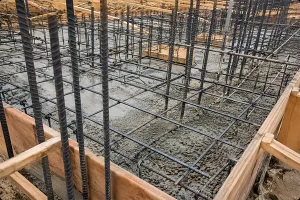
Rebar means reinforcement bar. It is a steel bar used to reinforce concrete. Concrete is strong under compression, but it is weak when pulled or bent. Steel helps the concrete structure handle tensile stress, bending force, and load-bearing needs. That is why steel and concrete work together in foundations, beams, columns, slabs, bridges, and other structural projects.
Most modern rebar has a deformed surface. The ribs and lugs on the bar help it grip the surrounding cement and concrete. ASTM A615 covers deformed and plain carbon-steel bars for concrete reinforcement, which shows that both plain and deformed bars can exist under reinforcement standards, but deformed bars are the common choice for structural concrete work.
For buyers, this matters because a steel bar is not just a metal rod. The bar’s grade, shape, surface, length, bend performance, coating, and bond behavior all affect how it performs inside concrete. If you are purchasing for a construction contractor, steel structure company, bridge builder, or metal fabrication factory, you need to match the bar to the engineer’s design.
What Are Round Bars, and How Are They Different From Rebar?
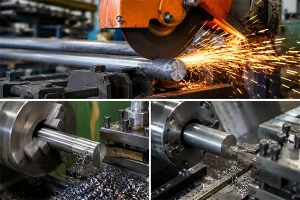
Round bars are smooth steel bars with a circular cross-section. They are widely used in machining, shafts, fasteners, frames, tools, supports, and metal fabrication. A round steel bar can be made from carbon steel, alloy steel, stainless steel, aluminium, copper, or other metal materials.
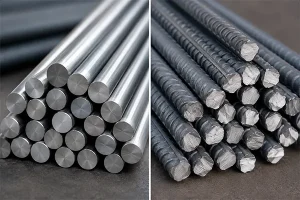
The main difference is purpose. A round bar is usually designed as a general steel product or machining material. Rebar is designed as a reinforcement bar for concrete. A round bar may be smooth, while deformed bars have surface ribs. That surface deformation helps create a mechanical bond with concrete.
A smooth round bar may look cleaner and may be easier to weld, cut, turn, or machine. But inside reinforced concrete, smooth shape can be a weakness. Without ribs, the bar may slip more easily under stress unless the design uses hooks, bends, special anchorage, or other structural details approved by an engineer.
Is a Round Bar Stronger Than Rebar in Tensile Strength?
The answer depends on what you mean by “stronger.” If you compare tensile strength only, a round bar can be stronger than some rebar if it is made from a higher-grade alloy or heat-treated steel. But common rebar can also have high yield strength. ASTM A615 includes multiple grades of reinforcing bar, and the grade relates to yield strength requirements.
So, a smooth steel bar is not automatically stronger than steel rebar. You must compare grade, chemical composition, diameter, manufacturing process, and test data. A 12 mm round bar and a 12 mm deformed bar may look similar in size, but their performance depends on the steel mill specification and final application.
For concrete reinforcement, tensile strength is only one part of the answer. Bond is just as important. Rebar must transfer stress between steel and concrete. If the bar has high tensile strength but poor bond, the concrete structure may not perform as expected.
| Comparison Point |
Round Bar |
Rebar |
| Surface shape |
Usually smooth |
Usually ribbed or deformed |
| Main use |
Machining, fabrication, shafts, rods |
Concrete reinforcement |
| Bond with concrete |
Lower unless specially anchored |
Better because of ribs |
| Tensile strength |
Depends on grade and alloy |
Depends on rebar grade |
| Bend use |
Depends on material |
Designed for reinforcement detailing |
| Best buyer use |
Metal fabrication and machinery |
Construction and structural concrete |
Why Does Rebar Deform Shape Matter in Concrete?
The deform shape is one of the most important features of rebar. Deformed bars have ribs or lugs on the surface. These ribs help the concrete grip the steel. When a beam, slab, foundation, or column carries load, stress must move between concrete and steel. The bond helps that happen.
The American Concrete Institute describes deformed steel bars as round steel bars with lugs, ribs, or deformations on the surface. These deformations are not decorative. They are part of how the reinforcement works in concrete.
FHWA research on deformed reinforcing bar bond behavior in ultra-high performance concrete also shows why bond behavior is a serious engineering topic, not just a small product detail. In structural design, development length, spacing, concrete cover, bar diameter, concrete strength, and bar shape all matter.
What Are the Key Differences Between Round Rebar and Deformed Bars?
The phrase round rebar can be confusing. Some people use it to describe a circular steel bar. But most rebar already has a circular core shape. The key difference is the surface: plain round bar is smooth, while deformed bars have ribs.
The key differences are:
- Bond: Deformed bars bond better with concrete.
- Shape: Round bars have a smooth circular surface; rebar has surface ribs.
- Use: Smooth rods suit machining and fabrication; rebar suits reinforced concrete.
- Structural role: Rebar is designed to reinforce concrete under tension.
- Specification: Rebar should match project grade, diameter, and code requirements.
For a builder, the safe rule is simple: do not replace rebar with smooth round bars unless the engineer approves it. A smooth steel rod may not provide the same reinforcement performance in a concrete structure.
Which Type of Rebar Is Best for Reinforcement?
The best type of rebar depends on the project. Standard carbon steel rebar is cost-effective and widely used. It works well in many foundations, slabs, beams, columns, and general construction materials. But in wet, coastal, chemical, or bridge environments, corrosion resistance may become more important.
Common options include:
| Type of Rebar |
Main Benefit |
Typical Use |
| Carbon steel rebar |
Cost-effective and widely available |
General reinforced concrete |
| Epoxy-coated rebar |
Coating helps resist corrosion |
Bridge decks and chloride exposure |
| Galvanized rebar |
Zinc layer improves rust resistance |
Moisture-prone concrete work |
| Stainless steel rebar |
High corrosion resistance and durability |
Marine, bridge, long-life structures |
| GFRP / fiberglass rebar |
Lightweight and corrosion resistant |
Special non-metallic reinforcement |
FHWA notes that corrosion of reinforcing steel in concrete bridges is a major infrastructure concern, and corrosion-resistant options such as epoxy-coated reinforcement and corrosion-resistant alloys have been developed for aggressive environments.
How Do Carbon Steel, Stainless Steel, Galvanized, and Epoxy-Coated Rebar Compare?
Carbon steel is the common choice because it is strong, available, and economical. For many normal buildings, it gives a good balance between strength and cost. But carbon steel can rust when moisture, oxygen, chloride, and cracks reach the reinforcement.
Epoxy-coated rebar adds a protective coating over steel. Galvanized rebar uses zinc protection. Stainless steel rebar offers stronger corrosion resistance, especially in harsh environments, but it costs more. The right choice depends on design life, exposure, budget, and maintenance plan.
FHWA research explains that specialty reinforcing bars include epoxy-coated, galvanized, dual-coated, low carbon-chromium, and stainless steel bars. These products were developed to address corrosion and, in some cases, increase tensile strength.
For B2B buyers, this is where supplier support matters. A professional steel supplier should help confirm grade, surface treatment, coating, diameter, length, tolerance, packing method, and inspection documents before shipment.
Can Fiberglass or GFRP Rebar Replace Traditional Steel?
Fiberglass rebar, often called GFRP rebar, is made from glass fiber reinforced polymer. It is not metal. It is lightweight, corrosion resistant, and useful in some projects where traditional steel corrosion is a major concern. A Texas transportation research report notes that GFRP reinforcing bars are non-corrosive, lightweight, and have high tensile strength and high strength-to-weight ratios.
However, GFRP does not behave exactly like steel. It has different stiffness, thermal expansion behavior, bend limits, and design rules. That means a builder should not replace steel rebar with fiberglass rebar by simple diameter matching.
Fiberglass rebar can be a good option for certain bridge decks, pavements, marine structures, or corrosive environments, but the structural engineer must design for it. In many normal buildings, traditional steel remains the standard choice because of familiar codes, supply, cost, and construction habits.
Where Should Builders Use Rebar, Round Bars, and Steel Rods?
Use rebar when the project needs to reinforce concrete. That includes foundation slabs, beams, columns, retaining walls, bridge decks, industrial floors, and other load-bearing concrete elements. Rebar is designed to work with concrete.
Use round bars when the project needs machining, metal fabrication, shafts, pins, fasteners, frames, gates, supports, or general steel components. A round bar can be cut, turned, welded, drilled, or machined depending on the grade.
Use steel rods carefully because the word “rod” can mean different products in different markets. It may refer to wire rod, smooth round rod, threaded rod, or reinforcement bar. For international trade, always confirm diameter, surface shape, grade, standard, and final application.
How Should B2B Buyers Choose Steel Products From a Reliable Supplier?
Steel importers, distributors, construction contractors, roofing suppliers, steel structure companies, machinery manufacturers, and OEM/ODM buyers should not purchase only by product name. Product names can vary by country. Specifications reduce mistakes.
Before ordering steel products, confirm:
- Product type: rebar, round bar, steel pipe, coil, sheet, or plate
- Material: carbon steel, stainless steel, galvanized steel, aluminium, copper, or alloy
- Grade and standard
- Diameter, thickness, width, length, or coil weight
- Surface: smooth, deformed, galvanized, painted, coated, polished, or black
- Tolerance and inspection requirement
- Packing and shipping method
- Mill test certificate or quality documentation
- Application: construction, roofing, machinery, fabrication, or OEM production
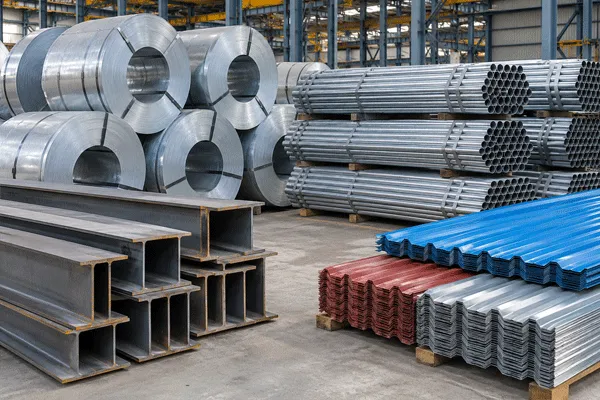
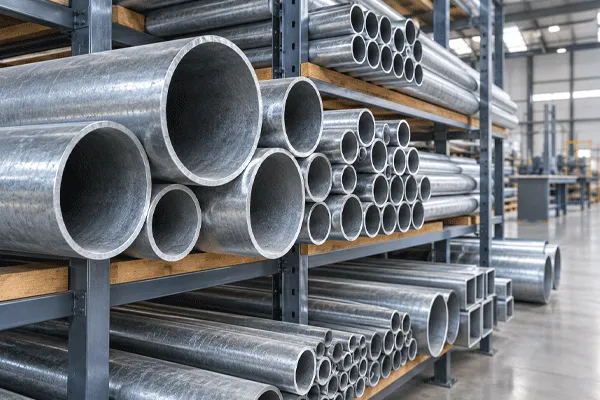
As a professional steel and metal materials supplier in China, we provide PPGI/PPGL coils, galvanized steel, hot rolled steel, cold rolled steel, stainless steel, steel pipes, roofing sheets, aluminum, copper, and customized metal solutions for global B2B buyers. Our goal is simple: stable quality, flexible specifications, and reliable long-term supply.
Practical Buyer Case: Choosing Between Round Bar and Rebar
A construction material buyer once asked whether he could use smooth round bars instead of rebar for a small concrete project because the round bars were easier to source. On paper, the diameter looked close. The price looked attractive too.
But after checking the application, the project needed reinforced concrete performance. The key issue was not only tensile strength. It was bond. Deformed rebar was the better choice because the ribs helped transfer stress between steel and concrete.
The final recommendation was:
| Project Need |
Better Product |
| Concrete slab reinforcement |
Deformed rebar |
| Machined shaft |
Round bar |
| Corrosive concrete environment |
Coated, galvanized, stainless, or GFRP option |
| General fabrication rod |
Smooth round steel bar |
| Bridge or marine structure |
Engineer-approved corrosion-resistant reinforcement |
This avoided a common mistake: choosing steel by appearance instead of function.
FAQs About Round Bar and Rebar
Is a round bar stronger than rebar?
Not always. A round bar can have higher tensile strength if it is made from a stronger grade or alloy. But for reinforced concrete, deformed rebar is usually stronger in practical structural performance because it bonds better with concrete.
Can I use round bars instead of rebar in concrete?
Do not replace rebar with smooth round bars unless a qualified engineer approves the design. Smooth bars may not bond with concrete as well as deformed bars.
Why does rebar have ribs?
Rebar has ribs to improve bond with concrete. The ribs help steel and concrete work together when the structure carries load, tension, bending, or stress.
What type of rebar is best?
Carbon steel rebar is widely used and cost-effective. Epoxy-coated, galvanized, stainless steel, and GFRP rebar may be better for projects with moisture, chloride, corrosion, or long service-life requirements.
Does stainless steel rebar rust?
Stainless steel rebar has much better corrosion resistance than normal carbon steel, but it is not always necessary for every project. It is often used in marine, bridge, and high-durability structures.
Is fiberglass rebar stronger than steel?
Fiberglass or GFRP rebar can have high tensile strength and good corrosion resistance, but it has different stiffness and design behavior from steel. It should be used according to engineering design rules.
Key Takeaways
A round bar is not automatically stronger than rebar.
For concrete reinforcement, bond with concrete is often more important than smooth bar appearance.
Deformed bars grip concrete better because of their ribbed shape.
Round bars are better for machining, shafts, rods, and general metal fabrication.
Rebar is better for reinforced concrete structures such as foundations, columns, beams, and bridges.
Carbon steel rebar is cost-effective, while stainless steel, galvanized, epoxy-coated, and GFRP rebar improve corrosion resistance in special environments.
Always compare grade, tensile strength, yield strength, diameter, surface shape, coating, and project application before buying.
B2B buyers should work with a reliable steel supplier that can provide stable quality, flexible specifications, quality documents, and long-term supply support.









 05-28 2026