






Schedule 40 vs Schedule 80 Steel Pipe: How to Choose the Right Wall Thickness
Explore galvanized steel pipe sizes, OD, wall thickness, and schedule 40 charts. Learn how to measure galvanized pipe size and astm a53 specifications.
10-22 2026

 10-09 2026
Buying the wrong galvalume steel coil can lead to coating failure, forming problems, rust, wasted material, and delayed projects. These risks become more serious when thickness, coating weight, grade, and surface treatment are unclear. A reliable galvalume steel coil supplier helps you control these details before production starts.
A good galvalume steel supplier should provide stable steel quality, the correct aluminum-zinc coating, traceable specifications, flexible processing, secure export packaging, and reliable delivery. For roofing, cladding, steel structures, appliances, and industrial fabrication, buyers should compare substrate grade, thickness, coating mass, surface treatment, forming requirements, inspection documents, and supplier processing capability—not price alone.
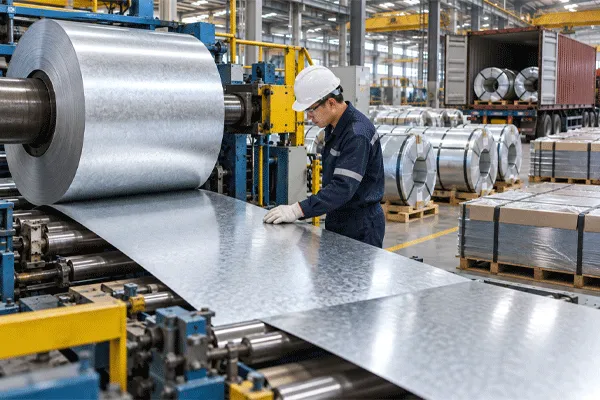
Galvalume Steel Coil Supplier: How to Choose Quality Aluzinc Steel Coil for Your Project
A galvalume steel coil is a flat steel coil covered with an aluminum-zinc alloy through a continuous hot-dip process. Instead of using a mostly zinc surface like conventional galvanized steel, the material combines aluminum and zinc to provide both barrier protection and sacrificial protection.
Traditional Type 1 Galvalume coating is commonly described as approximately 55 percent aluminum, 43.4% zinc, and 1.6% silicon by weight. ASTM A792/A792M covers 55% aluminum-zinc alloy-coated steel sheet in coils and cut lengths for applications that require corrosion resistance, heat resistance, or both. The current ASTM A792/A792M-25a also recognizes Type 2 Al-Zn-Mg-Si coatings in addition to the traditional Al-Zn-Si system.
During production, the prepared cold rolled strip passes through a molten alloy bath. The metallic layer bonds to the steel substrate, and the coating line controls the surface and coating thickness. This continuous hot-dip production process creates a metallic-coated material that can later be supplied as full master coils, slit coils, sheets, or profiled products.
A simplified structure looks like this:
| Layer | Main Function |
|---|---|
| Surface treatment | Helps control storage stain, handling marks, or downstream processing |
| Aluminum-zinc alloy coating | Provides environmental protection |
| Steel substrate | Provides mechanical strength and formability |
| Aluminum-zinc alloy coating | Protects the reverse side |
| Optional treatment | Oil, passivation, fingerprint-resistant treatment, or other specified finish |
The exact coating composition, grade, and processing condition should always match the final application.
The main reason buyers choose galvalume steel is its balance between aluminum’s barrier effect and the protection of zinc around exposed areas. Aluminum forms a relatively stable surface oxide layer, while zinc contributes sacrificial protection when the metallic layer is locally damaged.
This combination gives the material strong corrosion resistance in many building and industrial environments. According to GalvInfo, properly applied 55% aluminum-zinc alloy-coated sheet has demonstrated corrosion performance that can exceed conventional galvanized sheet by two to four times depending on the environment. However, application conditions matter, so this should not be treated as one universal service-life multiplier.
The structure of the alloy coating is therefore important. It is not simply an aluminum-coated steel sheet, nor is it ordinary zinc-coated material. The combination of aluminum and zinc gives the coating its characteristic performance.
That does not mean every environment is suitable.
GalvInfo notes that bare 55% Al-Zn material needs special consideration in aggressive animal-confinement environments and should not be placed in contact with wet concrete because high alkalinity can attack the aluminum-rich coating.
For project buyers, the lesson is simple: superior performance comes from selecting the correct material for the actual exposure conditions, not from choosing one coated product for every project.
Both Galvalume and galvanized steel protect carbon-based steel, but they do it differently.
A conventional galvanized steel coil normally relies on a predominantly zinc metallic layer. Galvalume uses a much higher proportion of aluminum together with zinc. That difference changes surface behavior, corrosion mechanisms, appearance, and suitability for specific applications.
| Property | Galvalume Steel | Galvanized Steel |
|---|---|---|
| Main metallic system | Aluminum-zinc alloy | Mainly zinc |
| Common reference standard | ASTM A792/A792M | ASTM A653/A653M |
| Typical appearance | Metallic spangle | Spangle or minimized spangle |
| Barrier protection | Strong | Good |
| Sacrificial edge protection | Available, but generally lower than zinc-rich galvanized coating | Strong |
| Roofing use | Very common | Very common |
| Painted versions | Available | Available |
| Forming | Depends on grade and application | Depends on grade and application |
GalvInfo specifically warns that it is not technically correct to make a simple performance conversion such as asking which Galvalume coating is automatically equivalent to G90 galvanized material. The two coatings behave differently during corrosion.
This distinction matters at cut edges. A zinc-rich zinc coating generally provides stronger galvanic protection to bare exposed steel, while the aluminum-rich Galvalume system provides strong barrier resistance over the broader coated surface.
When choosing between these types of steel, consider:
For some environments, ZAM steel or another zinc-aluminum-magnesium system may also deserve consideration. Material selection should follow the project, not a generic ranking.
A quotation that only says “Galvalume coil” is incomplete.
Before ordering any steel coil, international buyers should define the dimensions, grade, coating level, surface treatment, tolerances, packaging, and required documentation.
A useful RFQ should include the following information:
| Procurement Item | Example Information to Confirm |
|---|---|
| Product | Galvalume coated steel |
| Standard | ASTM A792/A792M or agreed equivalent |
| Thickness | According to project requirement |
| Width | According to forming or fabrication line |
| Coil ID | Confirm before order |
| Coil weight | Based on handling equipment and destination |
| Grade | Commercial, forming, structural, or specified grade |
| Coating | AZ designation or required coating mass |
| Surface | Regular spangle, anti-fingerprint, passivated, oiled, etc. |
| Edge | Mill edge or slit edge |
| Processing | Slitting, cutting, profiling |
| Documents | MTC, packing list, commercial documents |
| Inspection | Factory QC or third-party inspection |
| Packing | Seaworthy export packing |
GalvInfo identifies AZ50/AZM150 and AZ55/AZM165 among common designations for construction building panels. Under the metric system, AZM150 represents a minimum total-both-sides coating mass of 150 g/m². Buyers should therefore avoid assuming that the number represents coating per side.
This is why we ask buyers to provide the end use before confirming the material. A steel roof, roll-forming line, warehouse panel, machine enclosure, and export fabrication project may all require different specifications even when they appear to use the same basic material.
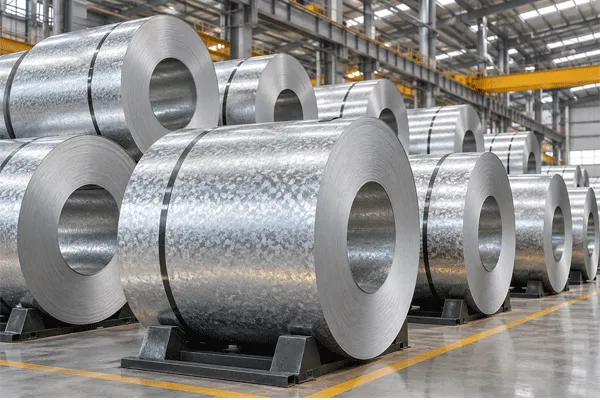
Galvalume Steel Coil Supplier: How to Choose Quality Aluzinc Steel Coil for Your Project
The metallic surface is only part of the product. The base steel underneath it controls much of the material’s strength, bending behavior, elongation, and forming performance.
For many coated products, the starting material is a suitable cold rolled steel strip that is prepared for continuous coating. Different applications may require commercial quality, forming quality, or structural-grade material.
A roll former producing roof panels does not have the same requirements as a fabricator producing structural parts. If the material is too hard, cracking or poor forming can occur. If it is too soft for a structural application, the finished profile may not achieve the required mechanical properties.
Thickness accuracy also matters. Small variations can affect:
The metallic coating weight affects protection and should be ordered using the correct standard designation. GalvInfo explains that common 55% Al-Zn designations include AZ50, AZ55, AZ60, and AZ70, with metric equivalents such as AZM150, AZM165, AZM180, and AZM210.
As a professional steel manufacturer and integrated supplier, we therefore treat base material, mechanical properties, dimensional tolerance, and metallic coating as one system. A quality galvalume steel coil should perform consistently not only when it leaves the factory, but also when your team cuts, forms, profiles, installs, or paints it.
Yes. One advantage of coated steel coils and sheets is that they can be processed for many downstream production lines.
Depending on customer requirements, we can support operations such as steel slitting, cut-to-length processing, profiling, width customization, packaging customization, and related OEM / ODM services.
For roofing factories, a coil may move directly from decoiling into a roll-forming machine and corrugate into roofing panels. Other customers may first slit a wider rolled steel coil into narrow widths for smaller profiles, flashings, or components.
Typical downstream formats include:
The material can also serve as the metallic base for prepainted galvalume steel. In that case, the paint system adds another protective and decorative layer over the metallic coating.
Buyers searching for terms such as aluzinc, aluzinc steel, aluzinc steel coil, coil aluzinc, or coil galvalume are often referring to closely related aluminum-zinc coated products. However, trade names, standards, and exact chemistry should always be checked instead of assuming that every market term describes an identical product.
Construction remains one of the largest application areas for this type of coated steel because the material combines formability, strength, weather resistance, and a clean metallic appearance.
Common applications include metal roofing, wall cladding, warehouse buildings, factories, agricultural structures, equipment housings, prefabricated buildings, and related construction components.
| Industry | Typical Application | Main Buyer Concern |
|---|---|---|
| Roofing | Corrugated roof panels | Weather resistance and forming |
| Steel structures | Wall and roof cladding | Stable supply and dimensions |
| Warehouses | Exterior building envelope | Cost and service life |
| Prefab buildings | Panels and trim | Fast fabrication |
| Manufacturing | Covers and housings | Formability and surface quality |
| Agriculture | Sheds and selected structures | Exposure environment |
| Distribution | Resale coils and sheets | Standardized specifications |
A roofing sheet manufacturer, for example, may care strongly about width accuracy because a small dimensional difference changes the finished panel geometry. A building contractor may care more about coating specification, project quantity, packing, and scheduled delivery.
This is why our broader steel service is designed around the finished project rather than one material alone.
Some international buyers purchase several product groups together—for example, coated steel sheet for building envelopes, carbon steel sections for the supporting structure, steel pipe for utility systems, and steel plate for fabricated parts.
An integrated steel supply chain can simplify sourcing when a project requires multiple steel materials.
International procurement creates distance between the buyer and production site. That makes quality documentation and inspection especially important.
Our approach starts with confirming the purchase specification before production. The steel grade, dimensions, coating requirement, surface condition, quantity, processing, labeling, and packing requirements should all be recorded clearly.
During production and final inspection, important checks may include:
Dimensional control
Thickness, width, coil dimensions, and other agreed tolerances should match the order.
Surface inspection
The material should be checked for visible defects that may affect use, coating appearance, handling, or downstream fabrication.
Metallic coating verification
The agreed coating requirement should be confirmed according to the applicable method and specification.
Mechanical properties
Where required, yield strength, tensile strength, and elongation should match the ordered grade. ASTM A792/A792M includes mechanical requirements and coating tests for covered products.
Traceability
MTC documents and coil identification help connect the delivered material with production and inspection records.
Packaging inspection
Export shipments require protection against movement, impact, and moisture during handling and transportation.
A uniform coating and stable base material are important, but export buyers also need consistency from one batch to another. That is why strict quality procedures should cover the entire order rather than checking only one visible sample.
When requested, we can also coordinate third-party inspection before shipment. This gives buyers another way to verify quantity, dimensions, packing, identification, and agreed quality and performance requirements.
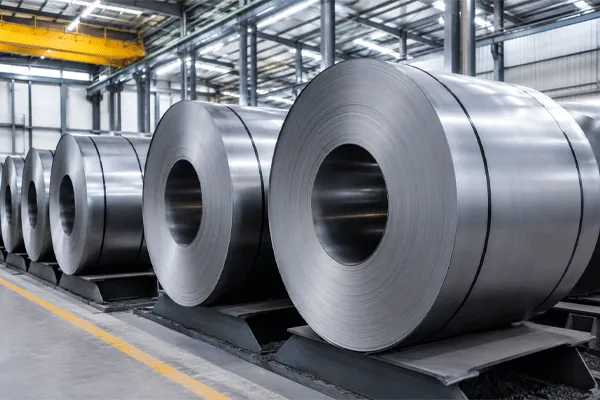
Galvalume Steel Coil Supplier: How to Choose Quality Aluzinc Steel Coil for Your Project
Price matters in steel procurement. But a low unit price can quickly lose its advantage if the material creates production waste, project delays, customs problems, inconsistent dimensions, or quality claims.
When comparing coil manufacturers and suppliers, look beyond the quotation.
A capable partner should understand both the raw material and your downstream use. For example, when a customer plans to profile a steel coil into roofing, we need to understand the finished profile, forming requirements, thickness, width, and destination—not simply quote the cheapest available material.
A practical supplier evaluation chart looks like this:
Product consistency       ██████████  Critical
Specification accuracy    ██████████  Critical
Coating control           █████████   Very High
Processing capability     █████████   Very High
Export packaging          ████████    High
Traceability / MTC        ████████    High
Delivery reliability      ████████    High
Price competitiveness     ████████    High
Communication speed       ███████     Important
At Luyuan Steel, our role extends beyond supplying one category of steel. We operate as a professional steel manufacturer and integrated supply partner for global B2B buyers.
Our product range supports coated material as well as hot rolled coil, cold-rolled material, stainless steel, section steel, tubes, pipes, non-ferrous products, and other project materials.
This matters when an engineering buyer needs several products from one supply chain. A warehouse project, for example, may need Galvalume roofing together with structural sections. An industrial project may require hot rolled material, stainless products, aluminum, or copper in addition to coated sheet.
Consider an overseas roofing sheet producer preparing a repeat order.
The buyer does not simply need a lower price per tonne. The production line needs a specific width, stable thickness, a defined metallic coating, suitable forming properties, controlled coil weight, and safe ocean shipping.
A weak quotation may say:
“Galvalume steel available. Best price.”
A useful quotation should instead make the commercial offer traceable to the specification:
grade + thickness + width + coating designation + surface treatment + coil weight + quantity + processing + packing + inspection requirement + delivery terms.
That difference reduces ambiguity before production.
For OEM / ODM orders, we can also support customized thickness, widths, surface treatments, RAL color requirements for painted products, cutting, slitting, profiling, customized packaging, MTC documentation, third-party inspection, and international logistics.
For long-term distributors and project buyers, this integrated approach usually matters more than buying one shipment at the lowest possible price.
No. Both are metallic-coated steel, but their surface systems differ. Traditional galvanized material uses a zinc-rich coating, while Galvalume uses an aluminum-zinc alloy. ASTM A792/A792M covers 55% aluminum-zinc alloy-coated sheet, while ASTM A653/A653M covers zinc-coated and zinc-iron alloy-coated sheet.
Terminology should be checked against the applicable standard and supplier specification. In the ASTM metric designation system discussed by GalvInfo, AZM150 refers to a minimum total-both-sides coating mass of 150 g/m² for 55% Al-Zn coated material.
Do not automatically interpret that number as coating on each individual side.
Yes. Roofing and building panels are major applications because the material offers useful weathering performance, formability, and long-term durability when correctly selected, installed, and maintained.
However, the required material specification depends on climate, building design, coating level, paint system, and expected exposure. A roof near salt or industrial pollution should be evaluated differently from one in a mild inland environment.
Yes. Width, thickness, coil weight, ID, slitting, cut-to-length processing, profiling, and packing can be customized according to production capability and order quantity.
For customers running roll-forming equipment, we recommend sharing the required finished product dimensions and machine limitations when requesting a quotation.
Yes. We support material documentation and can cooperate with agreed third-party inspection arrangements where required.
Inspection requirements should be confirmed before production so that sampling, testing, marking, and documentation can be organized correctly.
Not automatically.
A heavier metallic layer may offer more coating material, but correct selection depends on the exposure environment, application, standard, forming requirements, and project economics.
GalvInfo notes that AZ50/AZM150 and AZ55/AZM165 are both commonly used for construction building panels and that the performance difference between them can be subtle in some applications.
The right choice should therefore come from the application rather than simply selecting the highest number.
For international buyers, good procurement starts with a complete specification—not just a price request.
If you are sourcing Galvalume, aluminum zinc coated material, PPGI/PPGL, galvanized products, stainless steel, section steel, pipes, aluminum, copper, or other sheets and coils, send us your specification, quantity, destination port, and required delivery terms.
Luyuan Steel can help you review the specification, recommend a suitable material configuration, prepare a fast quotation, and arrange processing, inspection, export packaging, and international shipment for your project.
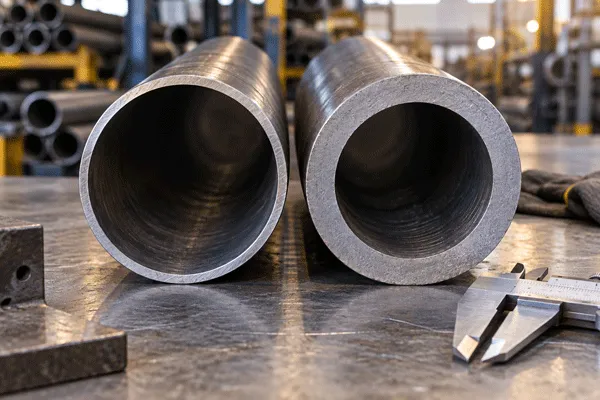
Explore galvanized steel pipe sizes, OD, wall thickness, and schedule 40 charts. Learn how to measure galvanized pipe size and astm a53 specifications.
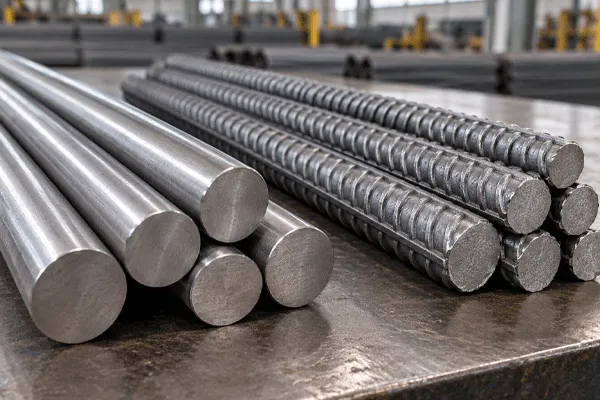
Compare plain round bar and deformed bar in this steel reinforcement guide. Learn which type of steel bar and rebar is best for your construction project.
We will reply you within 24 hours. If for urgent case, please add WhatsApp/WeChat: +86 15066120072,. Or call +86 15066120072 directly.
*We respect your confidentiality and all information are protected.
We will only use your information to respond to your inquiry and will never send unsolicited emails or promotional messages.