







Schedule 40 vs Schedule 80 Steel Pipe: How to Choose the Right Wall Thickness
Explore galvanized steel pipe sizes, OD, wall thickness, and schedule 40 charts. Learn how to measure galvanized pipe size and astm a53 specifications.
10-22 2026

 09-23 2026
Choosing the wrong material can mean cracked bends, uneven paint, or parts that fail to fit. Those problems add scrap and delay production. Knowing how hot and cold processing affect your order helps you choose the right grade, finish, and dimensions before costs build up.
The main difference between hot rolled and cold rolled steel is how they are processed. Hot rolled steel is shaped above its recrystallization temperature. Cold rolled steel receives further thickness reduction below that temperature, usually near room temperature. This generally improves surface quality and dimensional control. However, final strength and formability depend on the grade and delivery condition, including whether the material has been annealed.
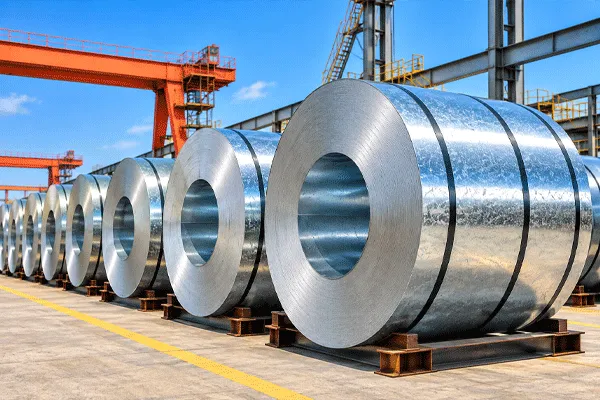
Hot rolled vs cold rolled steel: What’s the difference?
Steel is the broad material family. Cold-rolled steel is a product within that family, defined by its processing route. So, asking about “steel and холоднокатаная сталь” compares a general category with one of its forms. For most sheet and coil buyers, the useful comparison is between material supplied from a hot-strip mill and material that receives further cold reduction.
The rolling route does not name the alloy or guarantee its performance. Carbon steel, for example, comes in many grades with different chemical limits and mechanical properties. A purchase order needs more than a process label: it should identify the grade, dimensions, condition, and intended use. The World Steel Association’s material overview explains the wider family and the many forms available after casting and rolling.
As a manufacturer and integrated supplier in China, we start with what your finished part must do. Will you weld a frame, stamp a cover, or form a roof panel? That answer helps define the required type of steel and the processing steps that follow. This guide focuses mainly on flat sheet and coil; bars, beams, and tubes have their own product requirements.
Hot rolled steel is steel shaped while hot enough for substantial deformation above the relevant recrystallization range. A slab passes through a series of rollers that reduce its thickness. Each roller applies pressure while the high temperature makes deformation easier. This route supports large production volumes and a broad range of industrial products.
After reduction, the strip undergoes controlled cooling and coiling. It is misleading to describe every product as simply being left to cool at room temperature. Cooling schedules affect the final properties, and mills select them for the product. Thermal shrinkage also means that the dimensions must be assessed in the finished condition. Order against the applicable dimensional requirements, not a general expectation of accuracy.
Unpickled material usually carries dark oxide scale. That surface may be acceptable for some fabrication work, but it needs attention before certain finishing operations. Pickling removes scale and creates a different supply option. The World Steel Association’s product descriptions distinguish ordinary and pickled coils, as well as plate and structural sections.
Cold rolled steel is essentially hot rolled feedstock that undergoes further thickness reduction after scale removal. Cold rolling occurs below the material’s recrystallization range, often near room temperature. The term describes the reduction stage; it does not mean the entire production route avoids heat. Friction and deformation can also warm the strip during processing.
The cold rolling process changes both dimensions and material condition. Depending on the required product, the route may include annealing and a light finishing pass. Annealing helps restore the ability to form and bend after heavy reduction. SSAB’s cold-reduced coil process documentation shows pickling, reduction, annealing, and tempering within its manufacturing routes.
This distinction matters when ordering. Full-hard feedstock and annealed sheet can behave very differently in a press, even when their nominal thickness matches. We ask buyers to specify the delivery condition alongside the grade. If you need deep drawing or tight bends, share the drawing and forming sequence before approving a substitute.
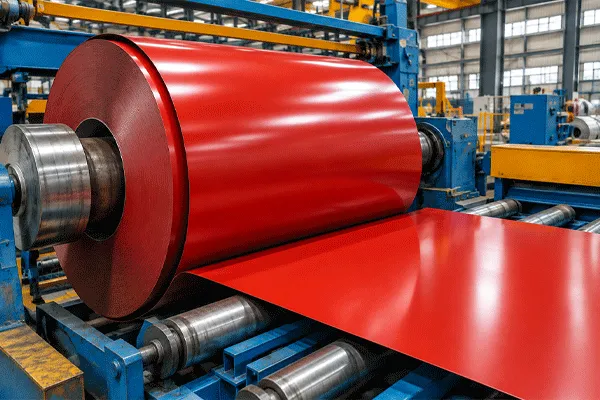
Hot rolled vs cold rolled steel: What’s the difference?
For purchasing, the most useful differences concern surface, dimensions, forming behavior, and total production cost. The table below gives a general comparison for common uncoated flat products. It is a starting point for discussion, not a replacement for a grade-specific datasheet or agreed inspection criteria.
| Buying factor | Hot rolled steel | Cold rolled steel |
|---|---|---|
| Processing route | Reduced at elevated temperature | Further reduced below the recrystallization range |
| Typical appearance | Dark scale unless removed | Cleaner, more uniform appearance |
| Dimensional control | Depends on product and ordered limits | Commonly selected for closer thickness control |
| Strength | Depends on grade and processing | Depends on grade, reduction, and final condition |
| Forming behavior | Grade and thickness dependent | Strongly affected by annealing and temper |
| Common purchasing priority | Fabrication, section size, value | Thin sheet, repeatable fit, appearance |
| Base material cost | Often lower for comparable products | Often higher because of additional processing |
| Corrosion protection | Requires a suitable protection system | Also requires a suitable protection system |
Neither rolling route guarantees a better finished part. A thicker structural component and a thin painted cover solve different problems. Comparing them only by appearance or price per tonne can lead to the wrong decision. Match the product to its load, forming method, exposure, and acceptance requirements.
The statement “cold rolled steel is stronger” needs qualification. Cold working can increase strength and hardness through strain hardening. Yet later annealing changes that condition. A high-strength structural grade from a hot-strip mill can therefore exceed the strength of a soft drawing sheet made through cold reduction. The American Iron and Steel Institute’s glossary explains cold working and the role of annealing in restoring formability.
For a useful comparison, check yield strength, tensile strength, and elongation for the exact grades and delivery conditions. Yield strength relates to permanent deformation; tensile strength describes the maximum stress reached in a tensile test; elongation helps describe ductility. None of these values should be guessed from surface appearance. Also consider internal stress when flat blanks will be cut into narrow or complex shapes.
If your supplier proposes an alternative, ask for a documented property comparison. Have the responsible designer confirm it where the part carries a defined load. We can support material selection with MTC documents and inspection coordination, but a generic label such as “higher strength” is not enough to approve a material change.
Cold rolled steel has a smoother surface in many common sheet applications, making it a practical starting point for visible panels. However, “smooth” needs a shared meaning. A painted cabinet face, an internal bracket, and a plated component may require different roughness, cleanliness, and defect limits. BlueScope’s product datasheet library includes both cold-reduced drawing products for exposed applications and pickled hot-strip products with improved surfaces.
Dimensional tolerance also needs detail. State the limits for thickness, width, length, flatness, and squareness where relevant. A nominal dimension alone does not define an acceptable delivery. For slit strip, add edge condition and camber requirements. For cut sheets, tell us whether the blanks go straight into a press, laser cutter, or assembly fixture.
Here is an illustrative example, not a customer case study: a cabinet maker needs thin blanks for visible doors and heavier blanks for concealed bases. The doors may justify tighter flatness and appearance requirements; the bases may allow a less demanding finish. Separating those requirements can avoid paying for unnecessary processing while protecting the quality that customers see.
Use hot rolled steel when the specified grade, thickness, and surface condition suit the component. Common hot rolled steel applications include fabricated frames, base plates, and feedstock for certain welded products. Heavy components often benefit from the sizes available through this route. Structural, pipeline, and pressure-service uses still require the correct product specifications and project approvals.
Use cold rolled steel when thin material, consistent appearance, or close dimensional control supports the manufacturing process. Suitable grades serve cabinets, appliance panels, metal furniture, and formed parts. Cold rolled steel is ideal for some visible sheet components, but only when its condition matches the bending or drawing operation. Full-hard material is not interchangeable with soft drawing sheet.
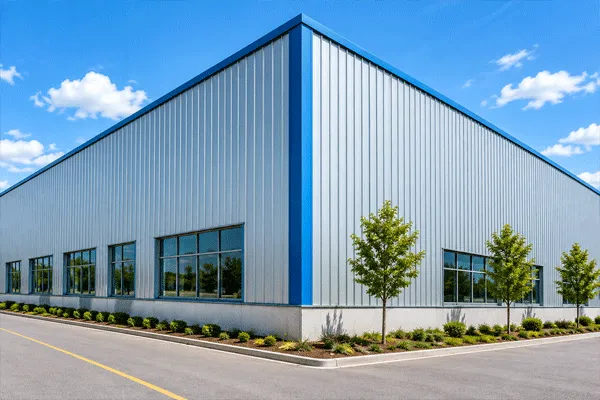
For roofing, wall cladding, and agricultural buildings, buyers often need coated products instead of bare sheet. We also supply galvanized, galvalume, PPGI, and PPGL materials. Specify the coating system, coating weight, paint requirements, and exposure conditions separately. The underlying rolling route alone does not establish weather resistance or expected service life.
Hot rolled material is often cheaper than cold rolled steel when comparing similar grades and dimensions. However, there is no fixed price gap that applies to every order. Availability, thickness, width, finish, volume, and delivery terms all affect a quotation. Compare offers issued for the same scope and validity period before deciding which is better value.
A lower purchase price may be offset by scale removal, extra finishing, scrap, or slower production. Equally, paying for a premium surface offers little benefit if the part is hidden and the specification permits a simpler finish. Our preferred comparison is cost per acceptable finished part, including the work needed after the shipment reaches your factory.
For a purely illustrative calculation, suppose a more processed material costs an extra $60 per tonne but saves $85 per tonne in verified preparation and scrap costs. The net saving would be $25 per tonne. These figures are not market prices or promised results. Use your own trial data, then add packing, freight, duties, and local handling on a consistent basis.
A detailed inquiry helps us quote an appropriate product and reduces repeated questions. Start with the drawing or end use, then identify the grade and acceptance limits. If you have only a reference sample, explain which features must match. We can discuss supply options, but any proposed equivalent should be reviewed before it enters production.
Include these details in your request:
We provide production, processing, customization, and export support for international distributors, fabricators, contractors, and manufacturers. Our range also includes plates, pipes, sections, stainless products, aluminum, and copper materials. Send your specification and quantity for a tailored quotation. We can review OEM/ODM requirements, packing, and logistics together so the proposed supply fits your production plan.
Yes. Bare products made from ordinary carbon grades can rust when exposed to moisture. A smoother surface is not a protective coating. Select suitable storage, temporary protection, and a final coating system for the environment. Oiling can support storage protection but does not replace durable outdoor protection.
Many grades from both routes are weldable. Suitability depends on chemistry, thickness, condition, and the welding procedure. Clean the joint area and assess distortion control. For specified structural or pressure work, follow the project’s approved procedures and material requirements rather than relying on the rolling label.
Как правило, это не лучший выбор. Значительное холодное обжатие снижает пластичность, тогда как для глубокой вытяжки требуется материал, способный деформироваться без образования трещин. Запросите подходящую марку стали для вытяжки и соответствующее состояние поставки. Если из-за формы изделия или особенностей производственного процесса эксплуатационные характеристики вызывают сомнения, проверьте предлагаемый материал с помощью испытаний на формование.
Нет. Травление удаляет поверхностные оксиды, но не обеспечивает дополнительного обжатия по толщине, которое является определяющей характеристикой холоднокатаной полосы. Травленый и промасленный подкат может быть полезен, если требуется более чистая поверхность без применения полного цикла холодной прокатки. При этом его заказанные свойства должны соответствовать требованиям области применения.
Не всегда. Одинаковая толщина не гарантирует одинаковую прочность, поведение при гибке, плоскостность, качество поверхности или поведение при резке. Сравните полные технические характеристики и согласуйте замену с ответственными специалистами по проектированию или контролю качества. Пробная партия поможет проверить совместимость, качество отделки и технологичность перед размещением крупного заказа.
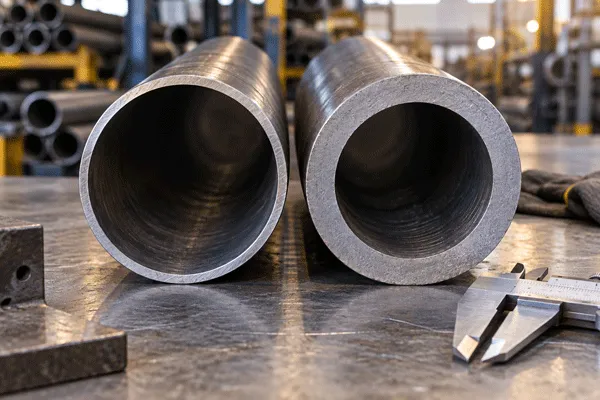
Explore galvanized steel pipe sizes, OD, wall thickness, and schedule 40 charts. Learn how to measure galvanized pipe size and astm a53 specifications.
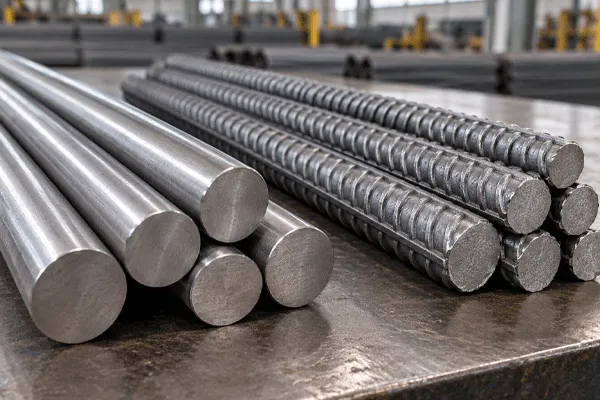
Compare plain round bar and deformed bar in this steel reinforcement guide. Learn which type of steel bar and rebar is best for your construction project.
We will reply you within 24 hours. If for urgent case, please add WhatsApp/WeChat: +86 15066120072,. Or call +86 15066120072 directly.
*We respect your confidentiality and all information are protected.
We will only use your information to respond to your inquiry and will never send unsolicited emails or promotional messages.