





H Beam 200 Dimensions: HEA 200 vs HEB 200 vs HEM 200 Size & Weight Guide
Compare H beam 200 dimensions and weights. Explore structural steel sizes for HEA 200, HEB 200, and HEM 200 in this complete beam guide.
11-06 2026

 10-30 2026
Choosing a PPGL-Coil only by color or price can lead to paint cracking, early corrosion, poor roll forming, and unnecessary replacement costs. Different environments demand different substrates, coatings, and paint systems. The right specification starts with understanding exactly where the material will be used.
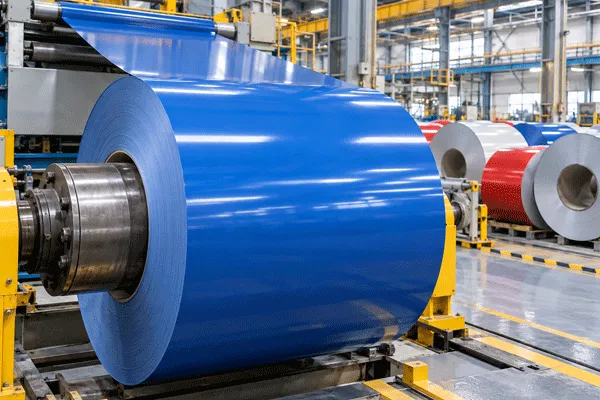
PPGL coil is mainly used for roofing, wall cladding, sandwich panels, prefabricated buildings, agricultural structures, appliances, HVAC equipment, and industrial enclosures. PPGL stands for pre-painted galvalume steel: a painted steel coil built on an aluminum-zinc-coated steel substrate. Its combination of steel strength, metallic corrosion protection, and factory-applied paint makes it useful for durable, decorative, ready-to-form products.
What Is PPGL Coil Used For? Applications in Roofing, Cladding, Appliances & Industrial Projects
PPGL stands for pre-painted galvalume steel. It starts with a steel substrate that receives an aluminum-zinc metallic coating. The coated substrate is then cleaned, pretreated, primed, painted, baked, cooled, and wound into a finished steel coil.
In simple terms, PPGL combines three functional layers:
PPGL is therefore not solid aluminum and is not ordinary painted carbon steel. It is a coated steel product designed for continuous fabrication.
ASTM A755/A755M-18(2024), currently listed by ASTM as active, covers metallic-coated steel sheet that is hot-dip coated and then prepainted through the coil-coating process for exterior building products. ASTM A792/A792M-25a is the current standard for 55% aluminum-zinc alloy-coated steel sheet, one of the metallic substrates associated with Galvalume-type products.
A simplified PPGL structure looks like this:
| Schicht | Main Function |
|---|---|
| Top paint | Color, weathering and appearance |
| Grundierung | Paint adhesion and extra protection |
| Pretreatment | Supports coating adhesion |
| Aluminum-zinc coating | Metallic corrosion protection |
| Steel core | Strength and formability |
| Reverse coating system | Back-side protection |
This layered structure is what makes PPGL useful across many construction and manufacturing applications.
The main applications of PPGL are products that need a combination of appearance, formability, corrosion protection, and efficient mass production.
Luyuan’s current PPGI/PPGL catalog positions prepainted coils for roofing, cladding, agricultural structures, appliance panels, HVAC ductwork, and industrial equipment enclosures. The National Coil Coating Association also identifies construction, appliances, HVAC, transportation, furniture, and other manufactured goods as major markets for prepainted metal.
Typical PPGL uses include:
| Branche | Typical PPGL Application |
|---|---|
| Roofing | Corrugated, trapezoidal and standing-seam roof panels |
| Wall systems | Exterior cladding and façade panels |
| Prefabricated buildings | Roof and wall skins |
| Sandwich panels | Outer and inner metal facings |
| Landwirtschaft | Storage buildings, sheds and selected cladding systems |
| Haushaltsgeräte | Refrigerator and equipment panels |
| HLK | Ductwork and equipment housings |
| Industrial manufacturing | Cabinets, covers and enclosures |
| Warehouses | Roofing and exterior wall systems |
| Commercial buildings | Decorative and protective metal panels |
Prepainted metal is especially attractive to manufacturers because the surface finishing happens before downstream fabrication. The coil can move into slitting, cutting or roll-forming equipment without requiring the buyer to paint every finished component separately.
That can simplify production.
But the correct PPGL specification still depends on the finished application.
Roofing is one of the most important markets for PPGL steel coil because roof panels need to handle rain, sunlight, temperature changes, wind, forming stresses, and long periods of outdoor exposure.
Prepainted metal can be formed into many roof profiles, including standing seam and formed panels. The National Coil Coating Association identifies roofing as a major application for prepainted metal in building products.
A roofing factory may take a prepainted galvalume steel coil and process it through:
PPGL Master Coil
      ↓
Slitting
      ↓
Decoiling
      ↓
Roll Forming
      ↓
Cut-to-Length
      ↓
Roofing Sheet
Typical finished products include:
A steel coil for roofing should not be selected only by nominal thickness.
Roof manufacturers should also confirm:
Luyuan’s roofing catalog currently lists GI, GL, and pre-painted substrates for roofing products and supports different profiles, widths, lengths, RAL colors, and finishes according to the application.
For a buyer, the important point is that PPGL roofing is a system decision. The coil, paint, panel geometry, fasteners, installation, and environment all influence final performance.
The same features that make PPGL useful for a roof also make it practical for exterior walls.
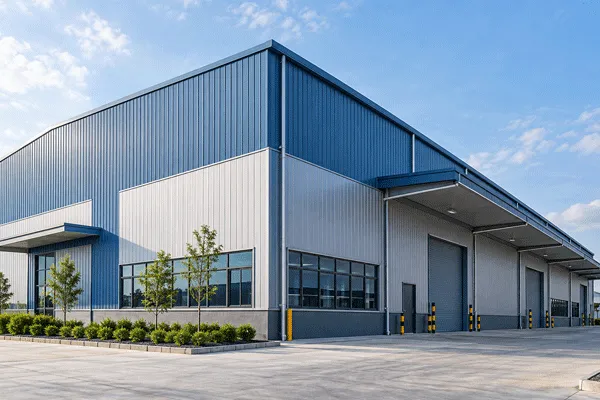
Industrial workshops, logistics warehouses, commercial buildings, prefabricated structures, and cold-storage facilities often use color-coated steel panels as exterior cladding.
A PPGL sheet can be formed into:
For sandwich panels, the prepainted steel skin is combined with an insulation core such as EPS, PU/PIR, or mineral wool depending on the panel system.
Luyuan’s roofing and panel catalog identifies sandwich panels for prefabricated buildings, cold storage, and clean-room applications.
Cladding specifications often place more emphasis on:
Color stability
Exterior walls are highly visible, so batch-to-batch color consistency matters.
Surface appearance
Gloss, matte texture, embossing, and finish can affect architectural appearance.
Umformbarkeit
The paint film must tolerate profiling and bending without unacceptable cracking.
Weather exposure
UV radiation, rainfall, industrial pollution, humidity, and temperature affect coating selection.
This is why two PPGL coils with the same color can still perform very differently.
What Is PPGL Coil Used For? Applications in Roofing, Cladding, Appliances & Industrial Projects
Construction is not the only market for prepainted steel.
The National Coil Coating Association notes that appliance manufacturers use prepainted metal in products such as refrigerators, washers, dryers, control panels, and appliance housings.
Depending on specification and manufacturing requirements, PPGL and other color-coated steel materials may be used for:
For these uses, buyers may prioritize different properties than a roofing manufacturer.
An appliance producer may care about:
An industrial enclosure manufacturer may care more about:
This illustrates an important point: one standard PPGL coil is not ideal for every application.
The final manufacturing process should drive the raw-material specification.
Agricultural buildings and warehouses often need large areas of roof and wall material while controlling both initial construction cost and maintenance.
PPGL panels can provide a practical combination of lightweight construction, color choice, roll-forming efficiency, and surface protection.
Common uses include:
Luyuan’s current PPGL category specifically identifies agricultural storage facilities and livestock sheds among possible applications for prepainted coated steel.
However, the operating environment matters.
For example, livestock buildings can contain moisture, ammonia, and other aggressive contaminants. A standard coating selected for an ordinary dry warehouse should not automatically be used in a chemically aggressive agricultural environment.
Likewise, coastal projects require careful material and paint selection because airborne salts can accelerate deterioration.
For these projects, the buyer should provide:
The supplier can then review whether the proposed substrate and paint system are suitable.
The difference between PPGI and PPGL starts with the metallic substrate.
PPGI generally uses galvanized steel with a zinc-based metallic coating.
PPGL uses a Galvalume or aluminum-zinc-coated steel substrate.
Both are prepainted products.
This article does not repeat a full PPGI vs PPGL comparison because Luyuan already has dedicated content covering that search intent. The more useful question here is how application affects the decision.
| Anwendung | Common Selection Consideration |
|---|---|
| General indoor panels | PPGI may be suitable depending on environment |
| Standard roof and wall cladding | Either PPGI or PPGL depending on specification |
| Long-exposure exterior panels | PPGL may be considered where Al-Zn substrate is appropriate |
| Appliance panels | Surface quality and forming may matter more than substrate name alone |
| Agricultural buildings | Exposure chemistry must be checked |
| Coastal construction | Paint system, cut edges and environment need project-specific review |
| Decorative architectural work | Color, gloss, surface finish and warranty requirements dominate |
It would be misleading to say PPGL always offers better corrosion resistance than PPGI in every possible environment.
The aluminum-zinc substrate often performs very well in atmospheric exposure, but cut edges, chemical conditions, contact materials, paint system, and installation quality all influence real-world service life.
The better material is the one specified for the actual environment.
A PPGL product has two protective systems working together:
Both matter.
For exterior building products, ASTM A755 recognizes paint systems using materials such as polyester, silicone polyester, fluoropolymer, plastisol, polyurethane, and other coating technologies depending on the specified product.
Luyuan’s PPGI/PPGL catalog currently lists options including:
as well as smooth, embossed, orange-peel, and matte surface options.
A simplified application guide looks like this:
| Paint System | General Positioning |
|---|---|
| PE / Polyester | General-purpose and cost-sensitive applications |
| SMP | Improved weathering and hardness |
| HDP | Higher outdoor durability than basic PE |
| PVDF | Premium exterior applications requiring strong color retention |
These are general categories, not guaranteed service-life numbers.
Actual durability depends on:
A buyer asking only for “blue PPGL” leaves too many variables undefined.
A better request specifies the entire coating system.
What Is PPGL Coil Used For? Applications in Roofing, Cladding, Appliances & Industrial Projects
One advantage of PPGI- und PPGL-Coils is that manufacturers can transform them into finished components efficiently.
Common processing steps include:
A wide master coil is cut into narrower coils that match a roll-forming line or component width.
The coil is flattened and cut into individual sheets or blanks.
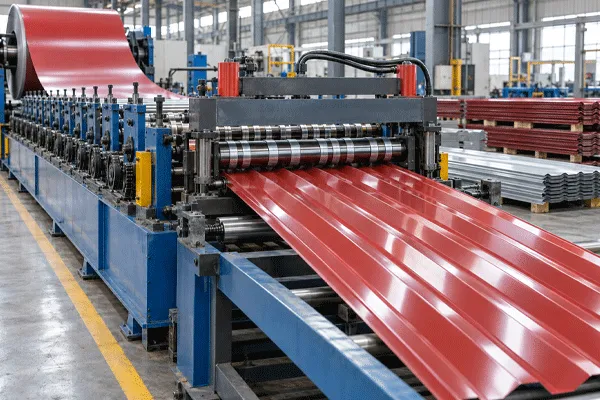
The strip passes through multiple rollers to create a roofing, cladding, channel, or other profile.
Flat prepainted material is formed into wave or trapezoidal shapes.
Sheets can be processed into trims, flashings, cabinets, covers, and other parts, provided that the grade and paint system are suitable.
At Luyuan, the broader PPGI/PPGL positioning includes customized dimensions, RAL colors, coating types, surface textures, and production support within the confirmed order range.
For OEM buyers, this can reduce downstream work.
A roofing manufacturer may order slit coil for roofing.
A distributor may prefer master coils.
A construction contractor may need finished roofing sheets.
An equipment manufacturer may need flat blanks.
The correct supply form depends on your production line.
Start with the finished application.
Do not start with a supplier’s stock list.
A useful selection sequence is:
Final Product
     ↓
Service Environment
     ↓
Required Steel Grade
     ↓
Al-Zn Coating Requirement
     ↓
Paint System
     ↓
Thickness & Width
     ↓
Forming Requirements
     ↓
Color & Finish
     ↓
Inspection / Packing
This method prevents a common purchasing mistake: choosing material first and asking whether it works later.
Confirm profile, forming radius, coil width, thickness, paint performance, metallic coating and coil dimensions.
Confirm the project specification, exposure environment, panel system, color and inspection requirements.
Focus on market-demanded grades, dimensions, colors, coil weights and repeatability between batches.
Prioritize surface appearance, dimensional stability, forming behavior, color consistency and process compatibility.
Understanding these differences helps buyers avoid overspecifying one parameter while overlooking another more important requirement.
A complete PPGL inquiry should contain enough information for the supplier to quote the same material the buyer expects to receive.
A useful RFQ includes:
| RFQ Field | What to Specify |
|---|---|
| Produkt | PPGL coil / PPGL sheet |
| Anwendung | Roofing, cladding, appliance, enclosure, etc. |
| Substrate | Galvalume / Al-Zn coated steel |
| Güteklasse | Required steel grade or applicable specification |
| Dicke | Nominal thickness and tolerance |
| Breite | Full or slit width |
| Metallic coating | Required AZ designation / coating mass |
| Paint | PE, SMP, HDP, PVDF or agreed system |
| Paint thickness | Top coat / back coat requirement |
| Farbe | RAL or approved sample |
| Oberfläche | Smooth, matte, embossed, etc. |
| Coil dimensions | ID, OD, target weight |
| Bearbeitung | Slitting / cutting / profiling |
| Documentation | MTC and inspection requirements |
| Verpackung | Export seaworthy packing |
| Destination | Country and port |
ASTM A755 is relevant to prepainted metallic-coated steel used in exterior building applications, while ASTM A792 covers the aluminum-zinc-coated steel substrate itself. Buyers should state the standard actually required by the project rather than assume that every PPGL order follows one universal specification.
Luyuan’s public catalog currently lists PPGL as part of its core prepainted steel range for roofing and cladding, with customization across color, coating type, surface texture, base metal and dimensions within the confirmed production range.
For international buyers, we also recommend confirming MTC, batch identification, third-party inspection, protective packing, and container-loading requirements before production.
The cheapest price of the PPGL coil is not always the lowest total cost.
A material that forms badly, fades early, arrives with damaged edges, or does not match the approved color can cost far more after processing begins.
PPGL stands for pre-painted galvalume steel. It is made from aluminum-zinc-coated steel that receives a factory-applied paint system through coil coating.
PPGL coil is used for roofing sheets, wall cladding, sandwich panels, warehouses, prefabricated buildings, agricultural structures, appliance panels, HVAC products, and industrial equipment housings. The correct grade and coating system depend on the final application.
Yes. PPGL roofing sheets are widely used because prepainted Al-Zn-coated steel combines steel strength, metallic protection and a finished colored surface. Roofing manufacturers should still confirm coating, paint, thickness, profile and environmental requirements before ordering.
PPGI typically uses a galvanized zinc-coated substrate, while PPGL uses an aluminum-zinc-coated Galvalume substrate. Both receive paint through a coil-coating process. The best choice depends on environment, forming, price and project requirements.
It can be used in some coastal applications when the complete material system is properly specified, but “coastal” covers many exposure levels. Severe salt environments require careful selection of metallic coating, paint system, cut-edge protection, fasteners and maintenance. Do not select material based only on the letters PPGL.
Yes. PPGL can be supplied with different colors, coating systems, finishes, dimensions and downstream processing depending on the supplier’s confirmed capability and the order. Luyuan’s current catalog lists custom RAL matching, PE/PVDF/SMP/HDP coating systems and multiple surface textures for its PPGI/PPGL range.
If you are sourcing PPGL coil, PPGI, Galvalume steel coil, roofing sheet, galvanized steel, or other coated steel products, send Luyuan Steel your required application, grade, thickness, width, coating requirement, paint system, RAL color, quantity and destination port.
As an integrated steel manufacturer and supplier in China, Luyuan Steel can support OEM-/ODM-Anpassung, slitting, cutting, profiling, quality inspection, MTC documentation, third-party inspection, export packaging and international logistics for roofing manufacturers, steel distributors, contractors, fabricators and global project buyers.
Compare H beam 200 dimensions and weights. Explore structural steel sizes for HEA 200, HEB 200, and HEM 200 in this complete beam guide.
Partner with trusted galvanized steel coil manufacturers and suppliers. Source high-quality steel coils and sheets for slitting, roofing, and OEM production.
Wir antworten Ihnen innerhalb von 24 Stunden. In dringenden Fällen fügen Sie bitte WhatsApp/WeChat hinzu: +86 15066120072. Oder rufen Sie direkt unter +86 15066120072 an.
*Wir respektieren Ihre Vertraulichkeit und alle Informationen werden geschützt.
Wir verwenden Ihre Informationen ausschließlich, um auf Ihre Anfrage zu antworten, und senden Ihnen niemals unaufgeforderte E-Mails oder Werbenachrichten.