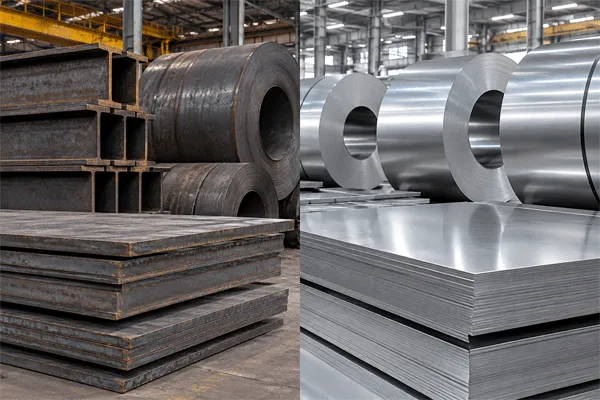
Cold rolled steel is widely used because of its smooth surface, accurate dimensions, and strong mechanical properties. However, choosing the wrong type of steel can increase production costs and create processing problems. Understanding the disadvantages of cold rolled steel helps buyers select the right material for construction, manufacturing, and industrial applications.
الصلب المدلفن على البارد is a type of steel processed at room temperature after hot rolling. It offers excellent surface finish, tight tolerance, and higher strength, but it also has disadvantages such as higher cost, limited thickness options, and more difficult forming compared with hot rolled steel.
What Are the Disadvantages of Cold Rolled Steel? Complete Guide to Cold Rolled Steel vs Hot Rolled Steel
What Is Cold Rolled Steel and How Is It Produced?
Steel is one of the most important industrial materials worldwide. It is used in construction, machinery, automotive manufacturing, infrastructure projects, and many other industries.
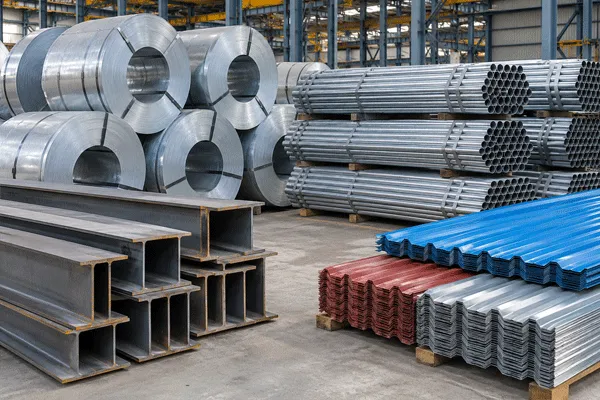
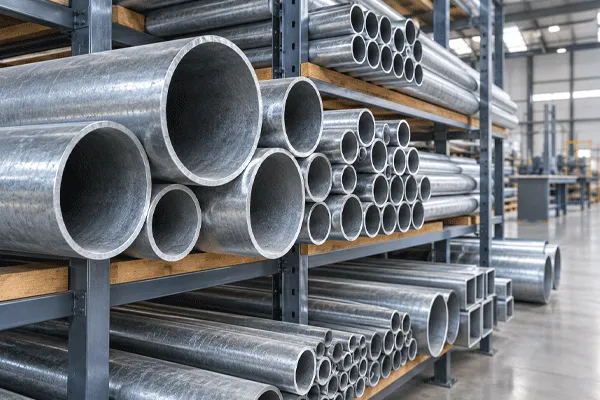
At our company, we provide factory-direct steel supply and customized processing solutions for global buyers, including الصلب المدلفن على البارد, الصلب المدرفل على الساخن, galvanized steel products, steel plates, pipes, and customized steel materials. Our services include cutting, slitting, surface treatment, OEM customization, quality inspection, and export support.
The production process determines the final performance of steel.
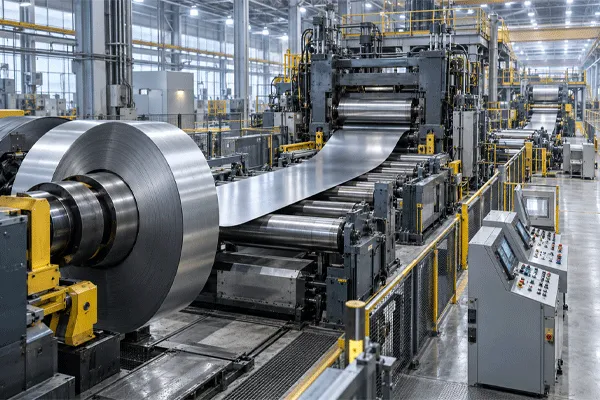
The cold rolling process starts with hot rolled steel. After the steel coil is produced at high temperatures, manufacturers further process it through rollers at room temperature.
The basic process includes:
| خطوة العملية |
Description |
| الدرفلة على الساخن |
Steel is produced at high temperatures and formed into coils |
| التخليل |
Removes surface oxides and impurities |
| الدرفلة على البارد |
Steel passes through rollers near room temperature |
| التلدين |
Improves flexibility and reduces internal stress |
| Surface finishing |
Creates the required surface quality |
During cold rolling, the steel undergoes additional deformation. This improves strength and dimensional accuracy but also creates some disadvantages.
What Are the Main Disadvantages of Cold Rolled Steel?
Although cold rolled steel provides many benefits, it is not suitable for every application.
The most common disadvantages include:
1. Higher Production Cost
One major disadvantage of cold rolled steel is its higher manufacturing cost compared with hot rolled steel.
The additional processing steps require:
- More production time
- Additional equipment
- More energy consumption
- Extra surface treatment processes
Because the steel goes through multiple stages after hot rolling, the final price is usually higher.
For large construction projects where cost control is important, buyers often compare hot rolled and cold rolled materials before making purchasing decisions.
2. Limited Thickness Availability
Another disadvantage of cold rolled steel is that it is usually available in thinner sizes.
The cold rolling process works best for thinner steel products because deformation at room temperature requires more force.
For heavy structural applications, hot rolled steel is often preferred because it can produce thicker sections.
Typical cold rolled steel applications include:
- Automotive components
- Electrical appliances
- Precision machinery
- الأثاث
- Interior structures
However, large beams, heavy plates, and structural components often require hot rolled steel.
3. More Difficult Forming and Shaping
Cold rolled steel has higher strength and hardness because the material becomes hardened during processing.
This means it can be:
- More difficult to bend
- More difficult to shape
- Less flexible compared with hot rolled steel
During manufacturing, companies need suitable equipment to process cold rolled steel without causing cracks or deformation.
The increased hardness is useful for some applications but becomes a challenge for complex forming operations.
What Is the Difference Between Hot Rolled Steel and Cold Rolled Steel?
Many buyers ask:
What’s the difference between hot rolled and cold rolled steel?
The main difference is the processing temperature.
| ميزة |
الصلب المدرفل على الساخن |
الصلب المدرفل على البارد |
| درجة حرارة المعالجة |
High temperatures above recrystallization temperature |
قريبة من درجة حرارة الغرفة |
| تشطيب السطح |
Rougher surface |
سطح أملس |
| التفاوت المسماري |
Lower accuracy |
Higher precision |
| القوة |
Standard strength |
Higher strength after hardening |
| التكلفة |
أدنى |
أعلى |
| التطبيقات |
Structural projects |
Precision manufacturing |
The hot rolling process uses steel at high temperatures, making it easier to compress and shape.
The cold rolling process involves further processing after hot rolling, improving accuracy and surface quality.
Therefore, the choice between hot rolled steel and cold rolled steel depends on project requirements.
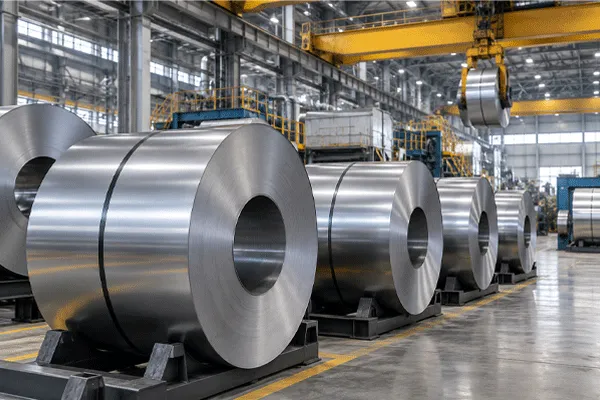
What Are the Disadvantages of Cold Rolled Steel? Complete Guide to Cold Rolled Steel vs Hot Rolled Steel
Why Does Cold Rolled Steel Have Better Surface Finish but Higher Cost?
One of the biggest advantages of cold rolled steel is its excellent surface finish.
Because the steel is processed through rollers at room temperature, manufacturers can achieve:
- سطح أملس
- الأبعاد الدقيقة
- Better appearance
- Improved aesthetics
For industries where appearance matters, cold-rolled steel is often the preferred choice.
Examples include:
- ألواح السيارات
- Household appliances
- Decorative metal products
- Precision equipment
However, achieving this smooth surface requires additional steel processing, which increases manufacturing expenses.
Compared with hot rolled steel, cold rolled steel offers better surface quality but requires a more complex production route.
How Does Cold Rolling Affect Steel Strength and Mechanical Properties?
The cold rolling process changes the internal structure of steel.
When steel passes through rollers at room temperature, the material experiences deformation.
This process can:
- Increase tensile strength
- Improve yield strength
- Increase hardness
- Reduce flexibility
Cold rolled steel is often stronger than hot rolled steel because the material becomes hardened during processing.
However, increased strength also means reduced ductility.
In some applications, engineers need steel that can easily bend and absorb deformation. In these cases, hot rolled steel may perform better.
The balance between strength and flexibility is important when selecting the correct type of steel.









 09-08 2026