أنبوب عبارة للطرق من الفولاذ المجلفن: التصميم والاختيار
أنبوب عبارة للطرق من الفولاذ المجلفن: التصميم والاختيار
09-07 2026
By Luyuan Steel Technical Team | Updated September 7, 2026
Choosing a galvanized steel culvert pipe starts with the hydraulic opening and site conditions, then moves to diameter, wall design, zinc protection, joints, bedding and inspection. The correct selection is the one that carries the design flow, survives the soil and water exposure, and can be installed without forcing an unverified pipe or coating specification into the project.
أساس المعلومات: This guide uses Luyuan’s published steel-pipe and infrastructure references. The source library describes a South American municipal drainage project using large-diameter galvanized pipe and structural supports with heavy-duty zinc coating in acidic soil and wastewater exposure. It does not publish a project diameter, wall thickness, coating mass or numeric service-life result, so those values remain project-specific RFQ fields.
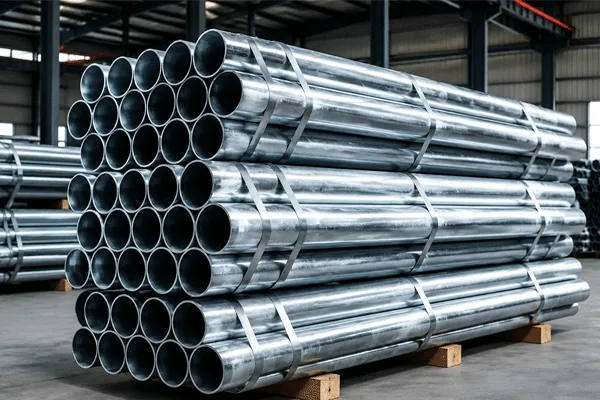
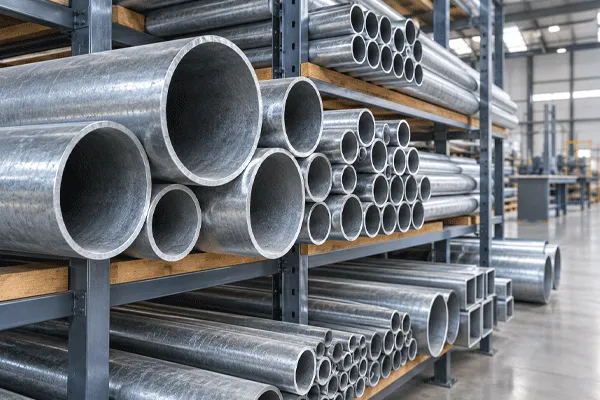
Bundled galvanized steel pipes should be protected from impact and standing water before installation.
Step 1: Define the drainage duty before choosing a size
Start with the design storm, catchment area, allowable headwater, downstream level, slope and inlet or outlet geometry. A culvert that is large enough for the pipe supplier’s catalog may still be too small for the project’s peak flow. The hydraulic designer should calculate the required opening under the governing local drainage code and record the assumptions in the procurement package.
Record the design flow and the return-period event required by the owner or authority.
Confirm the available slope, inlet control, outlet control and maximum allowable headwater.
Set the required internal opening and identify whether debris, sediment or maintenance access changes the practical diameter.
List the inlet, outlet, end treatment and any connection to a larger drainage network.
Do not select a pipe by nominal diameter alone. The hydraulic opening, roughness assumption, end condition and alignment all affect the result. For unusual crossings, ask the civil designer to sign off the hydraulic calculation before the RFQ is released.
Step 2: Match diameter, length and connection details
Diameter controls capacity and clearance; length and joint design control installation time and field risk. Luyuan’s published seamless-pipe directory references outside diameters from 10 to 700 mm and lengths of 6–12 m or customized lengths. Those published values describe the broader seamless-pipe offering, not a guarantee that every galvanized culvert diameter is stocked. Confirm the galvanized culvert size, wall thickness, length and joint system for the actual project.
حقل طلب عرض الأسعار
ما الذي يجب ذكره
لماذا هذا مهم؟
Opening
Required internal diameter or hydraulic opening
Controls flow area and headwater calculation
Outside diameter and wall
OD, nominal wall or structural design basis
Controls fit, cover depth and resistance to installation loads
Pipe length
6 m, 12 m or project-specific cut lengths
Changes joint count, lifting and alignment work
Joint
Coupling, flanged, welded or engineered connection
Controls watertightness, movement and field repair
النهايات
Plain, beveled, threaded or fabricated end treatment
Must match the specified joint and inspection method
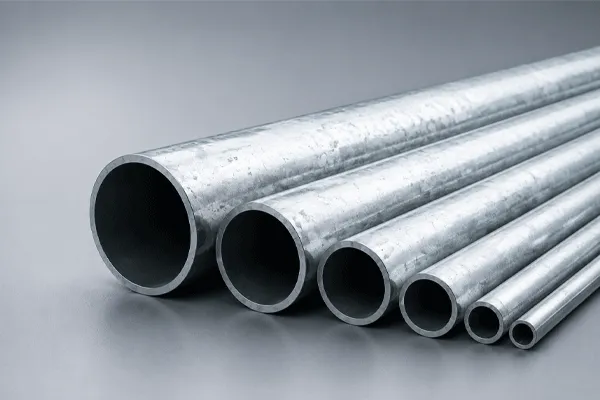
Diameter comparison is useful during selection, but the final size must come from the hydraulic design.
Step 3: Check the soil, water and corrosion exposure
Galvanizing is a corrosion-control system, not a substitute for site chemistry. Record soil pH, resistivity, moisture, chloride or salt exposure, wastewater characteristics, abrasion from sediment and the likelihood of trapped water. Buried pipe also needs protection at cut ends, field joints, lifting damage and any weld-affected zinc area.
The Luyuan source library’s municipal drainage reference involves acidic soil and wastewater exposure and describes heavy-duty zinc coating. It reports improved service life but does not publish a numeric lifespan. Use that reference as a reason to define the exposure and coating requirement, not as a guaranteed life claim for every culvert.
Compared with common uncoated black-steel pipe, galvanized pipe provides a zinc barrier and sacrificial protection that can reduce maintenance at exposed steel surfaces. The trade-offs are added coating-control requirements, possible damage during handling, and the need for a compatible repair method at cuts, welds and field joints. Plastic alternatives may reduce weight and avoid zinc chemistry, but steel can offer different structural, temperature and impact characteristics; the civil design must decide which properties matter.
Step 4: Specify the product and documentation boundary
For the related product scope, Luyuan’s published large-diameter galvanized-pipe reference supports drainage use and heavy-duty zinc coating in demanding soil and wastewater conditions. Exact galvanized culvert dimensions, coating weight, steel grade, joint style and price are not published in the source library and must be confirmed by RFQ. Mark the commercial line as السعر حسب الطلب until the supplier confirms the drawing and delivery basis.
Luyuan’s documented supply process includes an English Mill Test Certificate, stated 100% pre-shipment inspection, batch traceability and chemical and mechanical testing. Depending on the order, third-party inspection by SGS, Bureau Veritas, Intertek or a buyer-appointed inspector can be requested. ASTM International is an appropriate external reference point for steel and pipe specifications, but an ASTM reference should not be treated as proof that a particular galvanized culvert is certified until the exact standard and test documents are agreed.
Specify the steel grade and governing product or fabrication standard.
State the zinc coating method, target and repair procedure for damaged areas.
Request dimensional inspection, coating records, MTC and any project-required third-party report.
Confirm whether the quoted pipe includes couplings, end treatments, gaskets, lifting marks or coating touch-up materials.
Step 5: Design bedding, cover and installation controls
Even a correctly sized pipe can fail if the trench and backfill do not provide uniform support. The civil contractor should follow the approved geotechnical and structural installation design for trench width, bedding, haunching, side support, cover depth, compaction and traffic loading. Do not use a generic cover rule where the project has heavy construction traffic, shallow cover, poor soil or a high groundwater table.
Inspect the delivered pipe for dents, coating damage, blocked ends and ovality before lowering it into the trench.
Prepare a stable bedding layer and keep the pipe invert at the designed line and grade.
Place and compact haunch material evenly on both sides so the load transfers into the surrounding soil.
Protect joints and repaired coating from abrasion while backfilling.
Survey the finished alignment, inlet, outlet and cover before opening the route to traffic or flow.
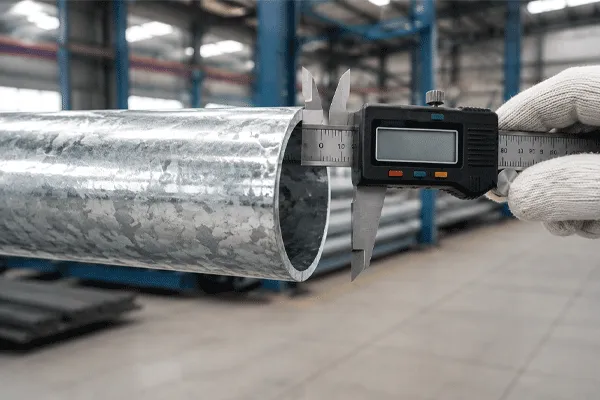
Measure the delivered pipe and confirm the recorded diameter against the approved RFQ and drawing.
Step 6: Inspect the installed culvert and record the handover
Before acceptance, compare the delivered identification marks, diameter, wall specification, length, joint materials and coating documentation with the approved submittal. Check that field cuts and damaged zinc have been repaired using the specified system. Inspect the inlet and outlet for obstructions, verify the line and grade, and record photographs before the trench is closed where local procedures require concealed-work evidence.
Common selection mistakes and boundary cases
The most common mistake is ordering a “large galvanized pipe” without defining the hydraulic opening, cover load, soil chemistry or joint detail. Another is treating a coating label as a complete corrosion design. A third is assuming that a seamless-pipe catalog range automatically confirms a galvanized culvert’s availability, wall thickness or price.
Use a different design path when the crossing carries aggressive industrial effluent, abrasive sediment, buoyancy risk, high traffic loads, or a clearance that cannot accommodate a round pipe. Those conditions may require a specialist corrosion review, structural calculation, alternative cross-section or additional end treatment.
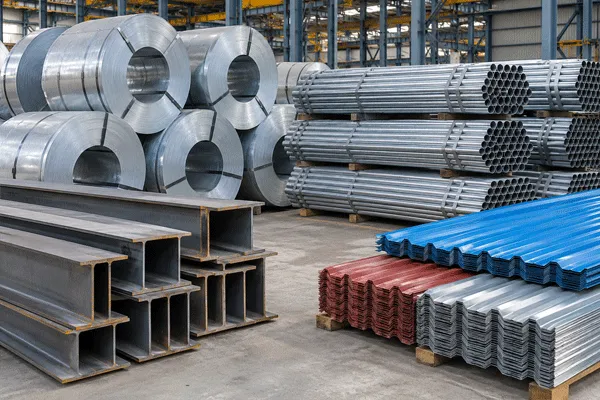
Useful Luyuan references
For the broader pipe range, see Luyuan steel pipe products. For connection and corrosion questions, compare the related guide to تجهيزات أنابيب الصلب المجلفن. Project teams can use the Luyuan contact page to send the drawing, hydraulic basis, soil report and required inspection documents for an RFQ.
الأسئلة الشائعة
Q: Does Luyuan publish a fixed galvanized culvert diameter and coating weight?
A: The public source library does not publish a fixed galvanized-culvert diameter, wall thickness or coating mass. Confirm those fields against the project drawing and RFQ. The broader seamless-pipe directory references 10–700 mm outside diameter and 6–12 m or customized lengths.
Q: Is galvanized steel suitable for acidic soil?
A: It can be considered, but suitability depends on the measured soil and water exposure, coating requirement, joint repair and design life. Luyuan’s municipal drainage reference describes acidic soil and wastewater with heavy-duty zinc coating, but it does not publish a universal service-life number.
Q: What should an infrastructure buyer send with an RFQ?
A: Send the hydraulic calculation, required opening, OD or wall basis, cover and traffic loads, soil and water chemistry, length and joint details, coating requirement, end treatment, inspection documents and delivery location. This prevents a nominal-diameter quote from being mistaken for a complete design match.
Q: How is galvanized steel culvert pipe priced?
A: Price is on request for this product scope. Grade, diameter, wall, zinc coating, joints, processing, order quantity, Incoterms and destination all affect the final quotation.









 09-07 2026