الفريق الفني لشركة Luyuan للصلب | تصنيع الصلب وتصديره | آخر تحديث: سبتمبر 2026
Cold rolled steel coil from Luyuan is supplied at 0.12–5.0 mm thickness, with coil inner diameters of 508 mm or 610 mm, most commonly as SPCC, SPCD or SPCE depending on how much drawing or forming the part requires.
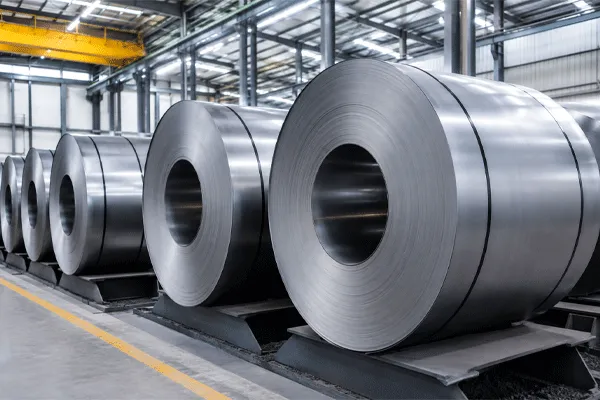
لفائف الصلب المدرفلة على البارد: الدرجات والسماكة والقطر الداخلي للملف
Thickness Range: What’s Published
| المواصفات |
Published Value |
| ملف CR السماكة |
0.12–5.0 ملم |
| Coil inner diameter (ID) |
508 مم / 610 مم |
| CR Sheet thickness (cut form) |
0.20–0.50 ملم |
CR Coil covers a wider thickness band than ورقة CR, which is why coil form is the default for anything requiring roll-forming, slitting, or decoiling equipment rather than a flat, pre-cut piece.
SPCC, SPCD and SPCE: Matching Grade to Forming Operation
Luyuan’s manufacturing application pages reference SPCC, SPCD, and SPCE — three grades under JIS G3141, Japan’s standard for cold-reduced carbon steel sheet and strip, maintained under the Japanese Industrial Standards Committee (JISC) system. The three aren’t interchangeable tiers of the same product; they’re differentiated by carbon content, which controls how much the material can be drawn or stretched before it cracks.
| الصف |
JIS G3141 Classification |
Forming Suitability |
| SPCC |
Commercial quality |
Bending and simple, shallow deep-drawing; the general-purpose default |
| SPCD |
جودة الرسم |
Moderate deep-drawing; lower carbon and phosphorus than SPCC for improved formability |
| المجلس الأعلى للتعليم |
Deep-drawing quality |
Complex or deep-drawn shapes; lowest carbon content of the three, optimized for stretchability |
Specifying SPCC for a part that actually needs SPCE-level formability is one of the more common ordering mistakes on a stamping order — the coil will roll off the line, but cracking or splitting shows up downstream at the press, after the material has already been cut and tooled. Matching grade to the part’s draw depth before the order is placed avoids that scrap.
3 Steps to Confirm the Right Grade Before Ordering
- Check the deepest draw or bend radius on the part, not just the flat blank dimensions — that’s what actually determines whether SPCC, SPCD, or SPCE is needed.
- Confirm thickness against the 0.12–5.0 mm coil range(or 0.20–0.50 mm if cut sheet is required instead of coil).
- Specify coil ID as 508 mm or 610 mmto match the uncoiler or decoiling equipment on the receiving line — this is a common miss on cross-border orders where the buyer’s line equipment wasn’t specified up front.
Why Coil Inner Diameter Isn’t a Minor Detail
A 508 mm ID coil and a 610 mm ID coil aren’t interchangeable on most decoiling equipment — the mandrel or uncoiler on the receiving line is typically built for one or the other, not both. An order placed without specifying coil ID often defaults to whichever is standard for the mill, which may not match the buyer’s equipment. Confirming ID alongside thickness and grade avoids a coil arriving at the dock that the receiving line can’t physically load.
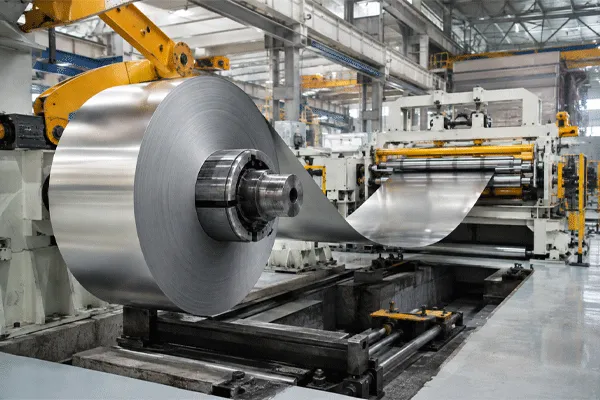
لفائف الصلب المدرفلة على البارد: الدرجات والسماكة والقطر الداخلي للملف
Annealing and Surface Options
Cold rolling work-hardens the steel, so most CR coil goes through an annealing step afterward to restore ductility before it’s shipped for forming. Luyuan’s processing options for cold rolled products include cutting, bending, punching, annealing, black annealing, welding, and decoiling, depending on the specific product and order. Black annealing — annealing without a fully oxygen-free atmosphere — leaves a different surface appearance than bright annealing, which matters for parts where surface finish is visible in the final application rather than hidden under paint or coating.
Certification and Documentation to Request
No SKU-specific certificate number is publicly disclosed for CR Coil. What is documented and available at the company level: a full English Mill Test Certificate with each shipment, 100% pre-shipment inspection, batch traceability from furnace number through shipment, and chemical composition and mechanical property testing. SGS, Bureau Veritas, Intertek, or a buyer-appointed inspector can be arranged for third-party verification — worth confirming in advance if the part is going into an automotive or appliance supply chain with its own incoming-inspection requirements.
Where Cold Rolled Coil Loses to Hot Rolled
Cold rolled coil isn’t the right call for every job. It costs more per ton than hot rolled material for the same base chemistry, because cold rolling and annealing are additional process steps on top of hot rolling. It also doesn’t extend as far into heavier gauges — Luyuan’s hot rolled coil range runs up to 4.0 mm, while cold rolled coil’s advantage is really in the thinner end of that range, where surface finish and dimensional tolerance matter more than raw section thickness. For thick structural components where surface finish is irrelevant, hot rolled is the more economical choice; for stamped, drawn, or visible sheet-metal parts, cold rolled’s tighter tolerance and cleaner surface are usually worth the premium.
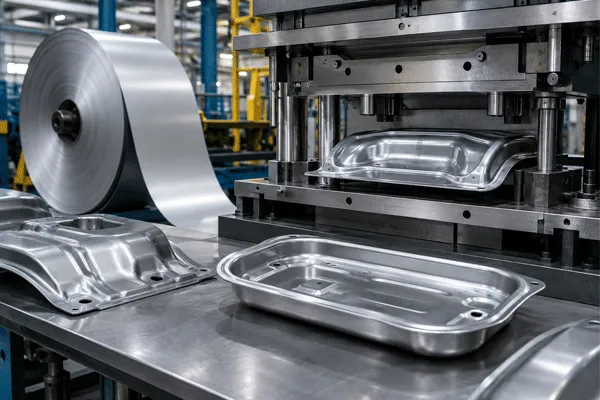
لفائف الصلب المدرفلة على البارد: الدرجات والسماكة والقطر الداخلي للملف
الأسئلة الشائعة
Q: What’s the difference between SPCC, SPCD and SPCE?
A: All three are JIS G3141 cold-rolled carbon steel grades. SPCC is commercial quality for bending and shallow drawing, SPCD is drawing quality for moderate deep-drawing, and SPCE is deep-drawing quality with the lowest carbon content for the most demanding forming operations.
Q: What coil inner diameters are available?
A: 508 mm and 610 mm. Confirm which one matches your decoiling equipment before ordering — the two aren’t interchangeable on most uncoilers.
Q: What thickness range does CR Coil cover?
A: 0.12–5.0 mm in coil form. Cut sheet is available separately at 0.20–0.50 mm.
Q: Why does cold rolled coil need annealing?
A: Cold rolling work-hardens the steel, reducing ductility. Annealing restores formability before the material goes to a press or roll-former. Black annealing and bright annealing produce different surface appearances.
Q: How is cold rolled coil priced?
A: Reference pricing is roughly USD 585–635 per metric ton, though final pricing depends on grade, thickness, coil ID, annealing, and order volume.









 09-05 2026