






Schedule 40 vs Schedule 80 Steel Pipe: How to Choose the Right Wall Thickness
Explore galvanized steel pipe sizes, OD, wall thickness, and schedule 40 charts. Learn how to measure galvanized pipe size and astm a53 specifications.
10-22 2026

 09-08 2026
Cold rolled steel is widely used because of its smooth surface, accurate dimensions, and strong mechanical properties. However, choosing the wrong type of steel can increase production costs and create processing problems. Understanding the disadvantages of cold rolled steel helps buyers select the right material for construction, manufacturing, and industrial applications.
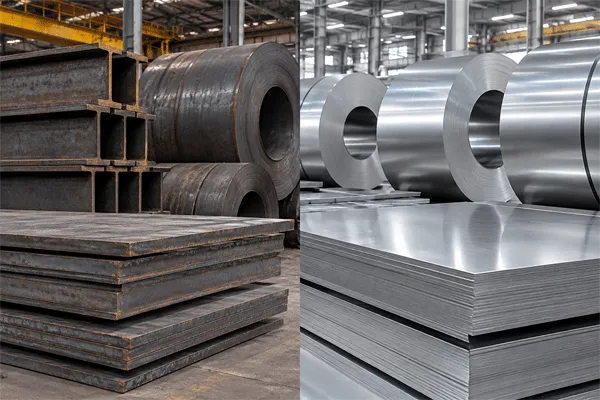
Cold rolled steel is a type of steel processed at room temperature after hot rolling. It offers excellent surface finish, tight tolerance, and higher strength, but it also has disadvantages such as higher cost, limited thickness options, and more difficult forming compared with hot rolled steel.
What Are the Disadvantages of Cold Rolled Steel? Complete Guide to Cold Rolled Steel vs Hot Rolled Steel
Steel is one of the most important industrial materials worldwide. It is used in construction, machinery, automotive manufacturing, infrastructure projects, and many other industries.
At our company, we provide factory-direct steel supply and customized processing solutions for global buyers, including kaltgewalzter Stahl, warmgewalzter Stahl, galvanized steel products, steel plates, pipes, and customized steel materials. Our services include cutting, slitting, surface treatment, OEM customization, quality inspection, and export support.
The production process determines the final performance of steel.
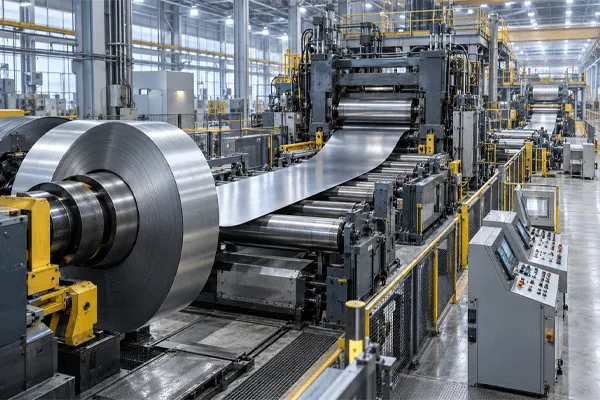
The cold rolling process starts with hot rolled steel. After the steel coil is produced at high temperatures, manufacturers further process it through rollers at room temperature.
The basic process includes:
| Process Step | Description |
|---|---|
| Hot rolling | Steel is produced at high temperatures and formed into coils |
| Pickling | Removes surface oxides and impurities |
| Cold rolling | Steel passes through rollers near room temperature |
| Annealing | Improves flexibility and reduces internal stress |
| Surface finishing | Creates the required surface quality |
During cold rolling, the steel undergoes additional deformation. This improves strength and dimensional accuracy but also creates some disadvantages.
Although cold rolled steel provides many benefits, it is not suitable for every application.
The most common disadvantages include:
One major disadvantage of cold rolled steel is its higher manufacturing cost compared with hot rolled steel.
The additional processing steps require:
Because the steel goes through multiple stages after hot rolling, the final price is usually higher.
For large construction projects where cost control is important, buyers often compare hot rolled and cold rolled materials before making purchasing decisions.
Another disadvantage of cold rolled steel is that it is usually available in thinner sizes.
The cold rolling process works best for thinner steel products because deformation at room temperature requires more force.
For heavy structural applications, hot rolled steel is often preferred because it can produce thicker sections.
Typical cold rolled steel applications include:
However, large beams, heavy plates, and structural components often require hot rolled steel.
Cold rolled steel has higher strength and hardness because the material becomes hardened during processing.
This means it can be:
During manufacturing, companies need suitable equipment to process cold rolled steel without causing cracks or deformation.
The increased hardness is useful for some applications but becomes a challenge for complex forming operations.
Many buyers ask:
What’s the difference between hot rolled and cold rolled steel?
The main difference is the processing temperature.
| Feature | Warmgewalzter Stahl | Kaltgewalzter Stahl |
|---|---|---|
| Processing temperature | High temperatures above recrystallization temperature | Near room temperature |
| Surface finish | Rougher surface | Smooth surface |
| Dimensional tolerance | Lower accuracy | Higher precision |
| Strength | Standard strength | Higher strength after hardening |
| Cost | Lower | Higher |
| Anwendungen | Structural projects | Precision manufacturing |
The hot rolling process uses steel at high temperatures, making it easier to compress and shape.
The cold rolling process involves further processing after hot rolling, improving accuracy and surface quality.
Therefore, the choice between hot rolled steel and cold rolled steel depends on project requirements.
What Are the Disadvantages of Cold Rolled Steel? Complete Guide to Cold Rolled Steel vs Hot Rolled Steel
One of the biggest advantages of cold rolled steel is its excellent surface finish.
Because the steel is processed through rollers at room temperature, manufacturers can achieve:
For industries where appearance matters, cold-rolled steel is often the preferred choice.
Examples include:
However, achieving this smooth surface requires additional steel processing, which increases manufacturing expenses.
Compared with hot rolled steel, cold rolled steel offers better surface quality but requires a more complex production route.
The cold rolling process changes the internal structure of steel.
When steel passes through rollers at room temperature, the material experiences deformation.
This process can:
Cold rolled steel is often stronger than hot rolled steel because the material becomes hardened during processing.
However, increased strength also means reduced ductility.
In some applications, engineers need steel that can easily bend and absorb deformation. In these cases, hot rolled steel may perform better.
The balance between strength and flexibility is important when selecting the correct type of steel.
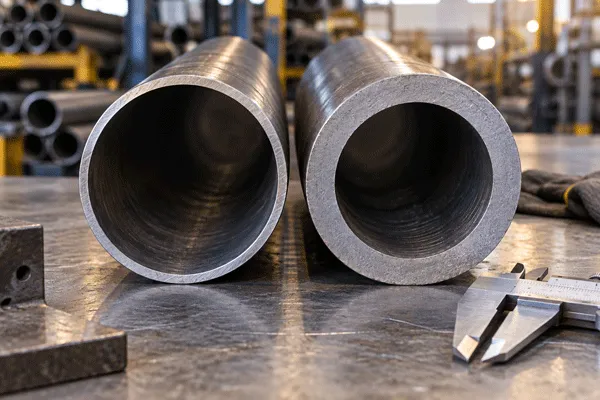
Explore galvanized steel pipe sizes, OD, wall thickness, and schedule 40 charts. Learn how to measure galvanized pipe size and astm a53 specifications.
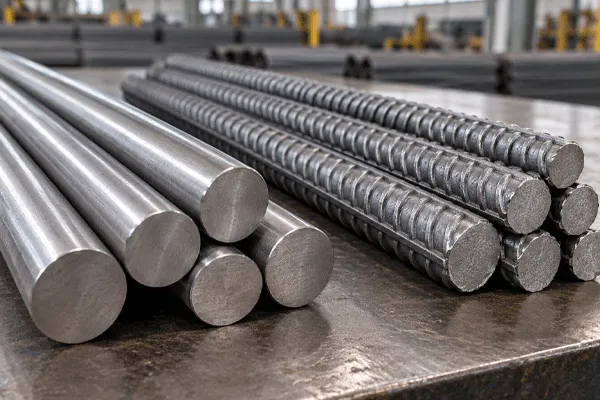
Compare plain round bar and deformed bar in this steel reinforcement guide. Learn which type of steel bar and rebar is best for your construction project.
Wir antworten Ihnen innerhalb von 24 Stunden. In dringenden Fällen fügen Sie bitte WhatsApp/WeChat hinzu: +86 15066120072. Oder rufen Sie direkt unter +86 15066120072 an.
*Wir respektieren Ihre Vertraulichkeit und alle Informationen werden geschützt.
Wir verwenden Ihre Informationen ausschließlich, um auf Ihre Anfrage zu antworten, und senden Ihnen niemals unaufgeforderte E-Mails oder Werbenachrichten.