







Schedule 40 vs Schedule 80 Steel Pipe: How to Choose the Right Wall Thickness
Explore galvanized steel pipe sizes, OD, wall thickness, and schedule 40 charts. Learn how to measure galvanized pipe size and astm a53 specifications.
10-22 2026

 10-20 2026
Choosing the wrong steel bar for concrete can reduce bond performance, complicate detailing, and create unnecessary project risk. A smooth bar and a ribbed bar may look similar at first, but they do not behave the same inside concrete. The right reinforcement starts with understanding that difference.
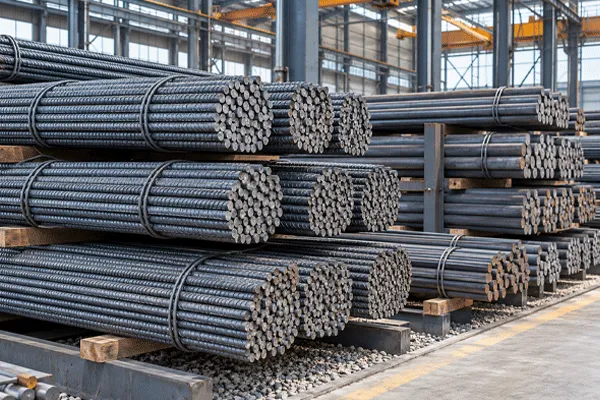
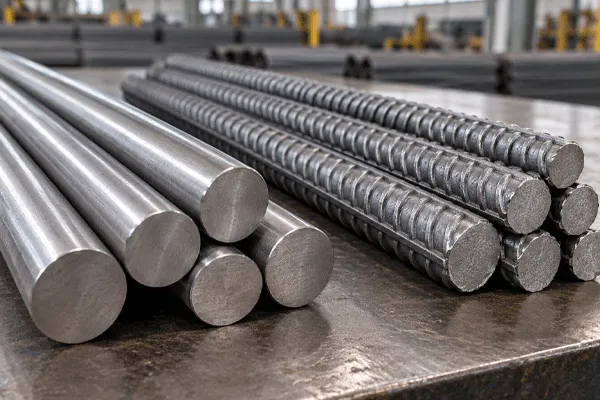
The main difference between a plain round bar and a deformed bar is the surface. Plain round bars have a smooth surface, while deformed bars have ribs or lugs that improve mechanical bond with concrete. For most reinforced concrete structural work, deformed rebar is preferred because it transfers stress more effectively between concrete and steel. Plain bars still have specific uses when the design requires a smooth reinforcing surface.
What Is the Difference Between Plain Round Bar and Deformed Bar? A Steel Reinforcement Guide
A plain round bar is a solid circular steel bar with a relatively smooth outer surface and no intentional reinforcing ribs. When manufactured and specified as concrete reinforcement, it can be considered a plain reinforcing bar.
That distinction is important.
Not every industrial round bar is automatically a concrete reinforcement bar. General engineering round bars may be produced for machining, shafts, fasteners, equipment components, or other applications. A bar intended for concrete construction should meet the standard, grade, dimensions, mechanical properties, and project requirements specified by the engineer.
ASTM A615/A615M-26 currently covers both deformed and plain carbon steel bars supplied in cut lengths or coils for concrete reinforcement. ASTM lists minimum yield-strength grades including Grade 40 [280 MPa], Grade 60 [420 MPa], Grade 80 [550 MPa], and Grade 100 [690 MPa].
A plain reinforcing bar therefore has two defining ideas:
Plain bars should not be confused with hexagonal bars, angle bars, general structural rounds, or unrelated merchant bar products.
A deformed bar is a reinforcing steel bar with raised ribs, lugs, or other controlled deformations rolled into its surface.
These ribs are the feature most people recognize when they hear the word rebar.
The purpose of the pattern is functional, not decorative. CRSI explains that deformations formed on reinforcing bars help transfer loads between the concrete and the reinforcing steel.
That load transfer is one reason deformed steel bars have become the normal choice for many structural concrete applications.
In everyday trade, deformed reinforcing bars are often:
Deformed bars may be made from carbon steel, low-alloy steel, stainless material, or other specialized reinforcing grades depending on the standard.
ASTM A615 covers carbon-steel reinforcing bars, while ASTM A706/A706M covers deformed and plain low-alloy reinforcing bars intended for applications where controlled mechanical properties and chemical composition are important, including enhanced welding compatibility.
Concrete performs very well in compression but is much weaker when subjected to tension.
Steel is added to carry tensile forces and help control cracking. Together, concrete and steel form a highly effective structural system.
For that system to work properly, stress must transfer between concrete and the steel reinforcement.
A smooth bar relies more heavily on adhesion, friction, end anchorage, hooks, and other detailing. A deformed bar adds mechanical interlock through its ribs.
You can think of it this way:
Plain Round Bar
Smooth Surface
      ↓
Lower Mechanical Interlock
      ↓
More Dependence on Anchorage / Detailing

Deformed Bar
Ribbed Surface
      ↓
Higher Mechanical Interlock
      ↓
Efficient Load Transfer to Concrete
CRSI confirms that bar deformations are specifically created to assist load transfer between concrete and reinforcing steel.
This does not mean a plain bar has no legitimate role.
It means engineers choose the type of bar according to the structural function.
Where a bar must be able to move or slip in a controlled way, a smooth bar can actually be useful. Where strong bond and anchorage are essential, a deformed bar is usually the more practical choice.
The most visible difference is the surface, but buyers should compare several characteristics.
| Property | Plain Round Bar | Deformed Bar |
|---|---|---|
| Surface | Smooth | Ribbed / lugged |
| Mechanical bond with concrete | Lower | Higher |
| Typical structural reinforcement | More limited | Very common |
| Slip behavior | Easier where deliberately required | Designed to resist slip |
| Identification | Often relies on tags/specification | Bar markings and deformation pattern |
| Common supply form | Straight bar or coil depending on size | Straight bar or coil |
| Standards | Can be covered by reinforcing standards | Covered by reinforcing standards |
| Main selection basis | Design function | Structural reinforcement requirements |
The biggest procurement mistake is choosing based only on shape.
A buyer may see two products with the same nominal diameter and assume they are interchangeable. They may not be.
The actual decision depends on:
A smooth 12 mm bar and a 12 mm deformed bar can therefore have very different roles in a construction project.
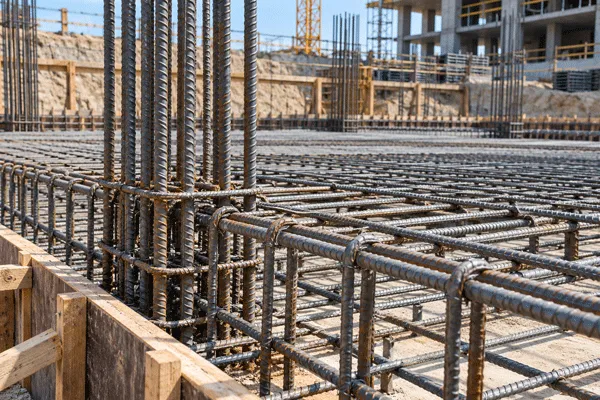
For most main reinforcement in slabs, beams, columns, foundations, retaining structures, and similar members, ribbed steel rebar is commonly specified because the bond behavior suits reinforced concrete design.
What Is the Difference Between Plain Round Bar and Deformed Bar? A Steel Reinforcement Guide
Reinforcing bars come in different strength levels and material families.
Under ASTM A615/A615M-26, deformed and plain carbon-steel reinforcement includes several minimum yield-strength grades. ASTM currently lists Grade 40 [280], Grade 60 [420], Grade 80 [550], and Grade 100 [690].
Grade 60, with a minimum specified yield strength of 60,000 psi or 420 MPa, is a widely recognized reinforcement designation in markets that use ASTM terminology.
However, buyers should never convert every international rebar grade into Grade 60 terminology.
Different markets use different standards.
You may encounter:
Older market language may also refer to Grade II, mild steel grade, twisted steel bars, or cold twisted deformed bars. These terms can appear in historical specifications or regional purchasing language, but modern procurement should use the actual current standard and grade rather than rely on an old commercial name.
ASTM A706/A706M covers plain and deformed low-alloy reinforcing bars for applications where more restrictive mechanical properties and chemistry are required, including applications where improved weldability is important.
This matters when bars need to be welded or where controlled tensile behavior is required.
ASTM A615 material, by contrast, should not automatically be assumed to have the same welding characteristics.
The engineer’s specification should decide.
Most people associate reinforcing steel with beams and foundations, but different bars serve different jobs.
Deformed steel bars for construction are commonly used for:
These are applications where good bond between concrete and reinforcing steel is important.
In many structures, longitudinal main bars in reinforcement carry tensile loads while stirrups, ties, and secondary reinforcement help control shear, confinement, and cracking.
Plain reinforcing bars can be used where the design does not require the same mechanical interlock as conventional deformed rebar.
A common engineering concept is a smooth dowel application where movement along the bar axis may need to occur while load transfers across a concrete joint.
Exact use must follow the drawings and applicable construction code.
Historically, mild steel bars are used in several forms of construction work, but modern structural projects commonly favor higher-strength deformed reinforcement for main reinforcing functions.
So the rule is not:
“Plain bar is bad and deformed bar is good.”
The correct rule is:
Use the bar specified for the structural function.
Surface shape tells you how the bar interacts with concrete.
It does not tell you everything about strength.
Two important values are yield strength and tensile strength.
Yield strength indicates the stress level where permanent deformation begins.
Tensile strength indicates the maximum tensile stress the steel can resist before failure during a tensile test.
For reinforcement, engineers also care about elongation and ductility.
A bar should not simply be strong. In many applications, it must also deform predictably without sudden brittle failure.
CRSI points out that reinforcing steel provides useful elongation under load, allowing structures to show recognizable cracking and deformation behavior under overload conditions.
This combination is important for structural safety.
No.
A higher-strength steel product can reduce the steel area required in some designs, but only when the structural design code permits that grade.
Other issues include:
For this reason, a buyer should never replace a specified Grade 60 reinforcement with a different high-strength grade simply because the second material has a larger tensile number.
Engineering approval is required.
The reinforcing steel market uses many terms, and some are regional rather than universal.
TMT bars are thermomechanically treated reinforcing bars.
Their production controls rolling and cooling to achieve a useful balance of strength and ductility. They are widely used in many international construction markets.
TMT is a manufacturing description, while ASTM A615 or another standard is a technical specification.
Do not treat the terms as automatically interchangeable.
Older construction markets may refer to twisted steel bars or cold-twisted deformed bars.
Cold twisting was historically used to increase strength by mechanical working.
Modern reinforcement production has largely shifted toward controlled hot rolling and thermomechanical processing in many markets, but old drawings or procurement documents may still contain these terms.
Stainless steel bars are also available for concrete structures exposed to severe chloride or corrosive conditions.
CRSI lists ASTM A955/A955M among specifications for deformed and plain stainless-steel reinforcing bars.
These products can be useful for bridges, marine environments, and infrastructure where long-term corrosion control justifies the added cost.
Do not confuse reinforcement with general commercial bars such as:
These products may be important construction materials, but they are not automatically reinforcing bar.
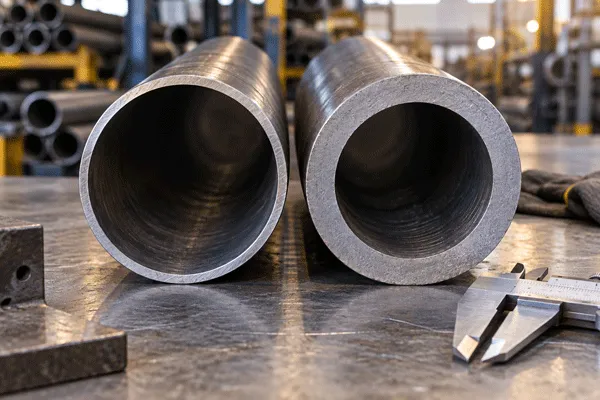
Likewise, steel tubing, structural sections, and merchant bar belong to different product categories.
What Is the Difference Between Plain Round Bar and Deformed Bar? A Steel Reinforcement Guide
Steel inside properly designed concrete is normally protected by the alkaline concrete environment.
But water, chloride, cracks, poor cover, carbonation, or aggressive exposure can eventually contribute to corrosion.
When reinforcing steel corrodes, corrosion products expand.
That expansion can create pressure around the bar, contributing to cracking and spalling of the surrounding concrete.
This is why long-term reinforcement selection considers more than initial strength.
Potential options for severe environments may include:
CRSI notes that light surface rust alone does not automatically make reinforcing steel unusable. Rust becomes a concern when material loss or reduction in deformation dimensions causes the bar to fall outside applicable ASTM requirements.
This distinction is important for site inspectors and importers.
A small amount of uniform surface oxidation on a “black bar” is not the same thing as heavy scaling, pitting, or section loss.
The accepted condition must still meet the applicable standard and project requirement.
Diameter affects the amount of steel area in the structure, but it does not change the basic difference between smooth and ribbed bars.
A larger smooth bar is still plain.
A smaller ribbed bar is still deformed.
Some suppliers advertise commercial reinforcement ranges such as 6 mm to 50 mm, but that range should not be treated as universal. Standard bar sizes depend on national standards, mill capability, product type, and market.
ASTM A615 uses standard reinforcing bar number designations and dimensional requirements rather than one universal metric commercial range.
For procurement, confirm:
The weight of steel is also important because reinforcement is often traded by metric ton while engineering drawings show quantities by bar length, diameter, and spacing.
For large projects, even a small difference in unit weight can affect total tonnage.
Start with the structural drawings.
Do not start with whichever bar costs less.
The engineering design determines:
For a typical reinforced beam, deformed bars may be used because the design needs strong bond and stress transfer.
For a movement joint dowel, the design may call for a smooth bar because controlled sliding is part of the joint function.
This illustrates an important principle in civil engineering:
Material performance is application-specific.
A product is not “best” simply because it is stronger, more expensive, or more advanced.
The best rebar is the reinforcement that complies with the design and applicable standard.
International procurement needs a complete specification.
Saying “send price for rebar” is not enough.
A practical RFQ should include:
| RFQ Item | Information to Provide |
|---|---|
| Produkt | Plain or deformed reinforcing bar |
| Standard | ASTM, BS, EN, GB, JIS, etc. |
| Güteklasse | Exact grade |
| Diameter | Nominal size |
| Länge | Standard or customized |
| Quantity | Tons / bundles |
| Processing | Straight, bent, cut, etc. |
| Surface | Black, coated, galvanized, stainless |
| Prüfungen | MTC / additional inspection |
| Packing | Bundled export packing |
| Destination | Country / port |
For reinforcing steel, the MTC helps confirm chemical and mechanical test information associated with the supplied material.
ASTM A615 includes requirements concerning chemistry, tension testing, bending, deformation characteristics, and marking.
For international projects, buyers may also request independent third-party inspection.
This can verify:
As a professional steel supplier, we recommend confirming these requirements before production so inspection can be planned rather than added after the order is finished.
For global B2B buyers, reinforcement is often only one part of a project.
A warehouse, industrial building, infrastructure project, or fabrication contract may also require:
Luyuan Steel works as an integrated Chinese steel manufacturing and supply partner for distributors, contractors, engineering companies, and international project buyers.
Our support can include:
For large construction needs, consolidating several steel categories can simplify communication, quality coordination, shipping, and documentation.
Consider a contractor preparing a reinforced concrete factory foundation.
A vague inquiry may say:
“Need 500 tons steel bar.”
A useful inquiry should define:
ASTM A615 Grade 60 deformed reinforcement, required bar sizes, cut lengths, tonnage by diameter, MTC, third-party inspection, bundle marking, seaworthy packing, and destination port.
The second version reduces misunderstanding before production starts.
It also makes quotations easier to compare fairly.
It can be, but not always.
A plain round product manufactured and specified for concrete reinforcement can be reinforcing bar. However, a general industrial round bar used for machining or fabrication should not automatically be described as rebar.
Always check the material standard and intended application.
The ribs create mechanical interlock with the surrounding concrete, helping transfer loads between concrete and the reinforcing steel. CRSI identifies this load-transfer function as the purpose of reinforcing-bar deformations.
That makes deformed reinforcement practical for beams, slabs, columns, foundations, and many other structural members.
Not necessarily.
Surface profile and material strength are separate characteristics.
A plain bar and a deformed bar can be manufactured to specified strength levels. The important difference is that the deformed surface improves mechanical bond with concrete.
Compare grade and test properties rather than assuming the smooth bar must have lower strength.
Some reinforcement can be welded, but the grade matters.
ASTM A706 is specifically intended for applications requiring controlled chemistry and enhanced welding compatibility. ASTM A615 material should not automatically be welded without checking chemistry, applicable welding procedures, and engineering requirements.
Yes.
Stainless steel reinforcement is used when enhanced corrosion performance is important. CRSI lists ASTM A955/A955M as a specification for plain and deformed stainless reinforcing bars.
Because it costs more than ordinary carbon reinforcement, it is normally selected based on lifecycle and exposure requirements.
Not without engineering approval.
Their bond behavior differs. Changing the type of steel can affect anchorage, joint movement, development length, and structural performance.
Always follow the design drawings and applicable construction code.
If you are sourcing steel bars for construction, deformed rebar, plain reinforcing bars, structural steel, steel plate, pipe, sections, coated steel, stainless steel, aluminum, or copper, send Luyuan Steel your required standard, grade, diameter, length, quantity, destination port, processing requirements, and inspection requirements.
As an integrated steel manufacturer and exporter in China, we can support material selection, OEM / ODM processing, MTC traceability, third-party inspection, safe export packaging, consolidated steel procurement, and international logistics for distributors, contractors, manufacturers, and global engineering projects.
Explore galvanized steel pipe sizes, OD, wall thickness, and schedule 40 charts. Learn how to measure galvanized pipe size and astm a53 specifications.
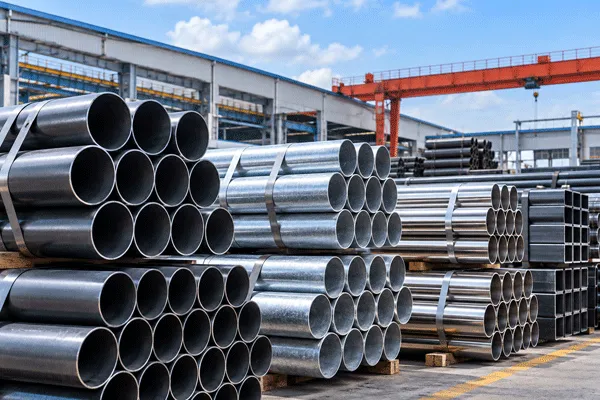
Steel Pipe Manufacturers: How to Choose Carbon Steel, Stainless Steel & Pipe Suppliers
Wir antworten Ihnen innerhalb von 24 Stunden. In dringenden Fällen fügen Sie bitte WhatsApp/WeChat hinzu: +86 15066120072. Oder rufen Sie direkt unter +86 15066120072 an.
*Wir respektieren Ihre Vertraulichkeit und alle Informationen werden geschützt.
Wir verwenden Ihre Informationen ausschließlich, um auf Ihre Anfrage zu antworten, und senden Ihnen niemals unaufgeforderte E-Mails oder Werbenachrichten.