







Schedule 40 vs Schedule 80 Steel Pipe: How to Choose the Right Wall Thickness
Explore galvanized steel pipe sizes, OD, wall thickness, and schedule 40 charts. Learn how to measure galvanized pipe size and astm a53 specifications.
10-22 2026

 08-28 2026
 Equipo técnico de Luyuan Steel | Asistencia sobre especificaciones de productos de acero, Shandong Luyuan Metal Materials Co., Ltd. | Publicado / Última actualización: 28 de agosto de 2026
La mayoría de las páginas de precios comienzan con una cifra y dan a entender al lector que se refiere a su pedido. Esta, en cambio, comienza con una tabla que distingue entre ambos casos.
| Gama de productos | Rango orientativo de cotización (USD/TM) | Ancho de banda por encima del extremo inferior |
| Bobina de acero laminado en frío | 585–635 | 8.5% |
| Bobinas con recubrimiento de color PPGI / PPGL | 460–650 | 41.3% |
| Tubo de acero galvanizado | 608–623 | 2.5% |
| Acero estructural en forma de viga en H | 440–568 | 29.1% |
| Productos seleccionados de acero para cubiertas | 410–450 | 9.8% |
| Todos los productos de la lista, en general | 410–650 | 58.5% |
| Gama de productos | Estado |
| Bobinas y chapas laminadas en caliente | Precio a consultar |
| Barra deformada / barra de armadura | Precio a consultar |
| Barra redonda y varilla | Precio a consultar |
| Bobinas galvanizadas y de Galvalume | Precio a consultar |
| Chapa, bobinas, tubos y barras de acero inoxidable | Precio a consultar |
| Productos de aluminio y cobre | Precio a consultar |
La segunda tabla es la más veraz. Un proveedor que publica una cifra para cada línea que vende o bien está indicando una especificación básica y la ajusta posteriormente, o bien está calculando la media de especificaciones que no deben incluirse en el mismo promedio. Cuando no existe un precio de catálogo verificado, la respuesta es «precio a consultar», en lugar de un rango inventado para rellenar la fila.
Respuesta rápida: El precio de catálogo de las bobinas de acero laminado en frío oscila entre 585 y 635 dólares estadounidenses por tonelada métrica a fecha de agosto de 2026. Cuando una línea de productos no tiene un precio de catálogo publicado, los presupuestos se emiten según las especificaciones, en lugar de basarse en una franja de precios fija.
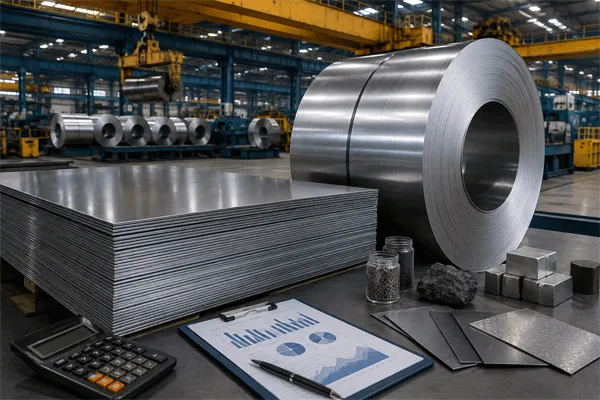
Precios del acero laminado en frío en 2026: rangos y factores que influyen en los costes
Vuelve a leer la columna de la derecha de la primera tabla. Es la cifra más útil de toda esta página.
El tubo galvanizado abarca un rango de 2,51 TP3T desde la parte inferior de su banda hasta la superior. El producto se define por un reducido conjunto de tamaños y calidades estandarizados, por lo que, una vez fijados el diámetro y el espesor de la pared, queda poco por negociar. El PPGI abarca un rango de 41,31 TP3T. Las bobinas con recubrimiento de color incluyen la elección del sustrato, el peso del recubrimiento de zinc o de aluminio-zinc, un sistema de imprimación y capa de acabado, una capa de base, un color RAL y un nivel de brillo, y cada uno de estos elementos constituye una partida de coste independiente. Dos pedidos de PPGI pueden situarse en extremos opuestos de ese rango y ambos tener un precio correcto.
La viga en H en 29.1% vuelve a comportarse de forma diferente: el tamaño y la calidad de la sección son los factores determinantes, y la variación refleja principalmente la variedad de secciones del catálogo, más que un rango de calidad para una misma sección.
La regla práctica se deduce directamente. Cuando recibas una oferta, lo primero que debes preguntar es cuál es el margen de ese producto. En un margen de 2,51 TP3T, una cotización 101 TP3T por debajo del mercado es una señal de alarma sobre el producto. En una banda de 41,31 TP3T, puede que simplemente se trate de un sustrato más fino con un sistema de pintura más barato, lo cual es una oferta legítima para una especificación incorrecta.
A diferencia de los índices y los fondos indexados que predominan en esta búsqueda —que recogen medias regionales para una especificación básica definida—, una cotización de fábrica corresponde a una única especificación en un momento concreto, con unas condiciones de entrega específicas asociadas. Hay cuatro diferencias que explican la mayor parte de la variación:
Nada de esto hace que los índices sean inútiles. Lo que hacen es servir como indicador de la tendencia del mercado, es decir, si está al alza o a la baja, pero no como referencia para determinar si tu oferta concreta es justa.
La bobina laminada en frío es el caso más claro, ya que su banda es lo suficientemente estrecha como para poder atribuirla. Parámetros publicados por Luyuan para esta línea:
| Parámetro | Valor publicado |
| CR Coil espesor | 0,12–5,0 mm |
| Diámetro interior de la bobina | 508 mm / 610 mm |
| Espesor de la lámina de CR | 0,20–0,50 mm |
| Calidades habituales utilizadas en aplicaciones industriales | SPCC, SPCD, SPCE |
| Calidades de las cañas CR | 1.2436, D7, SKD2, X210CrW12 |
| Servicio de procesamiento disponible | Corte, plegado, punzonado, recocido, recocido al negro, soldadura, desenrollado |
| Rango orientativo de cotización | 585-635 USD/MT |
Hay cuatro variables que influyen en una orden dentro de ese rango, más o menos en este orden de importancia:
Calidad. SPCC es la calidad comercial general según el sistema JIS. SPCD es una calidad para embutición, y SPCE, una calidad para embutición profunda. Cada nivel añade restricciones en cuanto a la composición química y al recocido, y los rechazos en la prensa del cliente son precisamente contra lo que esta calidad ofrece una garantía. Pedir SPCC para una pieza que necesita SPCE supone ahorrar dinero en la bobina y gastarlo en chatarra. Pedir SPCE para un panel plano supone gastar dinero en una propiedad que la pieza nunca utiliza.
Espesor. El rango publicado oscila entre 0,12 mm y 5,0 mm, lo que supone un factor de más de 40. Los espesores finos tienen un coste por tonelada más elevado debido a que se multiplican las pasadas de laminación, la velocidad de la línea disminuye y la pérdida de rendimiento en los extremos del rollo representa una proporción mayor en un rollo más ligero. Por debajo de aproximadamente 0,3 mm, la curva de costes se empina notablemente. Un comprador que elija 0,25 mm cuando 0,35 mm sería suficiente se ha situado en un nivel superior de la gama sin motivo alguno.
Tolerancia y planitud. La tolerancia estándar está incluida en el rango publicado. Una tolerancia de calibre más estricta, un requisito de planitud expresado en unidades «I» o un requisito relativo al estado de los bordes se facturan por separado, ya que modifican el funcionamiento de la línea de producción de la fábrica y la cantidad de bobina que esta puede suministrar.
Condiciones de superficie y recocido. El material recocido en negro, el endurecido al máximo y el sometido a laminado de acabado son productos distintos con un comportamiento diferente en las fases posteriores del proceso. El recocido en negro figura en la lista de procesamiento publicada; especificarlo o no especificarlo influye tanto en el precio como en el producto que se recibe.
El diámetro interior de la bobina es la variable que los compradores suelen pasar por alto. Se ofrecen dos opciones: 508 mm y 610 mm. Si tu desenrollador está diseñado para una de ellas, recibir la otra implicará necesidad de un adaptador de mandril o que la bobina sea rechazada, y la diferencia de precio entre ambas es nula. Se trata de una especificación que no cuesta nada indicar, pero que a menudo se omite.
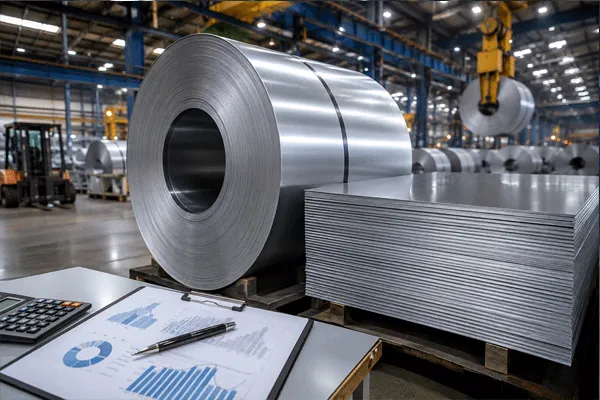
Precios del acero laminado en frío en 2026: rangos y factores que influyen en los costes
En el caso de los productos galvanizados y con recubrimiento de color, el peso del recubrimiento se indica en gramos por metro cuadrado en ambas superficies, mientras que la bobina se vende por peso. Esa discrepancia tiene una consecuencia que la mayoría de los compradores subestiman.
La masa de acero por metro cuadrado se calcula multiplicando el espesor en milímetros por 7,85. El zinc se añade directamente según la clase de recubrimiento. Haciendo los cálculos:
| Espesor de la bobina | Masa de acero (kg/m²) | Z120 de zinc como % de masa | Z275: zinc en una proporción de % de masa |
| 0,20 mm | 1.57 | 7.6% | 17.5% |
| 0,30 mm | 2.36 | 5.1% | 11.7% |
| 0,50 mm | 3.93 | 3.1% | 7.0% |
| 1,00 mm | 7.85 | 1.5% | 3.5% |
Con un espesor de 0,20 mm, un recubrimiento Z275 supone más de 17% de lo que se paga por peso. A 1,00 mm, la misma clase de recubrimiento equivale a 3,51 TP3T. Por eso, el precio por tonelada de una bobina recubierta carece de sentido si no se indican tanto el espesor como la clase de recubrimiento, y por eso “mejorar el recubrimiento sin aumentar el precio” no es una petición que una acería pueda satisfacer en el caso de los espesores finos.
Los parámetros publicados por Luyuan sobre los productos recubiertos ofrecen el contexto: la bobina GI figura como Z120 en las calidades DX51D/SGCC, mientras que en las páginas dedicadas a aplicaciones agrícolas y de fabricación se hacen referencia a rangos de zinc de hasta Z275, dependiendo del producto. La bobina de Galvalume se publica con un espesor de 0,21–0,50 mm. El espesor del PPGI se indica entre 0,21 y 0,50 mm. El peso del recubrimiento, el tipo de pintura y el color RAL se pueden personalizar a nivel de empresa, lo que explica precisamente por qué la gama de PPGI es la más amplia de la página.
Una oferta de 585 dólares estadounidenses y otra de 640 dólares estadounidenses pueden corresponder a la misma propuesta comercial. Los Incoterms 2020, publicados por la Cámara de Comercio Internacional, definen quién paga qué; el precio por tonelada incluye todos los costes que recaen sobre el vendedor.
| Término | Incluido en el precio del vendedor | El comprador se encarga de los trámites y corre con los gastos |
| EXW | Producto en fábrica | Carga, transporte terrestre, trámites de exportación, transporte marítimo, seguros, derechos de importación, entrega |
| FOB | Producto, transporte terrestre, despacho de exportación, carga en buque | Transporte marítimo, seguro, aranceles de importación, entrega |
| CFR | Producto más flete marítimo hasta el puerto indicado | Seguro, derechos de importación, transporte desde el puerto |
| CIF | Producto, transporte marítimo, cobertura mínima del seguro | Derechos de importación, entrega desde el puerto |
No se pueden comparar dos ofertas hasta que ambas se hayan reexpresado según las mismas condiciones. El error más habitual es precisamente el contrario: un comprador compara una cifra EXW de un proveedor con una cifra CFR de otro, elige la cifra más baja y descubre la diferencia al contratar el transporte. Solicita que se especifiquen las condiciones por escrito en cada oferta y pregunta por el puerto designado, ya que el CFR a dos puertos del mismo país supone dos precios diferentes.
Los aranceles de importación, las medidas antidumping y los contingentes de salvaguardia en el mercado de destino quedan al margen de los cuatro términos mencionados y del precio de cualquier proveedor. A menudo son más elevados que todas las variables de especificación de esta página juntas. Comprueba la clasificación arancelaria del producto concreto antes de comparar ofertas.
El volumen influye en el precio, pero no de forma lineal ni siempre en la dirección que suponen los compradores.
Si tus necesidades anuales son elevadas pero están muy dispersas, a menudo resulta más rentable agrupar las especificaciones que negociar el precio de cada uno de los productos de la lista.
Cada oferta que se sitúe significativamente por debajo del rango tiene una explicación. Hay seis motivos habituales, y ninguno de ellos se aprecia en la línea de precios:
La lista no pretende demostrar que las ofertas baratas sean deshonestas. Lo que sí sostiene es que la comparación de precios entre dos ofertas no es válida hasta que estas seis líneas se hayan igualado.
Los pasos del 1 al 4 resuelven la mayoría de las diferencias de precio aparentes que nos plantean los compradores. El paso 8 es el que convierte una comprobación de precios en una comprobación de especificaciones, lo cual resulta más útil.
Una documentación de calidad forma parte de lo que incluye el precio por tonelada, y su coste debería tenerse en cuenta de forma deliberada, en lugar de descubrirse a posteriori como una omisión:
Las certificaciones a nivel de empresa que figuran en la página web incluyen las normas ISO 9001, ISO 14001, ISO 45001 y la directiva RoHS. Los números de certificado deben solicitarse y verificarse directamente en los certificados emitidos, en lugar de tomarlos de cualquier página web, incluida esta.

Precios del acero laminado en frío en 2026: rangos y factores que influyen en los costes
Envía estos datos y el presupuesto que te enviemos será comparable a cualquier otro:
R: El rango de precios orientativo es de aproximadamente 585-635 dólares estadounidenses por tonelada métrica a fecha de agosto de 2026. La situación dentro de ese rango depende principalmente de la calidad, el espesor, la tolerancia y el estado de recocido. Los precios de entrega en su puerto serán superiores en función del componente de flete y seguro del Incoterm utilizado.
R: Los índices reflejan una media correspondiente a una especificación de referencia definida en un punto de entrega concreto durante un período pasado. Una cotización establece el precio de tu especificación, según tus condiciones de entrega, para un envío a plazo. Ambas pueden ser correctas y diferentes al mismo tiempo.
R: Las bobinas galvanizadas y de Galvalume se cotizan bajo pedido y no según una tabla publicada, ya que la clase de recubrimiento y el calibre influyen considerablemente en el precio por tonelada. El zinc representa entre 1,51 TP3T y 17,51 TP3T de la masa de una bobina, dependiendo únicamente de esas dos variables.
R: Las barras de refuerzo no tienen un precio de catálogo publicado y su cotización se establece según las especificaciones. El grado, el diámetro, la longitud o el formato en bobina, así como la normativa de destino, influyen en el precio.
R: El rango orientativo de cotización es de aproximadamente entre 440 y 568 dólares estadounidenses por tonelada métrica. Esta diferencia se debe principalmente a la variedad de tamaños de las secciones, más que a variaciones de calidad dentro de una misma sección.
R: El material laminado en caliente suele tener un precio inferior al laminado en frío por tonelada, ya que se salta las fases de reducción en frío y recocido. Luyuan no publica un rango de precios para los productos laminados en caliente, por lo que la comparación debe realizarse a partir de dos presupuestos actuales, en lugar de basarse en cifras publicadas.
R: Los precios de las barras redondas y las varillas se facilitan previa solicitud. El tipo de acero es la variable determinante, y los tipos de acero para herramientas, como el 1.2436, el D7, el SKD2 y el X210CrW12, se sitúan en una categoría de precios totalmente distinta a la de las varillas de carbono comerciales.
R: Una oferta de exportación incluye el precio de una materia prima que la fábrica aún no ha comprado, más una tarifa de transporte que aún no se ha reservado. Ambos factores pueden variar. Un plazo de validez prolongado o bien se cotiza con un margen de riesgo, o bien no se cumple.
R: Por sí solo, no. Normalmente, un pedido más grande de una sola especificación sí lo hace. Un pedido más grande dividido en varias especificaciones puede tener un precio similar al de varios pedidos más pequeños, ya que cada especificación supone un ciclo de producción y un lote de inspección independientes.
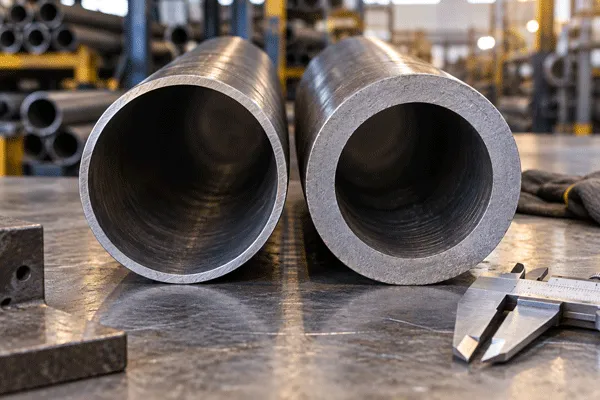
Explore galvanized steel pipe sizes, OD, wall thickness, and schedule 40 charts. Learn how to measure galvanized pipe size and astm a53 specifications.
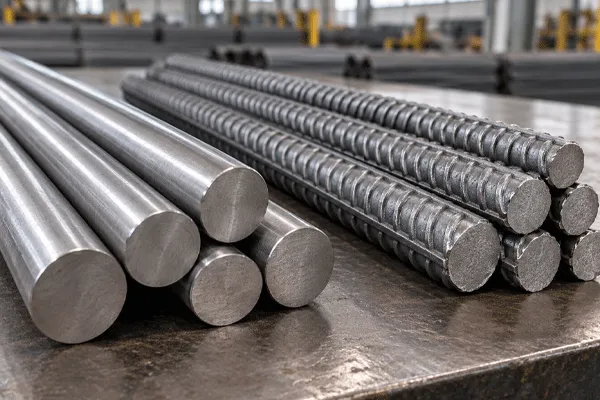
Compare plain round bar and deformed bar in this steel reinforcement guide. Learn which type of steel bar and rebar is best for your construction project.
Le responderemos en un plazo de 24 horas. Si para el caso urgente, por favor agregue WhatsApp/WeChat: +86 15066120072,. O llame directamente al +86 15066120072.
*Respetamos su confidencialidad y toda la información está protegida.
Sólo utilizaremos sus datos para responder a su consulta y nunca le enviaremos correos electrónicos o mensajes promocionales no solicitados.