







Schedule 40 vs Schedule 80 Steel Pipe: How to Choose the Right Wall Thickness
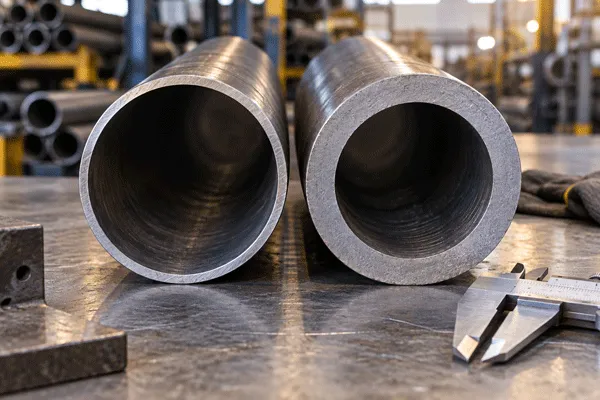
Explore galvanized steel pipe sizes, OD, wall thickness, and schedule 40 charts. Learn how to measure galvanized pipe size and astm a53 specifications.
10-22 2026

 10-14 2026
Poor steel sheet selection can cause cracking, unstable stamping, uneven dimensions, paint defects, and wasted material. These problems become expensive in high-volume production. Choosing the right cold roll grade, thickness, surface quality, and forming properties helps you build parts more consistently and control total manufacturing cost.
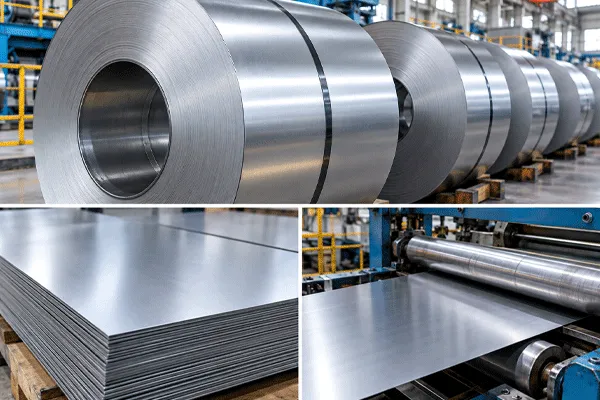
Cold rolled steel sheet is hot-rolled steel that receives additional pickling, cold reduction, annealing, and finishing processes. It offers tighter dimensional control, a smoother surface, stable mechanical properties, and good formability. It is widely used for automotive parts, appliances, cabinets, precision fabrication, tubes, electrical equipment, and other products that need accurate dimensions and good surface quality.
Cold Rolled Steel Sheet Guide: Cold Roll Steel Sheet Metal for Precision Manufacturing
Cold rolled steel is a flat steel product produced by further processing hot-rolled material after it has cooled. The term cold roll refers mainly to reducing the strip thickness through rollers at or near room temperature rather than while the material is red hot.
The starting material is normally warmgewalzter Stahl. The mill removes surface scale by pickling and then reduces the strip in a cold rolling mill. The material may later be annealed, temper rolled, leveled, oiled, slit, or cut into sheets depending on the final specification.
ArcelorMittal describes cold-rolled sheet as hot-rolled sheet that receives additional steps including pickling, cold reduction, annealing, and temper rolling. These operations are used to achieve more controlled mechanical properties, better gauge tolerance, improved strip shape, and better surface finish.
A typical product can be supplied as:
This makes cold-rolled flat steel suitable for a wide variety of shapes and a wide variety of applications.
The manufacturing process starts before the strip reaches the cold rolling mill.
Hot-rolled material normally carries oxide scale. The steel first passes through a pickling process to remove scale and prepare the surface. It then enters the cold-rolling process, where heavy rollers reduce the material to the required thickness.
A simplified flow looks like this:
Hot-Rolled Coil
      ↓
Pickling
      ↓
Cold Reduction
      ↓
Annealing
      ↓
Temper / Skin Pass
      ↓
Leveling
      ↓
Slitting or Cut-to-Length
      ↓
Cold Rolled Steel Sheet
ArcelorMittal’s Calvert cold rolling operation explains that tandem cold mills are designed to provide tight gauge control, flatness, and consistent properties from one end of the strip to the other.
During the rolling process, pressure between rollers reduces the strip thickness. Because this reduction takes place without reheating the strip to hot-rolling temperatures, the metal undergoes cold-working.
Cold working causes plastic deformation and changes the steel’s properties. Strength can increase, while available ductility may decrease until later heat treatment restores the desired forming characteristics.
This intermediate material is sometimes called full-hard cold rolled material.
The degree of reduction and later treatment must therefore match the finished product. A simple bent panel and a highly complex deep drawing part do not require the same steel condition.
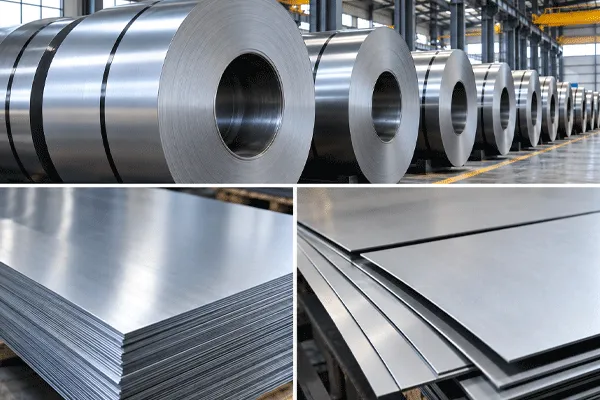
ASTM A1008/A1008M is one of the most important specifications for buyers sourcing cold-rolled carbon and high-strength sheet material.
As of 2026, ASTM lists ASTM A1008/A1008M-26 as the active edition. The specification covers cold-rolled steel sheet in coils and cut lengths, including commercial steel, drawing steel, deep drawing steel, extra deep drawing steel, structural grades, HSLA grades, improved-formability HSLA, solution-hardened, and bake-hardenable grades.
That makes it incorrect to treat “ASTM A1008” as one single steel grade.
A buyer should identify the required designation.
For example:
| Material Need | Possible Category |
|---|---|
| General fabrication | Commercial Steel |
| Moderate forming | Drawing Steel |
| More demanding drawing | Deep Drawing Steel |
| Complex drawn components | Extra Deep Drawing Steel |
| Strength-controlled component | Structural or HSLA grade |
| Lightweight high-strength part | HSLA / advanced grade |
ASTM states that chemical composition is verified through heat analysis and that specified products may require tensile, bending, elongation, yield, and other tests depending on the designation.
So instead of requesting:
“ASTM A1008 cold roll.”
A more useful RFQ would say:
“ASTM A1008/A1008M, required designation, 1.2 mm × 1250 mm, coil or cut sheet, surface requirement, forming requirement, quantity, MTC, and export packing.”
The more complete your specification is, the easier it becomes to control quality before production.
Cold Rolled Steel Sheet Guide: Cold Roll Steel Sheet Metal for Precision Manufacturing
The main difference between hot rolled and cold rolled material is not simply whether one feels smooth.
The two production routes create different dimensional, surface, and mechanical characteristics.
| Feature | Warmgewalzter Stahl | Kaltgewalzter Stahl |
|---|---|---|
| Main reduction | At high temperature | At or near room temperature |
| Surface | Mill scale or pickled | Cleaner and smoother |
| Toleranz | Generally broader | Generally tighter |
| Thickness control | Good for general fabrication | Better for precision production |
| Appearance | Industrial | More uniform |
| Forming applications | General | Precision and deep forming |
| Cost | Usually lower | Usually higher |
| Typical uses | Construction, machinery | Appliances, automotive, cabinets |
ArcelorMittal describes cold-rolled products as being distinguished by a smoother, close-tolerance surface and greater uniformity than typical hot-rolled products.
This is why hot-rolled and cold-rolled material should not be chosen only by price.
If you are building a welded structural frame, the extra precision of cold-rolled steel may provide little value. If you are stamping visible appliance panels at high speed, the cleaner surface and tighter dimensional consistency may reduce defects and improve press stability.
Choose the process according to the finished part.
Cold reduction allows mills to control strip dimensions more closely than conventional hot rolling.
After reduction and finishing, a rolled sheet can have more consistent thickness, better flatness, and a cleaner appearance. This matters in production lines where even small variations can affect tooling or assembly.
Typical applications that benefit from tight tolerance include:
The improved surface quality also makes preparation for paint and other coatings easier. ArcelorMittal notes that the uniform cold-rolled surface can be prepared for finishing relatively easily.
A cold-rolled surface is often supplied matte, although other conditions may be possible depending on the mill and product specification. ASTM A1008 states that sheet is generally matte and oiled unless otherwise specified.
For visible components, this matters.
A customer making an appliance door or cabinet may prioritize a consistent smooth surface. A customer making hidden structural brackets may care more about thickness and forming behavior.
Surface requirements should therefore be written into the purchase specification rather than assumed.
Cold reduction increases strength but can reduce formability. To restore useful forming behavior, manufacturers often anneal the strip.
Annealing heats the material under controlled conditions so its internal structure can recover and recrystallize. This improves ductility and helps prepare the strip for later bending, stamping, drawing, or other forming operations.
After annealing, the sheet may receive temper rolling or skin passing.
This light final reduction can help control:
In many stamping applications, manufacturers want to control the yield point of steel because unstable yielding can create visible stretcher strain marks on finished components.
In deep drawing, a flat blank is pulled into a die to create a cup, enclosure, housing, cylinder, or similarly deep shape.
The material must flow without tearing or severe thinning.
That means the buyer needs enough elongation and consistent formability, not simply high strength.
SSAB describes deep-drawing grades as materials designed for demanding stamping, bending, stretching, and cold-forming applications where predictable properties and consistent dimensions improve workshop productivity.
A general commercial cold rolled sheet may work well for simple bends. A complex drawn component may need a drawing, deep-drawing, or extra-deep-drawing grade.
This is why final part geometry should be considered before purchasing the raw material.
Yes. Suitable cold-rolled grades work well with many common fabrication processes.
A cold rolled steel sheet can often be:
The actual weldability depends on chemical composition, carbon content, strength level, thickness, coating condition, and welding method.
Many low carbon grades are relatively easy to weld, which is one reason they are so common in general manufacturing.
However, high-strength or low-alloy grades require more careful process control. A welding procedure should always match the actual material rather than relying on the general term “CRS.”
Cold Rolled Steel Sheet Guide: Cold Roll Steel Sheet Metal for Precision Manufacturing
Yes.
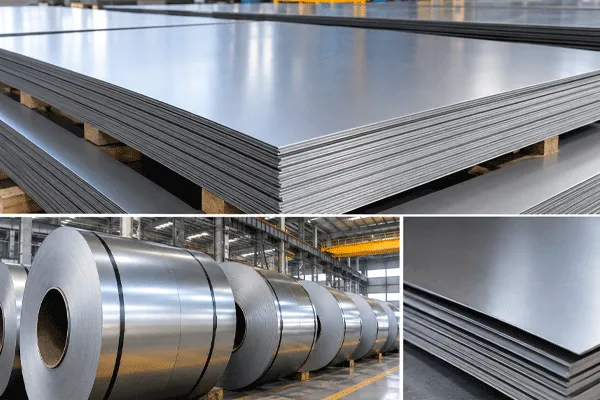
Cold-rolled substrate is widely used before metallic coating. It can enter a hot-dip line to produce galvanized steel, galvannealed material, and other coated products.
ArcelorMittal’s cold rolling mill specifically notes that full-hard substrate can move onward to hot-dip galvanizing or continuous annealing lines.
If you need to galvanize material, it is important to distinguish between:
Factory-produced galvanized steel provides controlled metallic coating and improved corrosion resistance, while bare cold-rolled carbon steel can rust if exposed to moisture without protection.
Cold rolled steel sheet metal appears in products people see every day.
Its combination of dimensional control, surface quality, forming ability, and strength makes it valuable in high-volume manufacturing.
Cold-rolled grades are widely used in automotive manufacturing, including body structures, reinforcement parts, brackets, interior components, and other stamped parts.
ArcelorMittal lists automotive as one of the main markets for cold-rolled sheet, while SSAB offers advanced cold-rolled grades for components requiring both strength and forming ability.
A home appliance factory may use cold-rolled material for:
These applications often require a stable smooth surface, good coating preparation, and repeatable dimensions.
Cold-rolled flat products are commonly found in:
A good surface and accurate geometry help parts align properly during assembly.
Metal furniture, shelving, lockers, drawers, cabinets, and display systems also use sheet steel because it can be punched, bent, welded, and painted efficiently.
A steel coil can be slit into narrow strips before tube forming.
Cold-rolled material may also become:
This explains why cold-rolled steel sheet and strip have such a broad manufacturing market.
Do not begin with price.
Begin with the finished component.
Ask:
What must this part do?
Then work backward.
A practical selection process is:
Finished Application
        ↓
Strength Requirement
        ↓
Forming Severity
        ↓
Surface Requirement
        ↓
Welding Requirement
        ↓
Coating / Painting Need
        ↓
Thickness & Width
        ↓
Applicable Standard
        ↓
Final Material Selection
A stamped cosmetic cover and a hidden structural reinforcement do not need the same type of steel.
Buyers sometimes request gauge steel, but gauge numbers can create confusion between markets.
For international purchasing, we recommend specifying actual nominal thickness in millimeters or inches.
For example:
1.00 mm × 1250 mm × coil
is clearer than:
20 gauge
If you use a gauge number, confirm the actual thickness as well.
If the final product will be painted, powder coated, polished, or used as an exposed part, surface requirements deserve special attention.
Possible considerations include:
Never assume that every cold-rolled product has the same cosmetic quality.
Depending on the component, confirm:
ASTM A1008 includes multiple designations specifically because one set of properties cannot satisfy every end use.
In daily steel trade, buyers sometimes use cold rolled plate, cold-rolled sheet, and flat steel interchangeably.
Technically, product categories and thickness ranges depend on the applicable standard and mill practice.
Most conventional cold-rolled flat products are supplied as relatively thin sheet or strip rather than heavy steel plate.
Heavy plate normally comes from different production routes and standards.
For international RFQs, avoid relying only on the word “plate.”
Instead specify:
This prevents confusion between steel sheet, cut-to-length coil material, and genuine heavy plate.
For large structural steel or heavy steel construction projects, hot-rolled plate and sections are usually more common than thin cold-rolled material.
A complete RFQ reduces purchasing risk.
We recommend including the following:
| Artikel | Information to Confirm |
|---|---|
| Standard | ASTM, EN, JIS, GB, etc. |
| Güteklasse | Exact designation |
| Produkt | Coil, slit coil, or sheet |
| Dicke | Nominal value |
| Breite | Required width |
| Länge | For cut sheets |
| Quantity | Tons / coils / sheets |
| Surface | Oiled, dry, finish requirement |
| Forming | Bending, stamping, deep drawing |
| Processing | Slitting, cutting, blanks |
| Prüfungen | MTC / inspection |
| Packing | Export seaworthy packing |
| Destination | Country and port |
When steel goes into repeat manufacturing, consistency matters.
The material test certificate helps document relevant chemical composition and mechanical data according to the ordered specification.
For high-volume stamping, differences between coils can affect press behavior. SSAB highlights that consistent chemistry, thickness, and dimensional properties help make cold-forming performance more predictable.
Third-party inspection can also be arranged where the buyer or project requires independent checking before shipment.
Bare cold-rolled carbon steel needs protection from moisture.
Oil can provide temporary protection, but storage and transportation conditions remain important.
A good export package may use:
The material should reach your factory in a condition suitable for production.
For global buyers, buying steel is rarely only about one material.
An appliance manufacturer may need cold-rolled flat products, galvanized material, and stainless components. A machinery factory may combine rolled steel sheet, pipe, sections, and plate. A construction project may need structural steel, roofing coils, hollow sections, and non-ferrous materials.
As a professional steel manufacturer and integrated steel supplier in China, Luyuan Steel supports international buyers with a broad range of flat, long, tubular, stainless, aluminum, and copper materials.
For cold-rolled products, our OEM / ODM services can support:
Our goal is not simply to sell a rolled sheet.
We help buyers define the correct material specification before production starts.
Imagine an overseas manufacturer producing thousands of appliance cabinet panels.
The company could order a general commercial coil based only on thickness and width.
But that leaves several questions unanswered:
A better purchase specification might define the standard, drawing grade, thickness, width, coil weight, surface, oiling condition, MTC, and packaging.
The unit price may look similar.
The production result can be very different.
For repeat manufacturing, stable strength and durability, good formability, and consistent dimensions often save more money than a small reduction in raw material price.
Cold working can increase strength and hardness, but the final answer depends on grade and processing condition. Annealed cold-rolled grades may be optimized for forming rather than maximum strength. High-strength cold-rolled grades can provide substantially higher strength.
Compare actual mechanical properties, not simply the production method.
Yes. Bare carbon cold-rolled material does not provide inherent long-term corrosion protection. It should be painted, plated, oiled temporarily, galvanized, or otherwise protected when the application requires better resistance to moisture or chemicals.
Many low-carbon cold-rolled grades have good weldability and are commonly spot welded or arc welded.
However, the welding procedure must match material chemistry, grade, thickness, joint design, and coating condition.
Yes, if you select the correct drawing grade. ASTM A1008 includes Drawing Steel, Deep Drawing Steel, and Extra Deep Drawing Steel categories for progressively demanding forming needs.
Do not assume general commercial steel will perform the same way in a difficult deep-drawn part.
In steel purchasing, CRS commonly means cold rolled steel. However, CRS alone is not a complete material specification. You still need to confirm standard, grade, thickness, width, surface condition, and mechanical requirements.
Yes. Depending on mill capability and order requirements, material can be supplied as master coil, slit coil, or customized sheets.
Slitting and cut-to-length processing can reduce downstream work and improve material utilization.
If you are sourcing cold rolled steel sheet, cold roll coils, galvanized products, hot-rolled materials, stainless steel, pipes, structural sections, aluminum, or copper, send us your required standard, grade, thickness, width, length, quantity, forming requirements, surface condition, and destination port.
Luyuan Steel can support specification review, OEM / ODM customization, cutting, slitting, MTC documentation, third-party inspection, seaworthy packaging, and international logistics—helping distributors, manufacturers, contractors, and global project buyers build a more reliable long-term steel supply chain.
Explore galvanized steel pipe sizes, OD, wall thickness, and schedule 40 charts. Learn how to measure galvanized pipe size and astm a53 specifications.
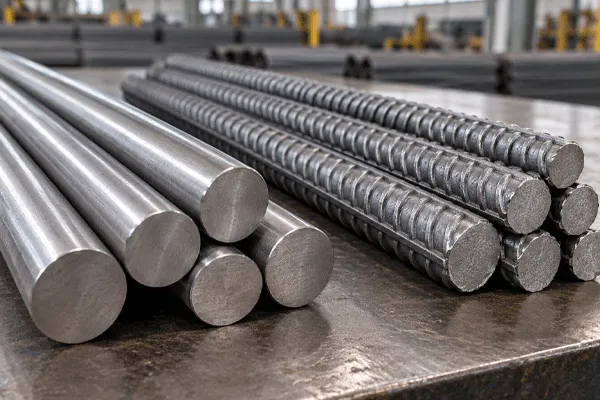
Compare plain round bar and deformed bar in this steel reinforcement guide. Learn which type of steel bar and rebar is best for your construction project.
Wir antworten Ihnen innerhalb von 24 Stunden. In dringenden Fällen fügen Sie bitte WhatsApp/WeChat hinzu: +86 15066120072. Oder rufen Sie direkt unter +86 15066120072 an.
*Wir respektieren Ihre Vertraulichkeit und alle Informationen werden geschützt.
Wir verwenden Ihre Informationen ausschließlich, um auf Ihre Anfrage zu antworten, und senden Ihnen niemals unaufgeforderte E-Mails oder Werbenachrichten.