







Schedule 40 vs Schedule 80 Steel Pipe: How to Choose the Right Wall Thickness
Explore galvanized steel pipe sizes, OD, wall thickness, and schedule 40 charts. Learn how to measure galvanized pipe size and astm a53 specifications.
10-22 2026

 09-24 2026
Ordering the wrong reinforcement can lead to rejected deliveries, fabrication delays, and costly replacements. A ribbed surface alone does not prove that a bar meets your project needs. Understanding grades, sizes, and inspection documents helps you buy the right material before work begins.
Deformed reinforcement bars are steel bars with raised ribs or other surface deformations that improve mechanical interlock with concrete. Also known as rebar, they help concrete members resist tensile forces. Their performance depends on the material grade, bar size, anchorage, placement, and concrete quality. “Deformed” describes the surface pattern, not damage or a guarantee of higher strength.
What are deformed reinforcement bars? A guide to steel rebar
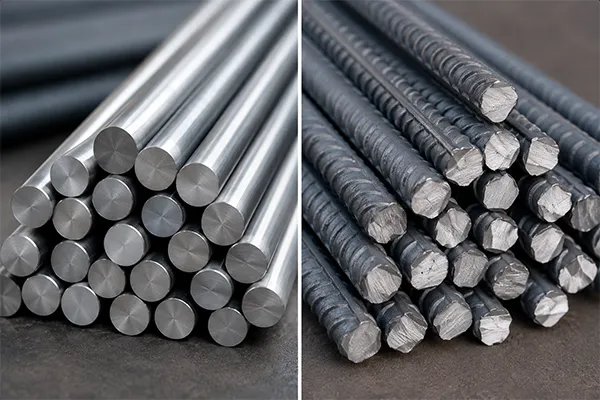
A deformed steel bar has a shaped surface rather than a smooth cylindrical finish. Raised transverse ribs help transfer force between the bar and the surrounding concrete. Depending on the product, longitudinal features and rolled identification marks may also be visible. Each rib is part of a controlled profile, not an added decoration. The pattern must meet the ordered product specification.
Compare this with plain bars, which lack the same raised pattern. Smooth round bars still have specified uses, including certain dowel applications where movement is intended. Neither shape should replace the other without design approval. A general-purpose square bar is also not a substitute for an approved reinforcement bar just because both products are metallic and solid.
For buyers, the first question is therefore not simply, “Does it have ribs?” Ask which standard and grade it meets. At our China-based manufacturing and supply business, we connect that specification with the required size, delivery form, processing, and traceability. This avoids treating every ribbed product as interchangeable.
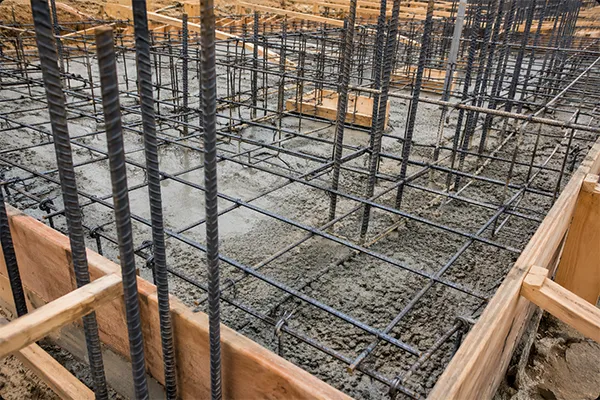
Concrete performs well under compression but is much less capable in tension. Steel reinforcement provides tensile resistance where the design requires it. In a loaded beam, for example, reinforcement placed in the tension zone helps carry forces after cracking develops. The two materials must act together for the member to perform as intended.
The surface deformations enhance bonding with concrete through mechanical interlock. However, this bond still depends on embedment, spacing, cover, confinement, and concrete strength. A bar that is too short or poorly positioned cannot achieve its intended role merely because it has a pronounced pattern. The Concrete Reinforcing Steel Institute’s properties guide explains how these features support load transfer.
It is more accurate to say the bars improve the tensile capacity of the composite member than to claim they change the inherent tensile strength of concrete. Reinforced concrete design also addresses cracking, deflection, durability, and anchorage. The American Concrete Institute and local design authorities provide relevant requirements; the engineer determines which apply to the project.
In a common production route, a billet passes through successive rolling stands while hot. The stands reduce its section and form the required profile. Deformed bars are manufactured with patterned finishing rolls that create the raised features. Cooling, cutting, inspection, and bundling follow. The precise route varies with the mill, grade, and ordered product.
Hot-rolled deformed products may obtain their properties through chemistry, controlled cooling, or other specified processing. A marketing term such as “thermomechanically treated” does not replace a compliance statement. Ask for the applicable standard and test results. Production methods influence performance, but buyers need evidence that the finished shipment meets its requirements.
Straight lengths and coiled forms serve different fabrication workflows. Smaller sizes may arrive in coils for suitable straightening and cutting equipment. If supplied material will be decoiled, establish who verifies its final dimensions and properties. Processing and handling should preserve identification so the finished pieces remain connected to the original batch records.
What are deformed reinforcement bars? A guide to steel rebar
Many standard products are made from carbon steel, while other options use controlled low-alloy chemistry, corrosion-resistant alloys, or protective coatings. These categories describe different features and may overlap. A coated product, for example, still needs an underlying material grade. Choosing the type of rebar requires both structural and exposure requirements.
| Product category | Main purchasing consideration | What to confirm |
|---|---|---|
| Uncoated carbon material | General construction supply | Grade, dimensions, test results, and exposure suitability |
| Controlled low-alloy material | Specified mechanical properties or enhanced weldability | Chemistry, carbon equivalent, and welding requirements |
| Epoxy-coated reinforcement | A barrier against corrosive exposure | Coating specification, handling, damage limits, and repairs |
| Galvanized reinforcement | Zinc-based corrosion protection | Coating requirements and approved fabrication sequence |
| Stainless reinforcement | Corrosion resistance for demanding service | Alloy, reinforcement standard, and project approval |
Stainless steel bars and galvanized steel reinforcement should be specified as reinforcement products, not ordered using a generic metal description. Likewise, high-strength deformed bars are not automatically the most economical choice in every member. The designer must consider permitted grades, anchorage, crack control, and fabrication. Review the CRSI corrosion-resistance overview when discussing available protection strategies with the project team.
Yield strength describes the stress at which significant permanent deformation begins, using the test method required by the specification. Tensile strength is the maximum stress reached during a tensile test. Ductility describes the ability to undergo plastic deformation before fracture. All three matter; a single strength number does not describe the full performance of reinforcing steel.
For example, Grade 60 rebar uses a minimum yield designation of 60,000 psi in the inch-pound system, approximately 414 MPa by unit conversion. The paired ASTM metric designation is Grade 420. This does not make every product carrying a similar metric number interchangeable. Test methods, chemistry, elongation, bending, and other requirements must also align with the contract.
Two common US specifications illustrate why names matter: ASTM A615/A615M covers carbon material, while ASTM A706/A706M includes controls on mechanical properties and chemistry, including provisions intended to enhance weldability. These links identify specific published editions; the purchase order should name the edition adopted by the project. Never silently replace one specification with the other.
Order the nominal size specified on the approved schedule. Measuring across the highest points of the ribs does not directly establish nominal diameter. A deformed bar is described using an equivalent nominal section under its product standard. Confirm the designation system as well: US bar numbers and metric diameter labels are not a universal one-to-one set.
The following table gives calculated planning weights, using a nominal circular area and an assumed density of 7,850 kg/m³. It is not a product availability list or an acceptance table. Published nominal masses, permitted deviations, and measurement procedures in the applicable standard take priority.
| Nominal diameter | Approximate mass per metre | Approximate mass for 12 m |
|---|---|---|
| 8 mm | 0.395 kg | 4.74 kg |
| 10 mm | 0.617 kg | 7.40 kg |
| 12 mm | 0.888 kg | 10.65 kg |
| 16 mm | 1.578 kg | 18.94 kg |
| 20 mm | 2.466 kg | 29.59 kg |
| 25 mm | 3.853 kg | 46.24 kg |
| 32 mm | 6.313 kg | 75.76 kg |
For estimating, mass per metre is approximately 0.006165 × diameter², with diameter in millimetres. Use the total scheduled length to estimate tonnage, then account for fabrication waste and agreed commercial terms. Confirm whether invoicing uses theoretical or actual weight. That choice affects how quantity, delivery records, and payment are reconciled.
Reinforcing bars are used in foundations, columns, walls, slabs, bridge components, and other engineered members. Their functions vary: longitudinal bars may resist bending, while ties and stirrups serve different roles. A common material appearance does not mean the same diameter and spacing suit every location. The approved drawings define the arrangement.
In reinforced concrete and reinforced masonry, the surrounding materials and detailing requirements differ. Do not transfer a lap length or placement rule from one system to another without review. The strength of the structure depends on the complete design and workmanship, including joints and anchorage. Correct supply is one part of that chain.
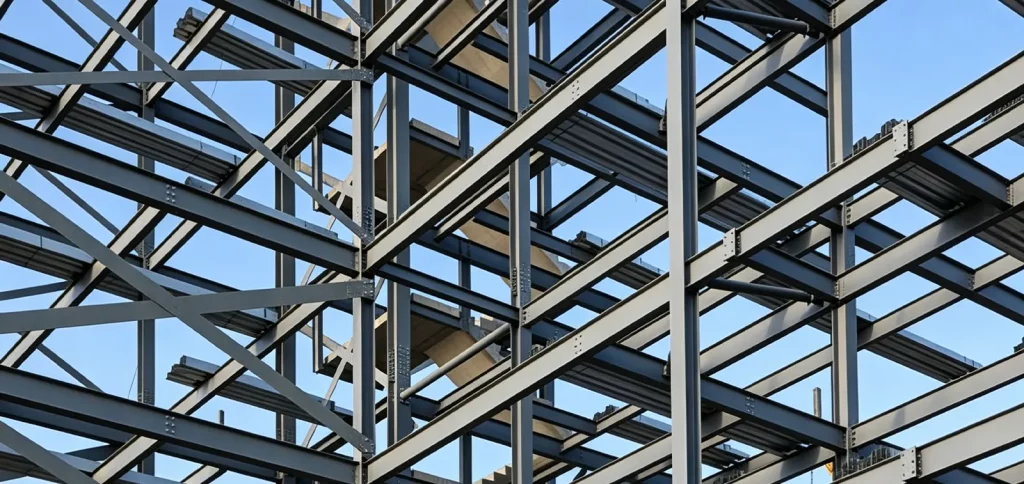
Consider an illustrative purchasing scenario: a warehouse project needs foundation cages alongside a structural steel frame. Its procurement list may include deformed reinforcement, H beams, plates, and angle steel. An integrated supplier can coordinate quantities and deliveries, but each product keeps its own specification and inspection records. This example describes a planning approach, not a completed customer case.
Start by matching the purchase order, bundle tags, and mill test certificate. Check the producing mill, heat or batch reference, grade, size, quantity, and reported test results. Identification should remain legible after cutting or rebundling. CRSI’s bar identification guide explains how ASTM markings identify the mill, size, material type, and grade.
Then define the inspection scope. It may include dimensions, mass per length, profile checks, tensile and bend testing, and coating examination where relevant. Sampling must follow the contract and applicable standard. Third-party inspection can provide independent evidence, but it must cover the actual order and agreed tests. A certificate from an unrelated batch does not establish shipment compliance.
Surface condition also needs judgment. Light rust does not automatically require rejection, while loose scale, contamination, excessive corrosion, or loss of section can matter. CRSI’s handling and storage guidance provides practical handling information. Agree on storage, bundling, lifting, and moisture management before shipping, particularly when protective coatings require careful treatment.
What are deformed reinforcement bars? A guide to steel rebar
A clear inquiry allows us to propose a suitable supply plan. We are a professional manufacturer and integrated supplier in China, supporting processing, customization, inspection coordination, MTC documentation, and international logistics. Our wider range includes sheet, coils, pipes, sections, stainless materials, aluminum, and copper. For this product, we focus the quotation on the approved reinforcement schedule.
Send these details with your request:
Our approach to OEM/ODM supply is to fit the delivery to your approved requirements. Customization does not mean changing structural dimensions or chemistry without authorization. Send your schedule, quantity, and destination for a tailored quotation. We can discuss processing, packing, and shipment sequencing before you place the order, helping your team compare complete offers rather than headline prices alone.
No. It describes the intentional surface pattern formed during production. Bent, cracked, or damaged material is a separate inspection issue. The surface of the bar should meet the ordered profile and condition requirements; a ribbed appearance alone does not prove compliance.
Not necessarily. Its raised features improve mechanical interlock, while material strength depends on grade and processing. Compare certified properties rather than appearance. A better bond with the concrete and a higher material strength are different characteristics, even though both can influence structural performance.
Some grades are suitable for welding under the proper procedure. Chemistry, carbon equivalent, size, joint design, and the governing welding requirements all matter. A706 addresses enhanced weldability, but that does not authorize unrestricted site welding. Confirm the material and approved procedure before fabrication.
Only after the responsible designer approves the change. Greater nominal strength does not resolve all requirements. Anchorage, permitted grades, strain behavior, detailing, and member performance may be affected. Submit a documented comparison rather than assuming the higher number represents a direct upgrade.
No. The decision depends on exposure, service-life targets, design, and maintenance planning. Coastal environments and chloride exposure may justify additional protection. The engineer should select the system, including material, cover, and concrete quality. No single coating or alloy removes the need for correct detailing.
Request the agreed mill test certificates, packing list, identification records, and any specified inspection reports. Commercial and shipping documents depend on the destination and transaction. Set these requirements before production so the supplier can maintain the needed links between material, testing, and each delivered bundle.
Key points to remember
Explore galvanized steel pipe sizes, OD, wall thickness, and schedule 40 charts. Learn how to measure galvanized pipe size and astm a53 specifications.
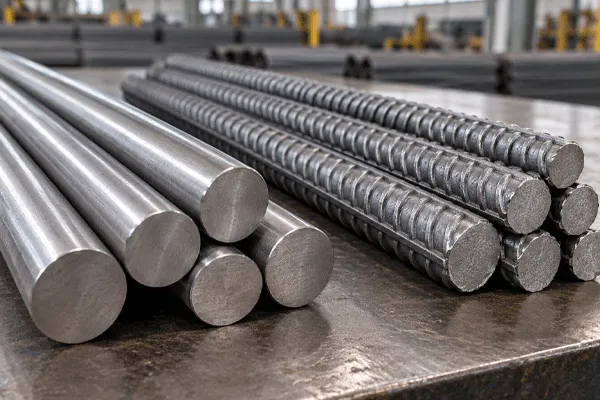
Compare plain round bar and deformed bar in this steel reinforcement guide. Learn which type of steel bar and rebar is best for your construction project.
24 saat içinde size yanıt vereceğiz. Acil durumlarda lütfen WhatsApp/WeChat üzerinden bize ulaşın: +86 15066120072. Veya doğrudan +86 15066120072 numarasını arayın.
*Gizliliğinize saygı duyuyoruz ve tüm bilgileriniz korunmaktadır.
Bilgilerinizi yalnızca talebinize yanıt vermek amacıyla kullanacağız ve asla izniniz olmadan e-posta veya tanıtım mesajları göndermeyeceğiz.