Luyuan Steel Technical Team | Steel Manufacturing & Export | Updated September 2026
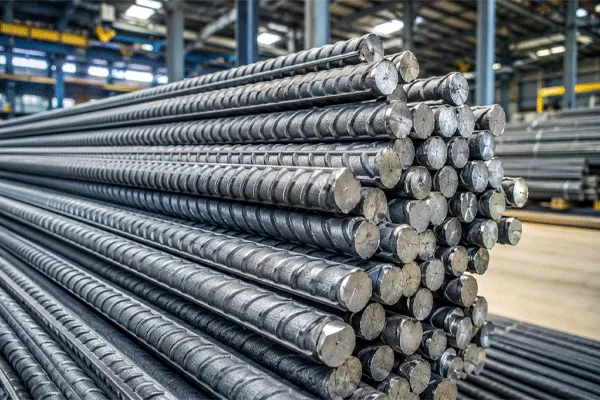
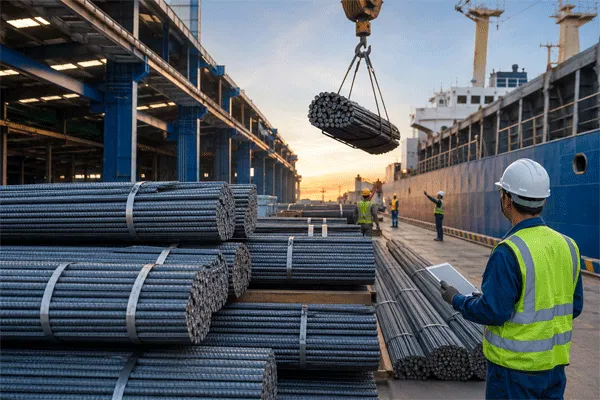
Deformed steel bars are rolled reinforcing bars with raised surface ribs that bond to concrete. Luyuan supplies them as HRB500, with HRB400 and ASTM A615 Grade 60 equivalents referenced on the same product line, in diameters up to 16 mm and 6 m, 9 m, 12 m or coil lengths.
Deformed Steel Bars: Grades, Diameters and Standards
What the Ribs Are Actually For
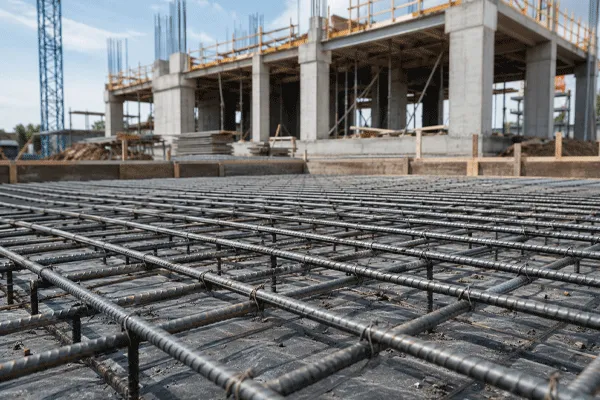
A deformed bar differs from a plain round bar in one structural respect: the transverse and longitudinal ribs interlock mechanically with cured concrete, transferring tensile load along the bar instead of relying on surface friction alone. That’s why building codes specify deformed bar for structural reinforcement and reserve plain round bar for stirrup ties, dowels, or applications where bending radius matters more than bond strength.
Rib pattern isn’t interchangeable across standards, though. GB 1499.2 (the Chinese standard behind HRB designations), ASTM A615, and EN 10080 each define their own rib height, spacing, and inclination tolerances. A bar stamped to one standard won’t automatically pass inspection against another, even if the yield strength happens to line up — which is the first thing to check before a diameter or length ever enters a bid sheet.
HRB400, HRB500 and ASTM Grade 60: Where the Numbers Actually Match
The “500” in HRB500 is the designation itself — it denotes a minimum yield strength of 500 MPa under GB 1499.2. ASTM International’s own A615/A615M specification defines Grade 60 bar at a 60,000 psi (420 MPa) minimum yield, alongside Grade 40 (280 MPa), Grade 80 (550 MPa), and Grade 100 (690 MPa).
That means Grade 60 (420 MPa) sits between HRB400 (400 MPa) and HRB500 (500 MPa) — it is not a direct substitute for either on a strength basis alone. A contractor converting a Chinese-standard bill of materials to a US-standard spec sheet, or vice versa, needs to re-run the structural calculation against the actual MPa value, not just swap grade labels.
| Designation |
Standard |
Min. Yield Strength |
Typical Use Case |
| HRB400 |
GB 1499.2 |
400 MPa |
General reinforcement, referenced on Luyuan’s solution pages |
| HRB500 |
GB 1499.2 |
500 MPa |
Luyuan’s primary rebar product line; higher-load structural work |
| Grade 60 |
ASTM A615 |
420 MPa (60,000 psi) |
Common baseline for US-standard EPC specs |
Luyuan’s product listing centers on HRB500, with HRB400 and Grade 60 equivalents referenced at the solution-page level rather than as separately certified SKUs. Buyers who need a formal Grade 60 mill certificate for a US-standard project should confirm that documentation path before order confirmation, not after mill production has started.
Diameter, Length and Delivery Format Reference
Luyuan’s published Steel Rebar (HRB500) listing covers a 5.5–16 mm diameter range, supplied as 6 m, 9 m, 12 m cut lengths, or coil.
| Spec |
Published Range |
| Diameter |
5.5–16 mm |
| Length (cut) |
6 m / 9 m / 12 m |
| Delivery format |
Cut length or coil |
| Certification documentation |
Full English Mill Test Certificate (MTC) |
Why the 16 mm Ceiling Matters on a Bid
Infrastructure specs often assume rebar sourcing tops out around 32–40 mm, since that’s the common range published by large-diameter structural mills. Luyuan’s current published diameter range stops at 16 mm. If a bid package calls for bar diameters above that — column reinforcement on a high-rise or bridge pier, for example — that line item needs to be confirmed against current mill availability before it’s priced into the package, rather than assumed to be covered under the same product listing as the smaller sizes.
3 Steps to Confirm a Deformed Bar Order Before It Ships
- Match the grade to the governing code.Confirm whether the project specification calls for GB 1499.2 (HRB400/HRB500), ASTM A615 (Grade 60), or an EN 10080 equivalent, and get that grade written into the purchase order — not just implied by a diameter and quantity.
- Verify diameter and length against the current published range.Cross-check the 5.5–16 mm diameter window and 6 m/9 m/12 m/coil format against the actual bar sizes on the drawings before requesting a quote.
- Request the MTC format in advance.Ask for the Mill Test Certificate template and, if the project requires SGS, Bureau Veritas, or Intertek inspection, confirm which party is scheduling and paying for that inspection before production starts.
Deformed Steel Bars: Grades, Diameters and Standards
Certification, Traceability and Inspection Options
No SKU-specific rebar certificate number is currently published on Luyuan’s site — buyers should request the actual certificate document rather than relying on a listed number. What is documented at the company level: 100% pre-shipment inspection, batch traceability from furnace number through shipment, and chemical composition and mechanical property testing, all of which apply to the rebar line along with the rest of Luyuan’s product range. A full English MTC ships with the order, and SGS, Bureau Veritas, Intertek, or a buyer-appointed inspector can be brought in for third-party verification.
Compared with sourcing hot-rolled deformed bar from a trading intermediary with no in-house rolling capacity, buying direct from a mill that also runs its own furnace-to-shipment traceability removes one link from the documentation chain — there’s one fewer party that has to forward or reissue paperwork before the MTC reaches the buyer.
What Deformed Bars Cost — and Where “Price on Request” Comes From
Luyuan doesn’t currently publish a listing price specific to deformed steel bar. Reference listing prices are available for other product lines — cold rolled steel coil, for example, lists at roughly USD 585–635 per metric ton — but rebar isn’t among the products with a public reference price. Final rebar pricing depends on grade, diameter, length format, order volume, and Incoterms, so this line item should be quoted on request rather than estimated from unrelated product pricing.
Where Hot Rolled Deformed Bar Still Loses to Cold-Worked Bar
Hot rolled deformed bar — the process behind HRB and Grade 60 products — isn’t the right call for every project. Cold-worked or cold-twisted deformed bar, produced by mechanically working the bar after hot rolling, can reach higher yield strengths from the same base material, which matters when a design is trying to reduce total reinforcement tonnage rather than just meet a minimum grade. The trade-off is ductility: cold working reduces elongation, which is why some seismic codes restrict or exclude cold-worked bar from critical structural members regardless of its yield strength advantage. For most standard building and infrastructure reinforcement, hot rolled HRB or Grade 60 bar remains the default; cold-worked bar is a deliberate substitution decision, not a general upgrade.
Deformed Steel Bars: Grades, Diameters and Standards
FAQ
Q: Is HRB500 the same as ASTM Grade 60?
A: No. HRB500 has a 500 MPa minimum yield strength under GB 1499.2, while Grade 60 has a 420 MPa (60,000 psi) minimum yield under ASTM A615. They’re comparable products but not a direct strength-for-strength substitution.
Q: What diameters does Luyuan currently supply for HRB500 rebar?
A: The published range is 5.5–16 mm. Larger diameters should be confirmed directly against current mill availability before they’re added to a bid.
Q: Does Luyuan supply rebar in coil form?
A: Yes — the published delivery formats are 6 m, 9 m, and 12 m cut lengths, or coil.
Q: What documentation ships with a rebar order?
A: A full English Mill Test Certificate is included. SGS, Bureau Veritas, Intertek, or a buyer-appointed inspector can be arranged for third-party pre-shipment inspection on request.
Q: How is rebar priced?
A: Rebar isn’t on Luyuan’s current public reference price list, so pricing is quoted per order based on grade, diameter, length format, and volume.









 09-02 2026