







Schedule 40 vs Schedule 80 Steel Pipe: How to Choose the Right Wall Thickness
Explore galvanized steel pipe sizes, OD, wall thickness, and schedule 40 charts. Learn how to measure galvanized pipe size and astm a53 specifications.
10-22 2026

 10-16 2026
Buying the wrong tubo de acero can cause leaks, welding problems, early corrosion, failed inspections, or costly project delays. The risk grows when grade, wall thickness, standard, surface treatment, and testing are unclear. A capable manufacturer helps you define these details before production begins.
Reliable steel pipe manufacturers supply the correct pipe material, dimensions, manufacturing method, standard, testing, traceability, processing, and export protection for the intended application. Buyers should compare carbon steel, stainless steel, seamless and welded options, then verify ASTM or project standards, wall thickness, inspection documents, fabrication needs, packing, and delivery capability before choosing a supplier.
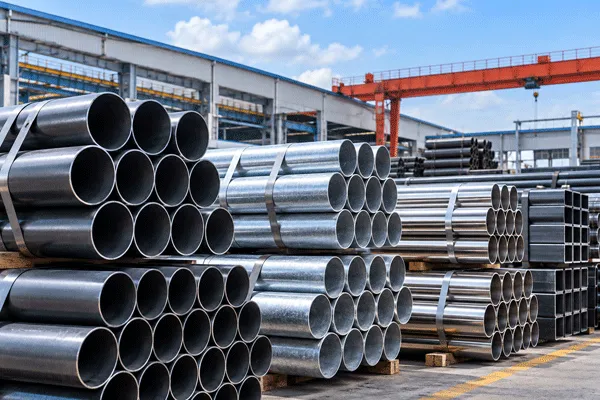
Steel Pipe Manufacturers: How to Choose Carbon Steel, Stainless Steel & Pipe Suppliers
Professional steel pipe manufacturers do not produce one universal pipe for every job. The correct product depends on whether the customer needs pressure service, fluid transportation, machinery, building structures, heat resistance, corrosion protection, or decorative fabrication.
Common product groups include:
The difference matters because each category serves different operating conditions.
A structural warehouse column, for example, does not need exactly the same properties as a high-temperature pipeline. A food-processing line may prioritize stainless steel and cleanability, while a construction contractor may prioritize strength, availability, welding performance, and price.
As an integrated steel manufacturer and international steel supply partner, we help buyers source both tubular and related flat or structural steel products. That can include pipe, hollow sections, H beams, angle steel, steel sheets, plates, coated coils, stainless products, aluminum, and copper.
For project buyers, this can reduce the number of suppliers involved in one shipment.
One of the first decisions in pipe purchasing is whether to use seamless and welded products.
A seamless steel pipe has no longitudinal welded seam. It is typically produced from a solid billet that is heated, pierced, rolled, and sized into a hollow section.
Because there is no longitudinal weld, seamless products are often selected for demanding pressure, temperature, mechanical, or process applications where the relevant specification requires them.
ASTM A106/A106M, for example, covers seamless carbon steel pipe for high-temperature service. The current active version is ASTM A106/A106M-26. The standard covers pipe intended for bending, flanging, similar forming operations, and welding when an appropriate procedure is used.
A welded product starts with flat steel strip or plate. The material is formed into a cylindrical or shaped section, and the edges are joined by welding.
Different manufacturing processes can be used depending on pipe size and application.
Common categories include:
Modern welded steel pipes can provide very reliable performance when produced and tested according to the correct standard.
ASTM A53/A53M covers both welded and seamless black and hot-dipped zinc-coated pipe. ASTM currently lists A53/A53M-24 as the active edition.
| Factor | Tubos sin soldadura | Tubos soldados |
|---|---|---|
| Longitudinal seam | No | Sí |
| Proceso de producción | Billet piercing and rolling | Strip/plate forming and welding |
| Large-size availability | More limited in some ranges | Often broader |
| Coste | Often higher | Often more economical |
| Pressure applications | Common | Also available when standard permits |
| Aplicaciones estructurales | Available | Muy frecuente |
| Custom large diameter | Less flexible | Often more practical |
| Stainless options | Available | Available |
The right answer is not “seamless is always better.”
The correct answer is: use the product required by the engineering specification and operating conditions.
Carbon steel remains one of the most widely used pipe materials because it combines strength, availability, fabrication efficiency, and competitive cost.
A typical carbon steel pipe may be used for water systems, construction, industrial lines, mechanical equipment, fire protection, energy projects, and general engineering.
However, bare carbon material is vulnerable to corrosion in many environments.
Depending on the project, buyers may:
Stainless material contains alloying elements that provide much better corrosion resistance than ordinary carbon steel.
Common stainless steel pipe grades include 304/304L and 316/316L, although many other grades are available for higher temperatures, chemicals, marine exposure, or special process conditions.
ASTM A312/A312M covers seamless, welded, and heavily cold-worked austenitic stainless steel pipes intended for high-temperature and general corrosive service. ASTM lists A312/A312M-25 as the active version.
A useful comparison is:
| Requirement | Carbon Steel | Acero inoxidable |
|---|---|---|
| Material cost | Inferior | Más alto |
| General strength | Good | Good |
| Resistencia a la corrosión | Requires protection in many environments | Más alto |
| Soldadura | Common | Requires stainless-specific control |
| Decorative appearance | Limited | Good |
| Chemical service | Application-dependent | Often preferred |
| Food / sanitary equipment | Less common | Common |
| Uso estructural | Muy frecuente | Available |
The project environment should decide.
Do not pay for quality stainless steel where carbon steel performs perfectly well. At the same time, do not choose carbon steel only to save initial cost if corrosion will create high maintenance costs later.
A pipe inquiry should include more than diameter and length.
The standard tells the manufacturer what chemical composition, dimensions, mechanical properties, processing, tests, and other requirements may apply.
Several commonly referenced ASTM specifications include:
| Estándar | Typical Product Scope |
|---|---|
| ASTM A53/A53M | Black and hot-dip zinc-coated welded and seamless steel pipe |
| ASTM A106/A106M | Seamless carbon pipe for high-temperature service |
| ASTM A312/A312M | Austenitic stainless seamless and welded pipe |
| ASTM A500/A500M | Cold-formed welded and seamless carbon structural tubing |
| ASTM A554 | Welded stainless mechanical tubing |
ASTM A500/A500M-23 is currently active and covers round, square, rectangular, and special-shape cold-formed welded or seamless structural steel tubing for buildings, bridges, and general structural purposes.
ASTM’s 2026 standards catalog also lists ASTM A554-26 for welded stainless mechanical tubing.
Consider this inquiry:
ASTM A53 pipe required.
That still leaves many unanswered questions.
A useful RFQ should identify:
The same applies to stainless steel pipe suppliers.
“Need 316 stainless pipe” is not a complete purchase specification.
Good purchasing begins with a complete technical description.
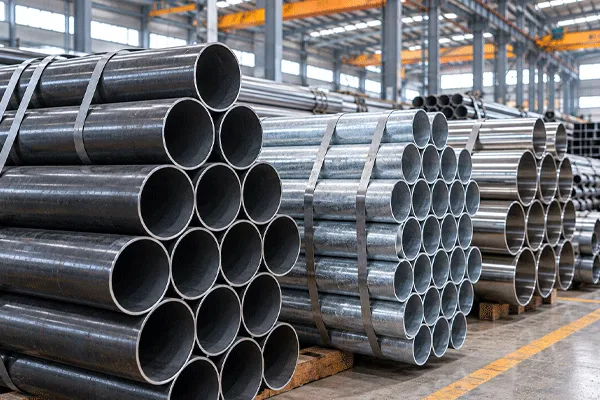
Steel Pipe Manufacturers: How to Choose Carbon Steel, Stainless Steel & Pipe Suppliers
The words pipe and tube are often used interchangeably in everyday business, but technical buyers should distinguish them.
Pipe is commonly specified around nominal pipe size, schedule, and pressure or fluid-service requirements.
Steel tubes, by contrast, are often specified directly by outside diameter, wall thickness, shape, dimensional tolerance, and mechanical application.
Por ejemplo:
| Producto | Example Specification Style |
|---|---|
| Process pipe | NPS 4, Schedule 40 |
| Round mechanical tube | 50 mm OD × 2 mm wall |
| Square structural tube | 100 × 100 × 5 mm |
| Rectangular tube | 120 × 60 × 4 mm |
The distinction becomes especially important for small diameter tubing, thin wall tubing, medical tubing, and other precision products.
A buyer searching for stainless steel tubing may be looking for instrumentation, heat exchanger, decorative, automotive, or precision applications rather than conventional pipeline material.
Similarly, polished stainless steel tubing may be purchased mainly for architectural or decorative appearance.
Always describe the finished use.
That helps the supplier recommend the correct standard.
Reliable pipe starts with controlled raw material.
Depending on the product, manufacturers may begin with billet, hot rolled coil, plate, stainless strip, or cold rolled steel.
A welded pipe line may follow this flow:
Steel Coil / Strip
       ↓
Slitting
       ↓
Forming
       ↓
Welding
       ↓
Weld Inspection
       ↓
Sizing
       ↓
Straightening
       ↓
Cutting
       ↓
Testing
       ↓
Surface Treatment
       ↓
Packing
For ERW material, forming rolls progressively shape the strip into a round section before the edges are joined.
After welding, the pipe is sized and inspected.
Depending on the specification, tests may include:
ASTM A53 includes requirements involving tension, bending or flattening, hydrostatic testing, and nondestructive electric testing for relevant products.
ASTM A530/A530M-18(2026), a general-requirements specification for specialized carbon and alloy steel pipe, also addresses tensile, flattening, hydrostatic, and ultrasonic testing requirements where applicable.
For stainless steel, raw material identification is especially important because grade mix-ups can create serious problems.
Depending on the order, inspection may include:
For stainless tubing used in demanding applications, the exact standard should define what testing is required.
Inspection requirements should be agreed before production—not after shipment.
A good supplier should ask how you will use the material.
This matters because pipe may require substantial downstream work before installation.
Our OEM / ODM and processing support can include:
For round pipe:
For square or rectangular tubing:
For precision products:
A machinery buyer ordering cold finished tubing or precision products usually needs tighter dimensions than a customer buying structural warehouse sections.
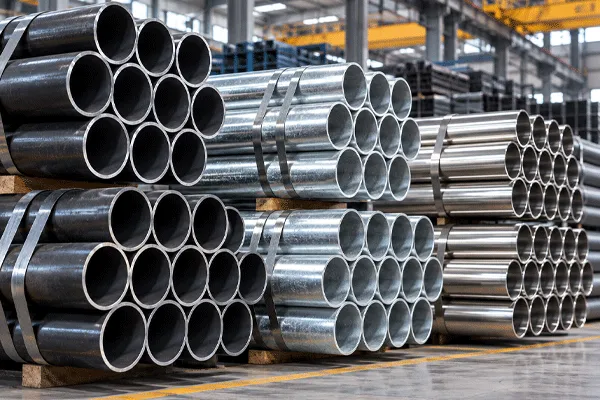
Steel Pipe Manufacturers: How to Choose Carbon Steel, Stainless Steel & Pipe Suppliers
Many pipeline projects require more than straight pipe.
Common pipe fittings include:
A matching fitting should be selected according to material, pressure class, standard, diameter, wall thickness, and connection method.
Combining pipe and fittings into one procurement package can simplify project logistics.
The global steel pipe manufacturing market serves an enormous range of end users because tubular steel provides an efficient combination of strength, hollow geometry, transport capability, and fabrication flexibility.
Usos típicos incluyen:
Square and rectangular tubes are especially common in structural steel fabrication.
ASTM A500 covers structural tubing specifically for welded, riveted, or bolted buildings, bridges, and general structural uses.
Pipe is used to transport:
The exact alloy and standard depend on temperature, pressure, corrosion, and fluid characteristics.
Mechanical tubing appears in:
These industrial applications may use carbon, alloy, or stainless material.
The automotive sector uses tubing in structural, exhaust, fluid, seating, chassis, and other systems.
Products may include aluminized tubing, stainless exhaust tubing, carbon mechanical tubes, and high-strength alloy tubing.
A broad range of stainless steel tubular products serves:
Different stainless steel products may be welded or seamless depending on service conditions.
When buyers search online for steel pipe manufacturers in USA, the results often mix several different business models.
Some companies manufacture tube. Some distribute material. Others act as service centers or specialty metal suppliers.
For example, Pennsylvania Steel Company describes itself as an independent regional steel distributor with warehousing and processing operations.
Continental Steel & Tube Co. operates as a specialty metal supplier and distributor across materials including carbon, stainless, alloy, aluminum, titanium, and copper forms.
Plymouth Tube is a tubing manufacturer supplying precision engineered products, including seamless and welded stainless and nickel tubing products.
Similarly, AK Steel International remains an operating entity within Cleveland-Cliffs and markets specialty steel products, although its business focus is broader than conventional steel pipe alone.
These examples show why a buyer should not assume every search result is the same kind of company.
Buying from local steel companies can offer:
Buying from global steel pipe producers can offer:
The better choice depends on quantity, lead time, specification, customization, and total landed cost.
For international buyers, comparing only the ex-works or FOB price gives an incomplete picture.
Consider:
Material Price
      +
Processing
      +
Inspection
      +
Packing
      +
Ocean Freight
      +
Import Cost
      +
Local Delivery
      =
Total Landed Cost
This is the number that matters.
The best steel pipe suppliers do more than send a price list.
They help reduce technical and commercial risk.
Before placing an order, evaluate:
| Supplier Capability | Por qué es importante |
|---|---|
| Product range | Supports multiple project requirements |
| Standard knowledge | Prevents incorrect material selection |
| Trazabilidad MTC | Supports quality verification |
| Processing ability | Reduces downstream work |
| Inspection support | Helps control order quality |
| Export experience | Reduces documentation problems |
| Embalaje apto para el mar | Protects material in transit |
| Stable supply | Supports repeat orders |
| Communication | Prevents specification errors |
| Logistics support | Simplifies international delivery |
A distributor sourcing standard stock may prioritize availability.
An engineering company may prioritize traceability.
An OEM buying steel pipe and tubing for repeat manufacturing may prioritize dimensional consistency.
A project contractor may need pipe, plate, fittings, beams, and other materials together.
En Acero Luyuan, our supply scope includes carbon and stainless tubular products together with coated coils, hot rolled and cold rolled flat steel, plate, section steel, aluminum, copper, and other materials.
This wide range of products allows buyers to consolidate multiple project requirements.
For example, a warehouse project may need:
An industrial project may combine carbon steel and stainless steel, pipe, fittings, plate, and fabricated components.
Our role is to help the buyer define the specification, coordinate production or sourcing, arrange processing, verify documentation, protect the cargo, and organize international shipping.
Imagine a contractor needs 120 tons of tubular products for a factory project.
A basic RFQ says:
“Need steel pipe. Send best price.”
That request is difficult to quote correctly.
A professional RFQ might say:
ASTM A500 structural tubing, specified grade, round and rectangular sizes, exact wall thicknesses, 6 m and 12 m lengths, required quantities by size, MTC, third-party inspection, bundled seaworthy packing, CFR destination port.
Now both sides understand the same product.
That clarity reduces re-quotation, quality disputes, and delays.
For global sourcing, good specifications are as important as finding a leading manufacturer or competitive price.
Seamless pipe is produced without a longitudinal weld seam, usually from a pierced billet. Welded pipe begins with flat strip or plate that is formed and welded.
Both can perform well when made to the correct specification. The choice depends on pressure, temperature, dimensions, standard, availability, and project requirements.
Not in every application.
Stainless material offers higher corrosion resistance but costs more. Carbon steel is economical, strong, widely available, and suitable for many construction and industrial systems when properly protected.
Choose according to service conditions and lifecycle cost.
Yes, certain carbon products can be galvanized to improve corrosion protection.
ASTM A53 includes hot-dipped zinc-coated welded and seamless steel pipe among its covered products.
The exact coating method and specification should be confirmed before ordering.
Yes. Depending on the project, we can supply round pipe, seamless pipe, welded pipe, square hollow sections, rectangular hollow sections, and related steel tubes.
Buyers should state whether the product is intended for fluid service, pressure service, structural use, or mechanical fabrication.
Yes, depending on the product and specification.
Stainless tube can be supplied for industrial, mechanical, structural, or decorative applications, with finishing options determined by grade, process, quantity, and required appearance.
For very specialized products such as medical tubing or extreme precision tubing, buyers should provide detailed technical drawings and qualification requirements.
Yes.
MTC documentation can provide traceability to the specified material and test results. Third-party inspection can also be coordinated when required by the buyer or project.
Inspection scope should be agreed before production.
If you are sourcing steel pipe products, stainless tube, seamless carbon pipe, hollow sections, galvanized pipe, fittings, or other steel materials, send us your standard, grade, size, wall thickness, length, quantity, processing requirements, inspection requirements, and destination port.
Luyuan Steel can support standard and custom steel supply, OEM / ODM processing, MTC documentation, third-party inspection, seaworthy packaging, and international logistics for distributors, contractors, machinery manufacturers, infrastructure buyers, and engineering projects worldwide.
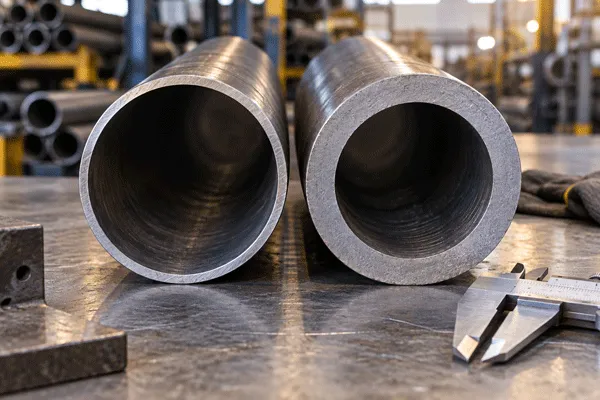
Explore galvanized steel pipe sizes, OD, wall thickness, and schedule 40 charts. Learn how to measure galvanized pipe size and astm a53 specifications.
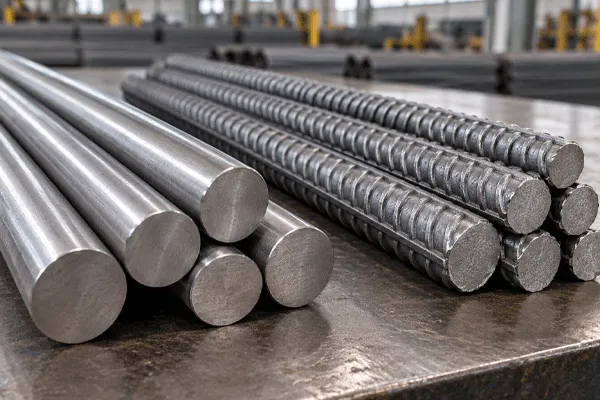
Compare plain round bar and deformed bar in this steel reinforcement guide. Learn which type of steel bar and rebar is best for your construction project.
Le responderemos en un plazo de 24 horas. Si para el caso urgente, por favor agregue WhatsApp/WeChat: +86 15066120072,. O llame directamente al +86 15066120072.
*Respetamos su confidencialidad y toda la información está protegida.
Sólo utilizaremos sus datos para responder a su consulta y nunca le enviaremos correos electrónicos o mensajes promocionales no solicitados.